
NASA and international space weather experts are closely monitoring a powerful solar storm expected to impact Earth after a major eruption was detected on the surface of the Sun.
According to reports from the National Oceanic and Atmospheric Administration (NOAA) and space monitoring agencies, the event was triggered by a strong coronal mass ejection (CME) moving toward Earth at high speed.
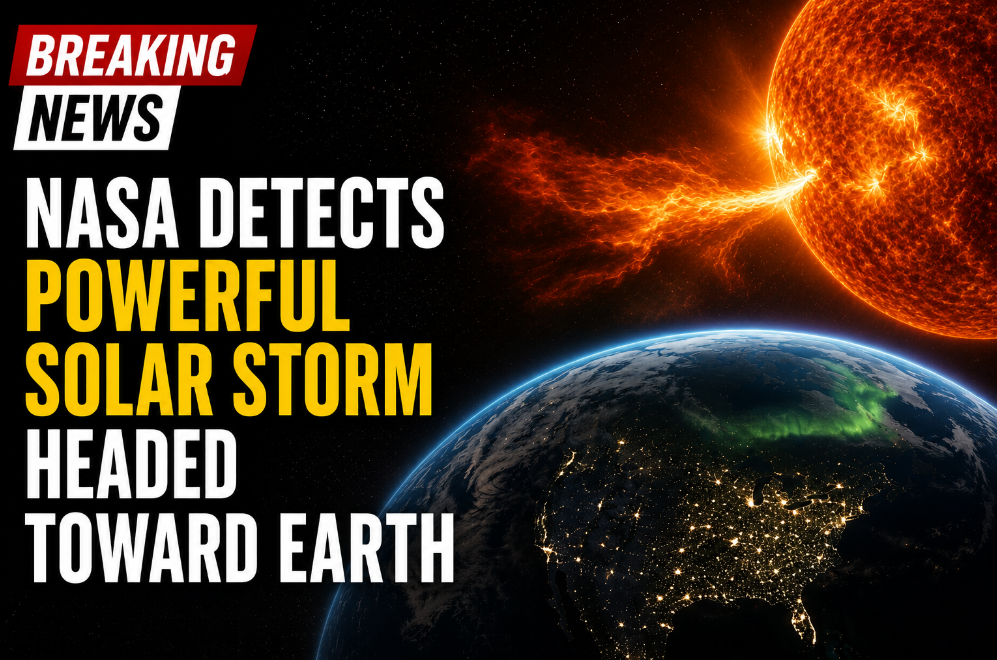
Scientists Monitoring Incoming Solar Storm
The solar storm was reportedly caused by intense activity from a large sunspot region that released massive amounts of charged particles into space.
Experts say the storm could affect:
- satellite communications
- GPS systems
- radio signals
- power grids
- aviation routes in some regions
While officials do not expect catastrophic impacts, scientists warn that strong geomagnetic storms can temporarily disrupt technology and infrastructure.
Increased Solar Activity in 2026
Researchers say solar activity has been rising significantly as the Sun approaches the peak of its current solar cycle.
Over the last several months, scientists have recorded:
- stronger solar flares
- increased magnetic activity
- more frequent coronal mass ejections
Space weather agencies are now increasing monitoring efforts due to concerns over how solar storms could affect modern digital infrastructure.
Possibility of Northern Lights Expanding
One possible side effect of the incoming geomagnetic storm could be brighter and more widespread auroras, also known as the Northern Lights.
Experts say unusual aurora activity may become visible farther south than normal if the storm intensifies.
Social media users and skywatchers are already closely following updates from NASA and NOAA as excitement grows online.
Why Solar Storms Matter
Modern societies rely heavily on:
- satellites
- communications networks
- navigation systems
- electrical infrastructure
Scientists warn that severe solar storms can interfere with these systems by disturbing Earth’s magnetic field.
Experts continue emphasizing that most solar storms do not create major long-term damage, but stronger events can still cause temporary disruptions and technological problems.
The situation is now being monitored closely worldwide as the storm approaches Earth over the coming days.