
WASHINGTON, President Donald J. Trump announced Wednesday that negotiations between the United States and Iran have entered their “final stages,” marking a significant development in long-standing efforts to address Tehran’s nuclear program and regional tensions.
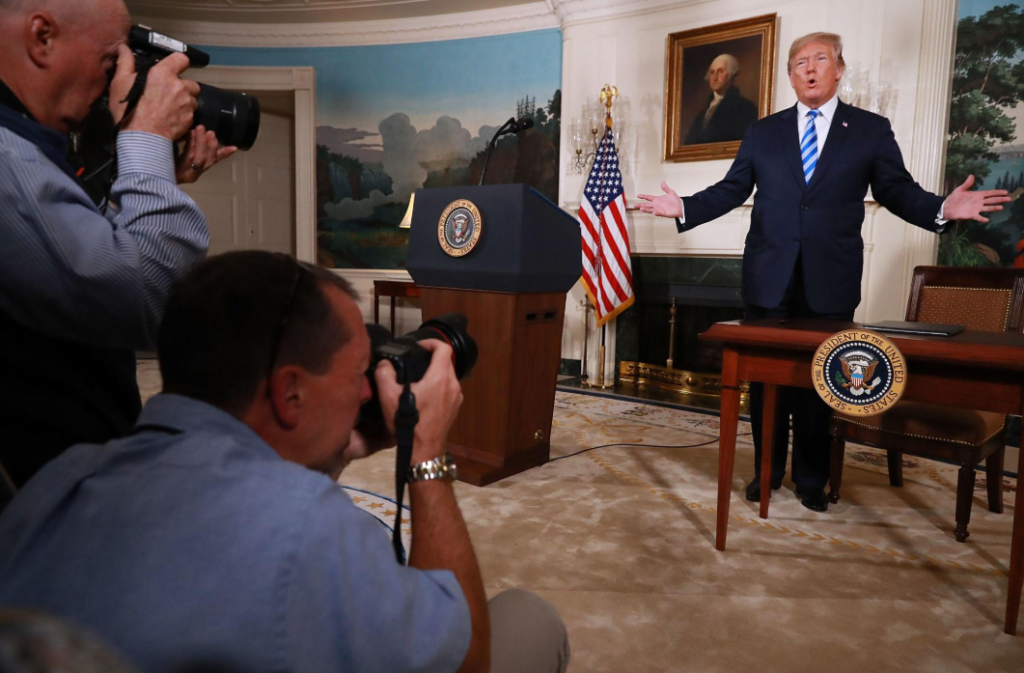
Speaking briefly to reporters, Trump expressed optimism about the ongoing talks, stating that senior negotiators Steve Witkoff and Jared Kushner are finalizing a comprehensive 14-point memorandum of understanding.
According to sources familiar with the discussions, the proposed agreement includes key provisions such as strict limitations on Iran’s uranium enrichment activities, enhanced international monitoring of nuclear sites, the reopening of safe passage through the Strait of Hormuz for international shipping, and a phased lifting of U.S. sanctions in exchange for verifiable compliance.
Positive Market Reaction
Financial markets responded positively to the news. Oil prices dropped more than 2% on expectations that a deal could stabilize energy supplies through the critical Strait of Hormuz. The U.S. dollar strengthened slightly against major currencies as investors anticipated reduced geopolitical risk in the Middle East.
Background of the Negotiations
The current round of talks builds upon indirect discussions facilitated through third parties in recent months. The involvement of Jared Kushner, who previously played a key role in Middle East diplomacy during Trump’s first term, and Steve Witkoff, a longtime Trump ally, signals the administration’s commitment to achieving a concrete outcome.
President Trump emphasized that any final agreement would prioritize American interests and the security of U.S. allies in the region, particularly Israel and Gulf states.
“We are very close,” Trump said. “We want a deal that is strong, verifiable, and good for everyone involved, but especially for the United States and its allies.”
Potential Challenges
While optimism is growing, several sticking points remain, including the timeline for sanctions relief and the extent of Iran’s regional proxy activities. Senior administration officials have cautioned that no agreement is final until it is formally signed and verified.
The White House has not yet released the full text of the proposed 14-point memorandum, but sources indicate it addresses both nuclear and conventional security concerns in the Gulf.
International Reactions
Officials in Israel and Saudi Arabia are closely monitoring developments. European allies have welcomed the possibility of a diplomatic breakthrough, while some members of Congress from both parties have expressed skepticism about Iran’s willingness to comply long-term.
Edge World News will continue to monitor this rapidly evolving story and provide updates as more details emerge from the negotiations or any official statements from the White House or Iranian officials.