
Ukraine launched its largest drone strike on Moscow in over a year overnight on May 16 to 17, 2026, sending 1,054 drones, 8 guided aerial bombs and 2 newly developed Ukrainian missiles deep into Russian territory, killing at least 4 people and wounding a dozen others in what President Volodymyr Zelensky called “entirely justified” retaliation.
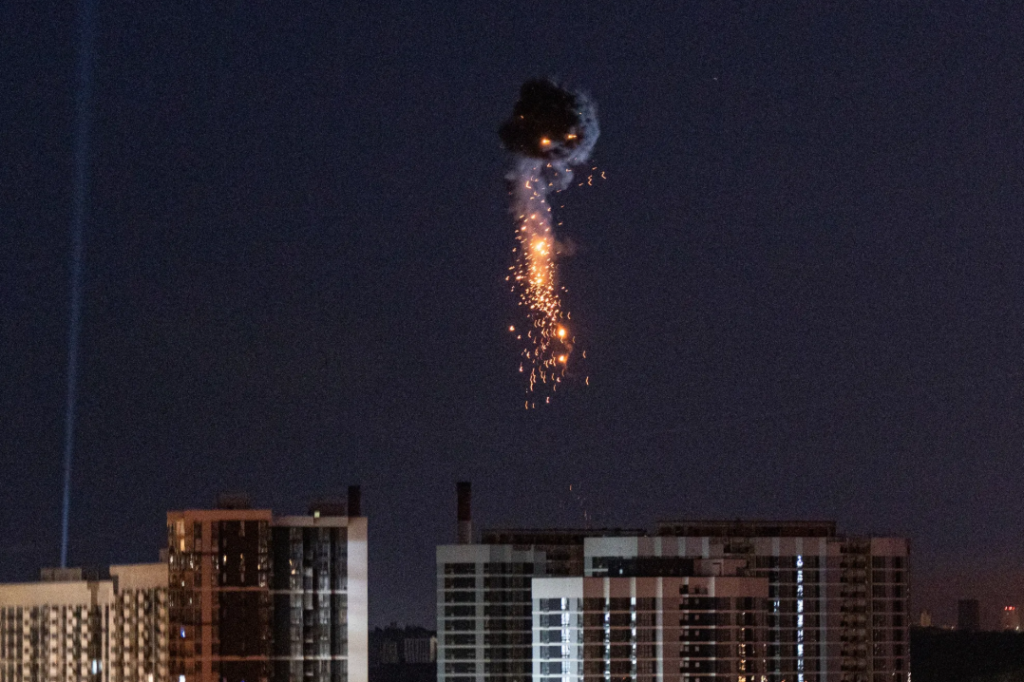
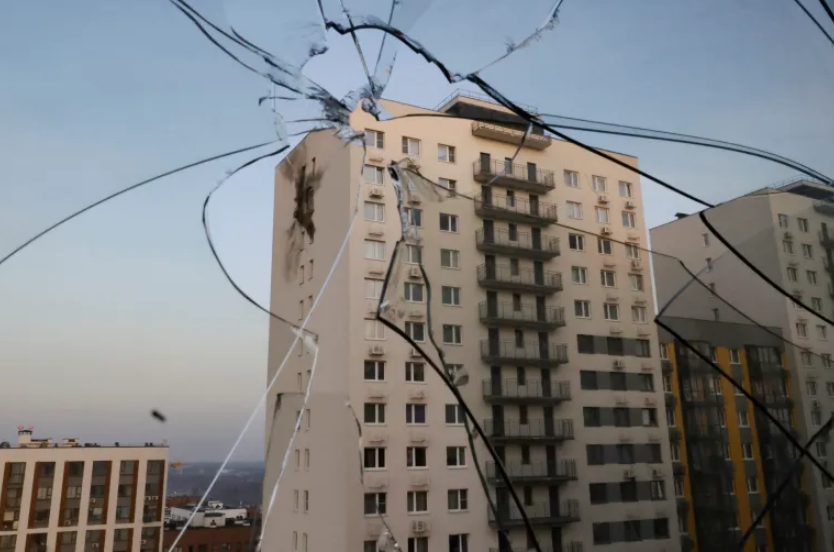
Three people died in the Moscow region alone. A woman was killed when a drone hit her home in Khimki, just northwest of the capital. Two men were killed in the village of Pogorelki, 10 kilometers north of Moscow. A fourth person died in the Belgorod region bordering Ukraine, struck by a drone hitting a truck. An Indian worker was also reported dead in the Moscow region, with three other Indian nationals hospitalized.
In Moscow itself, 12 people were wounded near the entrance to the city’s oil refinery, though Mayor Sergei Sobyanin confirmed the refinery’s infrastructure was not damaged. Drone debris fell on the grounds of Sheremetyevo Airport, Russia’s busiest air hub, without causing damage or affecting flights. Residential high-rises were damaged across multiple suburbs including Krasnogorsk and Istra. Russia’s Defense Ministry said it shot down 556 drones overnight, with more than 1,000 total drones downed or jammed within 24 hours.
The strike targeted military industrial sites, fuel infrastructure, air defense systems and the Belbek military airfield in occupied Crimea. Ukraine’s Security Service (SBU) confirmed the operation was conducted jointly with Ukraine’s Armed Forces. Zelensky hailed the attack as a shift in momentum: “Ukrainian long-distance sanctions have reached the Moscow region. Their state must end its war.”
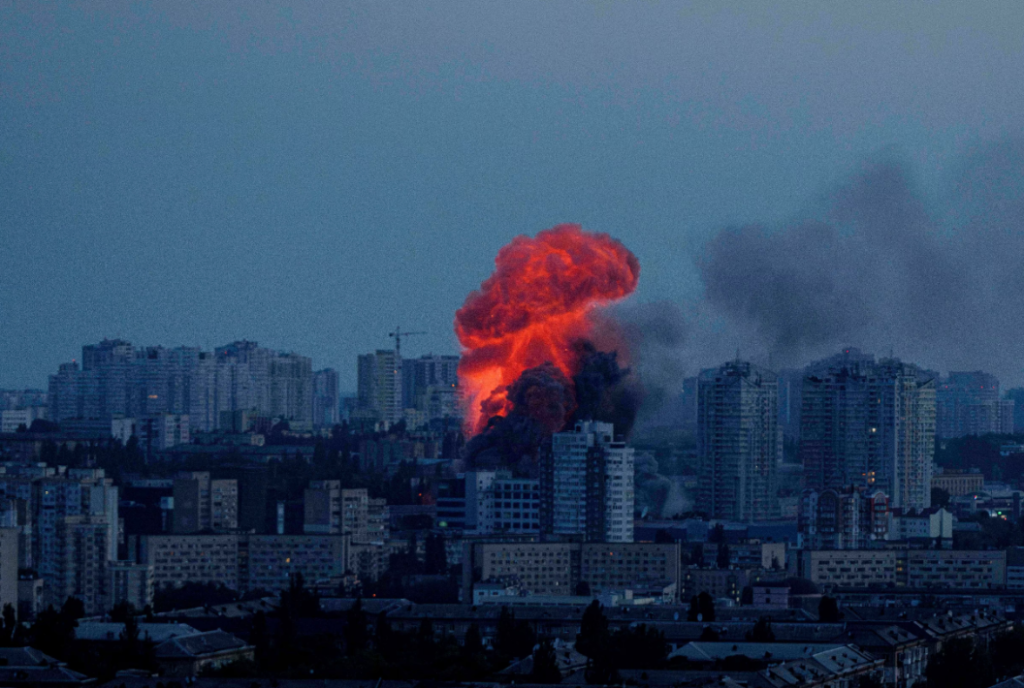
The attack was a direct response to Russia’s deadliest assault on Kyiv since the war began, which killed at least 25 people and injured dozens in the days following the expired three-day ceasefire. Military analyst Nigel Gould-Davies of the International Institute for Strategic Studies said the strike “brings home the fact that Ukraine has the capacity to strike at very significant scale at or around the Russian capital” in a way that would be “most unwelcome” for Moscow.
In a striking psychological move, Ukraine’s drone commander posted a message on Telegram addressed directly to residents of Patriarshiye Prudy, one of Moscow’s most elite residential districts, signaling Ukraine’s ability and willingness to reach Russia’s wealthiest neighborhoods.
Russia has introduced new laws banning the publication of photos, videos or details of drone strike damage without official authorization, with fines up to 200,000 rubles for companies. For the first time since 2022, polls show Russians now worry more about strikes at home than events at the front line.