
Quick Summary
The Department of Government Efficiency, Elon Musk’s signature cost-cutting initiative, officially terminated on July 4, 2026, exactly as mandated by the executive order that created it 18 months earlier. The executive order Trump signed on his first day back in office stated the U.S. DOGE Service Temporary Organization would terminate on July 4, 2026. Instead of the $2 trillion in savings Musk once promised, the agency’s own unverified tally landed at a fraction of that, while independent reviews found even less, and the fallout includes a multibillion-dollar payroll hole and a gutted foreign aid agency.
What Happened
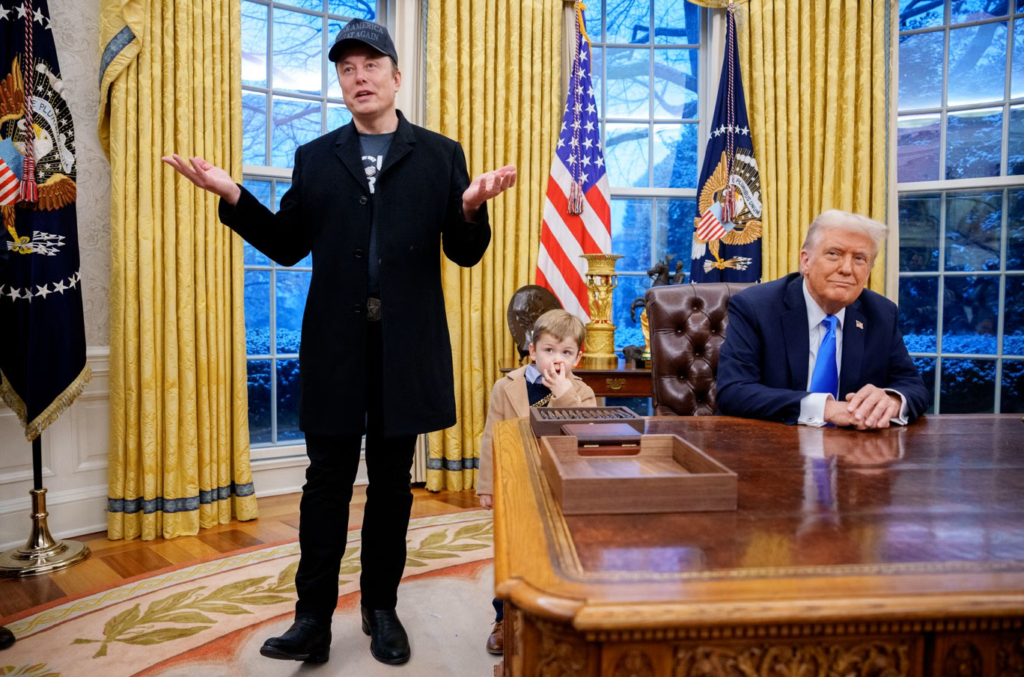
The Department of Government Efficiency officially blinked out of existence on Saturday, July 4, 2026, in accordance with the executive order that mandated its termination. The closure landed quietly, coinciding with the country’s 250th birthday celebrations. Musk himself had said on X that the final step of DOGE was to delete itself, though neither he nor his designated co-leader, Vivek Ramaswamy, was still involved by the time the sunset clause actually took effect. Ramaswamy left almost immediately after being named co-leader and is now running for governor of Ohio, while Musk exited the role in May 2025.
Notably, Musk marked Independence Day by posting a patriotic AI-generated video montage without any mention of DOGE’s termination, and a cryptic exchange with a Bitcoin executive fueled speculation his focus has shifted entirely toward cryptocurrency.
Background
Trump created DOGE via an executive order signed in January 2025 that renamed the Obama-era U.S. Digital Service as the U.S. DOGE Service. The president framed the project’s built-in expiration date as a gift to the nation, saying a smaller, more efficient government would be America’s present on its 250th birthday.
Musk was never formally in charge in a legal sense, a White House official stated in a court filing that Musk had no actual or formal authority to make government decisions and was working only as a senior advisor to the president. He was designated a special government employee, a category limited by law to no more than 130 days of federal work in a 365-day period, and his term ran out at the end of May 2025.
Why It Matters
The gap between promise and outcome is stark. Musk initially set a target of eliminating up to $2 trillion in wasteful government spending. What DOGE actually reported achieving fell far short: the agency’s own public tally claimed $215 billion in savings, or $1,335.40 per taxpayer, far below the $2 trillion originally promised and barely registering against a federal budget near $7 trillion a year.
Independent verification made the picture look even worse. An NPR review of DOGE’s published “wall of receipts” checked its claims against federal contract data and estimated verifiable savings closer to just $2 billion. One of the agency’s largest claimed cuts turned out to be a data error: a supposed $8 billion cancellation was actually an $8 million contract mislabeled by a clerical mistake.
The human and institutional costs were significant. The closure leaves an estimated $11 billion hole in the federal budget, paid out to workers who accepted Musk’s “Fork in the Road” buyout offer to stop working for nine months while still collecting full salary and benefits. Foreign aid took a direct hit as well: the gutting of USAID left key foreign assistance programs shuttered, a disruption critics link to deaths across the globe.
Expert & Official Reaction
Academic assessment: A Harvard Kennedy School public policy professor said DOGE simply failed to deliver on its own stated promises, a view echoed by multiple other experts who studied the initiative’s record.
Administration response: Office of Management and Budget Director Russ Vought told a congressional hearing there would be no closing report for DOGE, even as the following year’s proposed budget still requested roughly $35 million for the U.S. DOGE Service, prompting a Republican congressman to note the operation had effectively already been eliminated in practice.
Musk’s own admission: Speaking on a podcast in December, Musk described DOGE as “a little bit successful” but said he would not do it again, saying he instead would have focused on his own companies.
Workforce reversal: In a sign of how deep the disruption ran, multiple federal agencies that slashed staff under DOGE are now actively hiring again, including the IRS, which received special fast-track authority to hire up to 8,000 new workers after losing a quarter of its workforce.
Statistics & Context
- Official DOGE-claimed savings: $215 billion (~$1,335 per taxpayer)
- Independent (NPR) verified estimate: roughly $2 billion
- Original savings target set by Musk: up to $2 trillion
- Estimated budget hole from buyout payroll costs: $11 billion
- Requested 2027 budget line for DOGE despite “closure”: ~$35 million
- IRS workforce cut under DOGE, now being rehired: about 25%, with up to 8,000 fast-tracked new hires
- Duration of the initiative: 18 months (Jan. 20, 2025 – July 4, 2026)
What’s Next
With DOGE’s charter now expired, the central question is institutional: whether any of its cost-cutting mandate survives inside individual agencies, or whether, as several agencies’ hiring sprees suggest, much of the disruption will simply be reversed. The White House has not clarified whether any successor structure will take up DOGE’s mission, and lawmakers are expected to keep pressing for a formal accounting of its results.
FAQ
When did DOGE officially close?
July 4, 2026, exactly as specified in the executive order that created it in January 2025.
Did DOGE achieve its $2 trillion savings goal?
No. It claimed $215 billion in savings, and an independent NPR review estimated verifiable savings closer to $2 billion.
Who ran DOGE?
Elon Musk and Vivek Ramaswamy were named co-leaders, though both departed long before the agency’s official end date, Ramaswamy almost immediately to run for Ohio governor, and Musk in May 2025 when his legal term limit expired.
What happened to the federal workers affected by DOGE cuts?
Many took a buyout offer to stop working while retaining pay and benefits for nine months, at an estimated cost of $11 billion. Some agencies, including the IRS, are now rehiring at scale.
Is DOGE really gone, or could it continue in some form?
The organization’s legal charter has expired, but the administration has requested continued funding for it in next year’s budget and has not clarified its future status.
Editorial Note: This article was prepared using publicly available information from international news organizations and official sources available at the time of publication. Facts may be updated as authorities release new information.
Sources:
Yahoo! – DOGE officially ended on July 4 as agencies push to hire jobs lost under Elon Musk’s cuts
BigGo Finance – Musk and Saylor Spark Bitcoin Speculation as DOGE Shuts Down on July 4