
Quick Summary
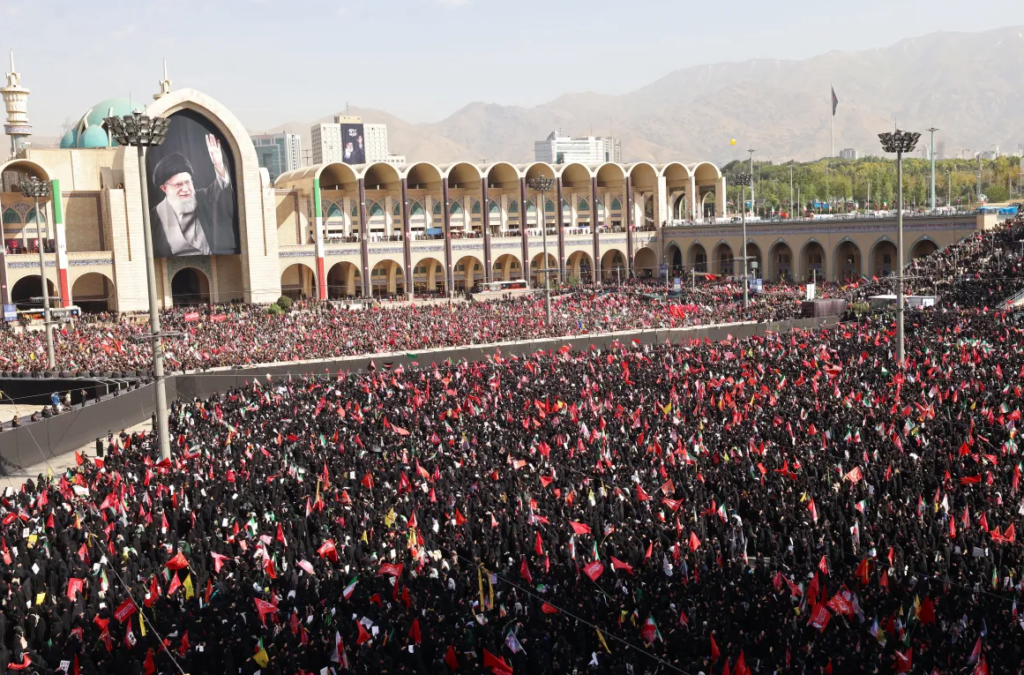
Iran entered the second day of a multi-day state funeral for former Supreme Leader Ayatollah Ali Khamenei, who was killed alongside several family members in a joint US-Israeli air strike on his compound on February 28, the opening day of the US-Israel war on Iran. Officials say more than 10 million mourners could turn out nationwide, with hundreds of thousands already jamming Tehran’s main boulevards and the vast Imam Khomeini Mosalla Grand Mosque. The ceremony is being compared directly to the 1989 funeral of Islamic Republic founder Ayatollah Ruhollah Khomeini, which drew around 10 million mourners and remains the historical benchmark for scale.
What Happened
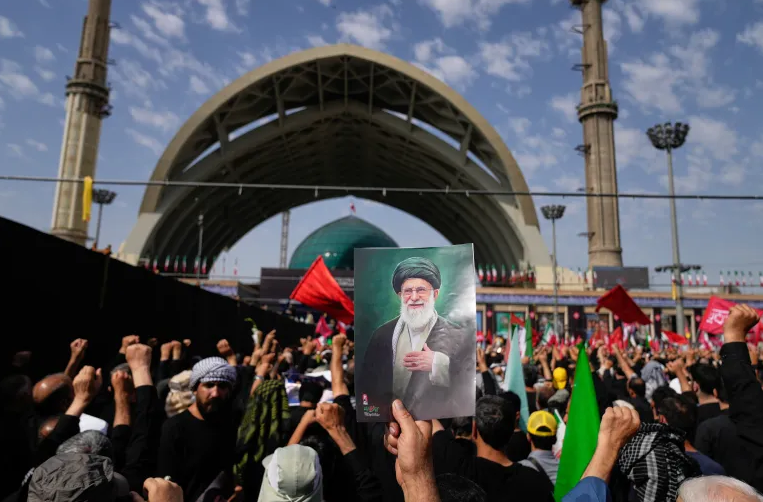
Crowds packed major avenues in Tehran over the weekend as mourners, many dressed in black and carrying flags and portraits of the 86-year-old leader, gathered to view his coffin. The bodies of several family members killed in the same strike, including a three-year-old granddaughter, are being honored alongside him. Authorities opened more than 5,000 schools nationwide as temporary shelters for pilgrims traveling from distant provinces.
Banners invoking martyrdom and resistance hang from overpasses across the capital, tying Khamenei’s death to Shia narratives of sacrifice observed during the early days of Muharram, while loudspeakers broadcast Quranic recitations and elegies over the crowds.
Background
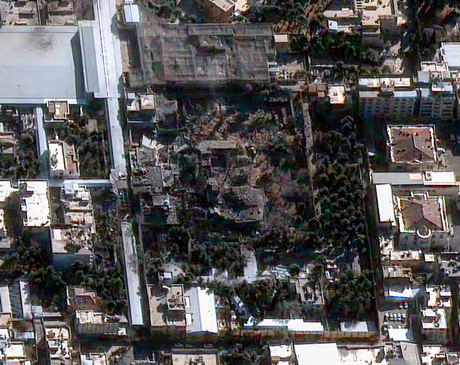
Khamenei and several relatives, including his daughter, son-in-law, and daughter-in-law, were killed in the strikes on his compound. Because the position of Supreme Leader is appointed rather than inherited, and Iran abolished the role of Deputy Supreme Leader in 1989, Khamenei had no officially designated successor at the time of his death. His son, Mojtaba Khamenei, was appointed the new Supreme Leader by the Assembly of Experts on March 8, and was reportedly wounded in the same attack that killed his father, sustaining burns and leg injuries requiring multiple operations. He has not appeared in public or issued any audio statement since, and is not expected to attend his father’s funeral, reportedly due to specific threats against his life.
The funeral itself was delayed for months as the war with the US and Israel continued, before finally beginning this week. The proceedings span seven days: public viewing in Tehran over the weekend, a funeral procession south to Qom, an official reception in Najaf, Iraq, and processions through Najaf and Karbala, before the body returns to Iran for final burial at the Imam Reza shrine in Mashhad, Khamenei’s own birthplace.
Why It Matters
The scale of the funeral is being read as a deliberate political statement. A Middle East studies expert at George Washington University said the ceremony gives the regime’s remaining leadership a chance to project the Islamic Republic’s strength and resilience under outside pressure, and to demonstrate the loyalty of the population by any means available. Representatives from more than 100 countries are expected to attend, according to Iranian state broadcaster IRIB.
The event is also colliding with active diplomacy. Indirect talks between the US and Iran, described by Qatari mediators as making positive progress, were paused as Iranian officials left Doha, with further discussions expected only after the funeral concludes.
Expert Analysis
Political messaging: Sina Azodi of George Washington University’s Middle East studies program said organizers want the funeral to signal that the Islamic Republic can resist outside pressure and remains resilient, using it to showcase popular loyalty to the state.
Security posture: Iran’s Civil Aviation Organization ordered Tehran’s airspace fully closed during Monday’s funeral procession, while a senior IRGC commander who has not appeared publicly in months made a rare appearance at a farewell ceremony, underscoring the security concerns still shadowing the leadership.
Succession uncertainty: Reporting indicates the true extent of Mojtaba Khamenei’s injuries, and how they may affect his ability to govern, remains unclear even to people close to the situation, despite official claims that he is directing Tehran’s negotiations with Washington from a recovery period out of public view.
Statistics & Context
- Estimated total mourners expected nationwide: more than 10 million
- Comparable historical event: Khomeini’s 1989 funeral, which drew approximately 10 million mourners
- Schools/shelters opened for pilgrims: more than 5,000
- Foreign delegations expected: representatives from more than 100 countries
- Date of the strike that killed Khamenei: February 28, 2026
- Age of Khamenei at time of death: 86
- Funeral duration: seven days, ending with burial in Mashhad
What’s Next
Mojtaba Khamenei’s potential appearance at the funeral remains a central open question, his first public emergence, were it to happen, would be a major moment for establishing his legitimacy as the new Supreme Leader. Diplomatically, US-Iran talks in Doha are set to resume only once the funeral concludes, with unresolved questions including Iranian frozen assets and reported US efforts to dissuade Iran from imposing tolls on shipping through the Strait of Hormuz.
FAQ
How did Ayatollah Khamenei die?
He was killed in a joint US-Israeli air strike on his compound on February 28, 2026, the first day of the US-Israel war on Iran.
How many people are attending the funeral?
Iranian officials say more than 10 million mourners could attend ceremonies across the country over the seven-day funeral period.
How does this compare to Khomeini’s funeral in 1989?
Officials and analysts say this funeral is expected to rival or surpass the scale of Khomeini’s 1989 funeral, which drew roughly 10 million mourners and remains Iran’s historical benchmark for a state funeral of this kind.
Who is Iran’s new Supreme Leader?
Mojtaba Khamenei, son of the late Ayatollah, was appointed by the Assembly of Experts on March 8, 2026, though he has not appeared publicly since being wounded in the same strike that killed his father.
Is the war between Iran, the US, and Israel still ongoing?
Diplomatic talks were underway in Doha before being paused for the funeral, with further negotiations expected once the ceremonies conclude.
Editorial Note: This article was prepared using publicly available information from international news organizations and official sources available at the time of publication. Facts may be updated as authorities release new information.
Sources:
CNN – Public mourning of Khamenei
Al Jazeera – Millions mourn Khamenei as calls for revenge reverberate