
Quick Summary
A Rochester, New York man says Homeland Security Investigations agents showed up at his home while he was vacationing in Finland with his 7-year-old daughter, then tracked him to an airport hotel hours after he landed back in the US, all over a single angry email he sent to then-Acting ICE Director Todd Lyons five months earlier. David Streever, 45, says he never threatened anyone, and civil liberties groups are calling the pursuit a troubling example of the government using federal resources to intimidate a critic over protected political speech.

What Happened
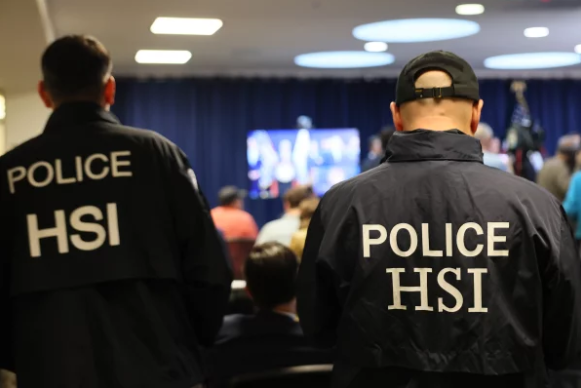
Streever’s doorbell camera captured two law enforcement officers in blue jackets waiting on his Rochester porch while he was out of the country. His wife, the Rev. Hilary Streever, an Episcopal priest, told the agents her husband was traveling and would be home Friday. The agents left behind a form labeled “WARNING NOTICE,” stating Streever “may be in violation of federal law” and citing statutes making it a crime to threaten federal officials. The notice said ICE’s Office of Professional Responsibility had identified his email as potentially violating federal code and was requesting he “promptly remove and/or discontinue” the behavior, language Streever found confusing given the email had been sent five months earlier and, he said, would be impossible to “un-send.”
The pursuit didn’t stop there. Hours after Streever landed at John F. Kennedy International Airport on his way home from Finland, a third HSI agent tracked him to the airport hotel where he was staying that night and left a business card at the front desk requesting contact. Streever said he had not told anyone, including his wife, which hotel he was staying at, and the Department of Homeland Security has not explained how the agent located him.
Background
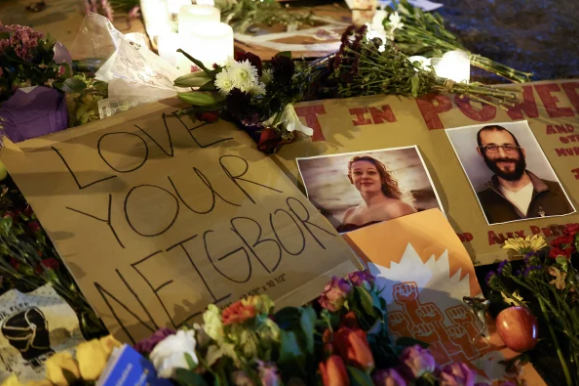
The email at the center of the case was sent January 26, 2026, with the subject line “What’s next,” after federal immigration officers fatally shot two people, Renée Macklin Good and Alex Pretti, during operations in Minneapolis. In the email, reviewed by NPR, Streever called Lyons “a monstrous human being” and predicted the ICE leader would “go down in history as America’s Reinhard Heydrich, the butcher,” a reference to the Nazi official considered one of the chief architects of the Holocaust.
“The way you are protecting the obvious execution in Minnesota, even as we see the videos, will lead to your downfall,” Streever wrote. “Even Trump will turn on you before the end, and you will be a sad, despised man who eats himself alive with shame at your own pathetic weakness.” The email continued: “You will never know peace. You will seek to lose yourself, to escape the burden of knowing the truth about yourself. But wherever you go, you will find yourself. You will torment yourself until your last day on Earth.” It was, Streever said, the only email he ever sent to Lyons.
Streever, a former journalist who now works in the tech industry, is not the only person to receive this kind of visit. The Streevers later learned the same two agents who came to their home had visited a Syracuse poll worker, Paigelynne Gonyea, that same day over a social media post in which she wrote she believed it was “a great day” for the ICE officer who shot Good to be indicted. DHS spokesperson Lauren Bis said separately that Gonyea “committed a federal crime by posting the address of an ICE law enforcement officer online” and warned, “if you doxx our officers, we will investigate you, and you will be brought to justice.”
Why It Matters
Legal experts who reviewed Streever’s email say it falls well short of what courts have defined as a true threat. Ari Cohn, an attorney who reviewed the case, has argued that a genuine threat requires “a serious expression of an intent to commit violence,” and that Streever’s email, however harsh in tone, “doesn’t even come close,” characterizing it instead as political speech and “an act of petitioning your government.” That distinction matters legally: threats against federal officials are a crime, but sharply worded political criticism, even criticism using violent or dramatic language metaphorically, is generally protected under the First Amendment.
Expert Analysis
Civil liberties impact: Nathan Freed Wessler, deputy director of the ACLU’s Speech, Privacy and Technology Project, said the tactics used to locate Streever, potentially involving surveillance cameras, cellphone location data, or credit card records, “sure looks like a serious issue” under both the Fourth Amendment’s protection against unreasonable searches and the First Amendment’s protection of speech.
Institutional impact: Jeramie Scott, senior counsel at the Electronic Privacy Information Center, questioned the proportionality of the response, saying the effort to track down a private citizen over a months-old email appeared “more geared towards intimidation than actually any type of reasonable use of law enforcement resources.”
Political impact: The case fits into a broader pattern DHS and ICE have pursued over the past year, using administrative subpoenas to email and social media platforms to identify people posting critically about the agency, part of what the department has characterized as a crackdown on threats and doxxing targeting its personnel.
Chilling effect impact: Streever himself described the episode’s core message succinctly: “One powerless citizen yelled into the void with a stern email to the former director of this agency six months ago. And now there’s agents at his door,” a framing civil liberties advocates argue illustrates exactly the kind of intimidation effect that concerns them, regardless of whether any charges are ultimately filed.
Statistics & Context
The email that triggered the investigation was sent January 26, 2026. Agents visited Streever’s home approximately five months later, in late June. Streever was one of at least two individuals, alongside Syracuse poll worker Paigelynne Gonyea, who received identical warning notices from the same two agents on the same day.
What’s Next
Streever has said he does not plan to contact the agents back, according to his attorney, and has instead chosen to go public with his account. No criminal charges have been filed against him as of the most recent reporting. DHS has declined to comment further, citing an ongoing investigation, meaning it remains unclear whether the case will result in any formal legal action or fade without further consequence, a pattern civil liberties groups say may itself be part of the intended effect regardless of outcome.
FAQ
What did David Streever’s email actually say?
He told then-Acting ICE Director Todd Lyons that Lyons’s handling of a fatal shooting in Minneapolis would “lead to your downfall” and compared him to a Nazi official, but did not explicitly threaten violence.
Has Streever been charged with a crime?
No. As of the most recent reporting, no criminal charges have been filed against him.
How did agents find him at his hotel?
Streever said he had not disclosed his hotel location to anyone, including his wife, and DHS has not publicly explained how the agent located him there.
Is this the only case like this?
No. The same agents visited a Syracuse poll worker the same day over a social media post, and DHS has pursued similar administrative subpoenas against other online critics of ICE over the past year.
Do legal experts think Streever’s email was an actual threat?
Attorney Ari Cohn, who reviewed the email, said it did not meet the legal standard for a true threat and instead characterized it as protected political speech.
Editorial Note: This article was prepared using publicly available information from international news organizations and official sources available at the time of publication. Facts may be updated as authorities release new information.
Sources: