
When the United States and Israel launched strikes against Iran on February 28, Lebanon was not the stated target. Three months later, it has become the war’s most devastated front, and the one with the least international attention.
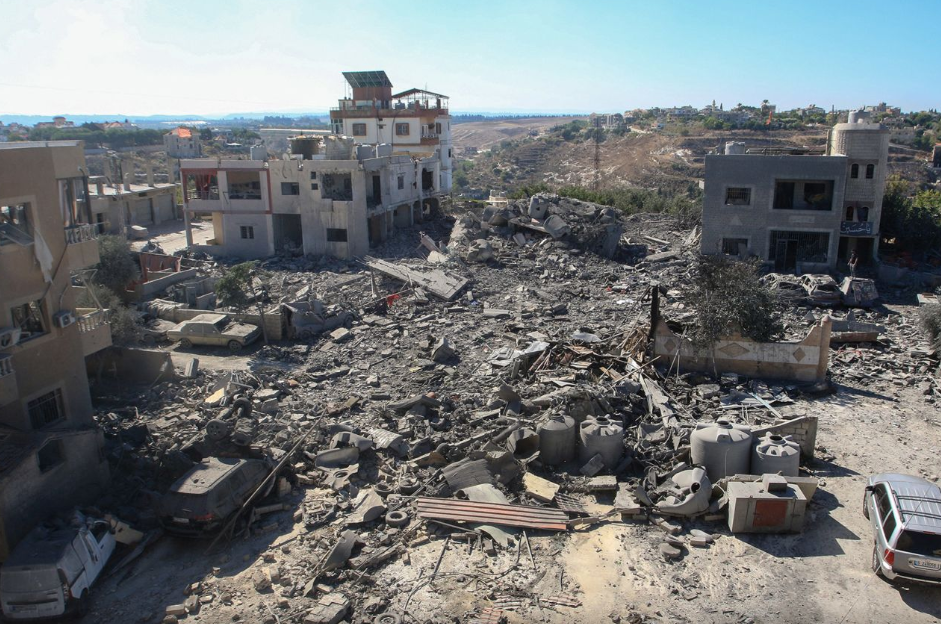
Since March 2, Israel has killed more than 3,400 people in Lebanon while seizing large swaths of the country and displacing about one-fifth of the population. Lebanon is “a weak state, it doesn’t have a lot of leverage, and a lot of people are concerned,” says Associated Press reporter Kareem Chehayeb in Beirut. “They sort of feel beholden to the regional and global powers on their fate.”
The numbers alone tell a story that the daily cycle of ceasefire updates tends to obscure. One-fifth of Lebanon’s population displaced. More than 3,400 killed in approximately 90 days of fighting. A country whose government has almost no military capacity to resist an Israeli ground advance that has now pushed 20 miles past the Litani River.
Israel has designated the area from the Litani to the Zahrani River as a combat zone. Some residents have already left the region because of the heavy strikes of recent days, but many people remain in numerous towns in the area. Israeli troops have been advancing for days through villages near Beaufort Castle. They are now about five kilometers from Nabatiyeh, a major center in southern Lebanon, and have urged all residents to evacuate, as well as residents of the coastal city of Tyre, Lebanon’s fourth-largest city. euronews
People rushed to flee Beirut’s capital on Monday after Netanyahu ordered attacks on Hezbollah-controlled southern suburbs, with thousands of displaced Lebanese who had been sheltering in the capital suddenly needing to flee again. Rescuers worked at the site of an Israeli airstrike that hit a building and damaged a hospital in the southern port city of Tyre. CNN
The Lebanese government finds itself in an impossible position. It does not control Hezbollah. It cannot negotiate on Hezbollah’s behalf. It cannot stop Israeli strikes on its own territory. And yet it is Lebanese civilians, not Hezbollah fighters, who are filling the casualty lists and the displacement statistics.
Lebanese authorities received confirmation of Hezbollah’s agreement to a US proposal calling for a ceasefire with Israel. Under the proposal, Israeli strikes on Beirut’s southern suburbs are to cease in exchange for Hezbollah halting its attacks. Whether that agreement holds beyond the next 24 hours is, at this point, genuinely unknown.
Why it matters: Lebanon did not start this war and has no meaningful ability to end it. What is happening there is not a side story to the US-Iran conflict, it is the direct human consequence of a regional war being fought over Lebanese territory by outside powers. The displacement of one-fifth of a country’s population in three months is not a footnote. It is a humanitarian crisis that will require years of reconstruction and billions in aid, regardless of how and when the fighting finally stops.
Does the world have a responsibility to protect Lebanon, or has it already decided that Lebanese lives are an acceptable cost of this conflict?