
If it feels like the world is at war more than usual, that is because it is. A landmark new report published Monday by Uppsala University’s Conflict Data Program in Sweden has put a number to what many people have been sensing for years: 2025 recorded the highest number of conflicts between states since World War II, and more people were killed in organized violence than in any year since the Rwandan genocide of 1994.
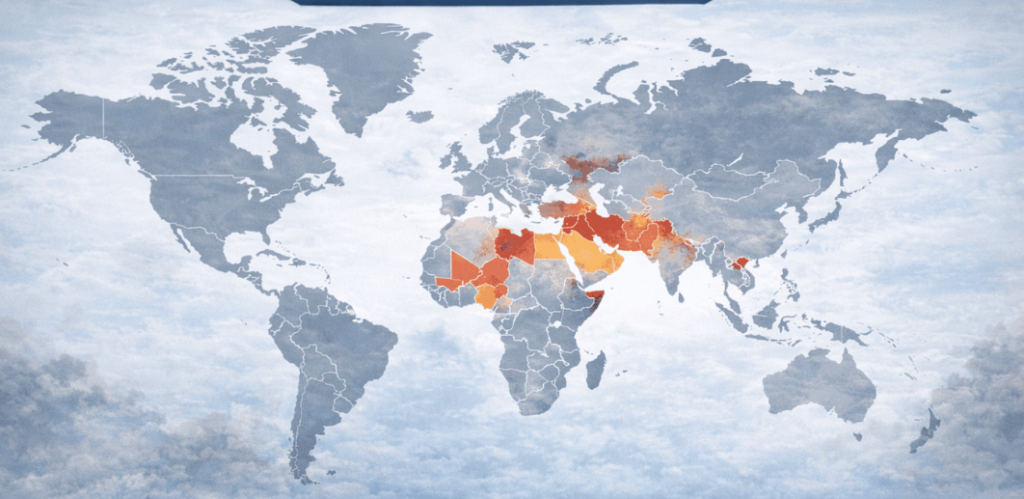
According to NPR, which first reported on the Uppsala findings, there were 65 active armed conflicts worldwide in 2025. Of those, eight were direct conflicts between individual states, double the number recorded in 2024, and the highest tally since Uppsala began collecting data in 1946. The conflicts included the war between Russia and Ukraine, the Iran-Israel conflict, fighting between India and Pakistan, a border dispute between Thailand and Cambodia, and Israel’s operations in Syria and Yemen.
The human cost behind those numbers is staggering. The Russia-Ukraine war remained by far the deadliest, accounting for 62 percent of all battle-related deaths globally. Uppsala researchers estimated 77,700 Russian military deaths and approximately 14,000 Ukrainian military deaths in 2025 alone. “Russian battlefield losses have increased and Ukraine losses have remained relatively stable,” the researchers noted. The Israel-Hamas conflict was the second deadliest, with 14,400 documented fatalities in 2025, though that represented a decline from the previous year as ceasefire agreements took hold in Gaza.
The Uppsala Conflict Data Program is widely regarded as one of the most rigorous and authoritative sources on organized violence in the world. Its data is used by governments, the United Nations, and international courts. Unlike casualty estimates produced by warring parties themselves, Uppsala researchers cross-reference military and open-source data including social media to arrive at their figures.
Perhaps most sobering is the report’s assessment of the trajectory. The Uppsala researchers warned, as reported by multiple NPR member stations, that 2026 is showing no signs of reversing the trend. With the Iran war ongoing, the Russia-Ukraine conflict entering its fourth year, and tensions in the Pacific remaining elevated, the data collected so far this year suggests the number of active conflicts is likely to remain at or above 2025 levels.
For American readers, the relevance is direct. The United States is currently engaged in an active military conflict with Iran, its forces are still present in multiple theaters globally, and its military hardware and financial support are central to several of the conflicts the Uppsala report documents. The scale of global violence is not happening in a vacuum separate from American policy. It is, in significant part, shaped by it.
Why it matters: Numbers like 65 active conflicts can feel abstract. What they represent is 65 situations in which people are dying because states have decided that military force is a preferable option to negotiation. The Uppsala report does not assign blame. It counts. And what it has counted in 2025 is a world more at war than at any point in the past 80 years.
With 65 active conflicts and the worst death tolls since the 1990s, is the international system that was built after World War II to prevent this still functioning?