
Bolivia protests against President Rodrigo Paz turned violent on May 16 and 17, 2026, as the government deployed 3,500 soldiers and police in a pre-dawn crackdown to clear roadblocks strangling supply routes into the capital La Paz, in the most dramatic escalation of weeks of nationwide unrest.
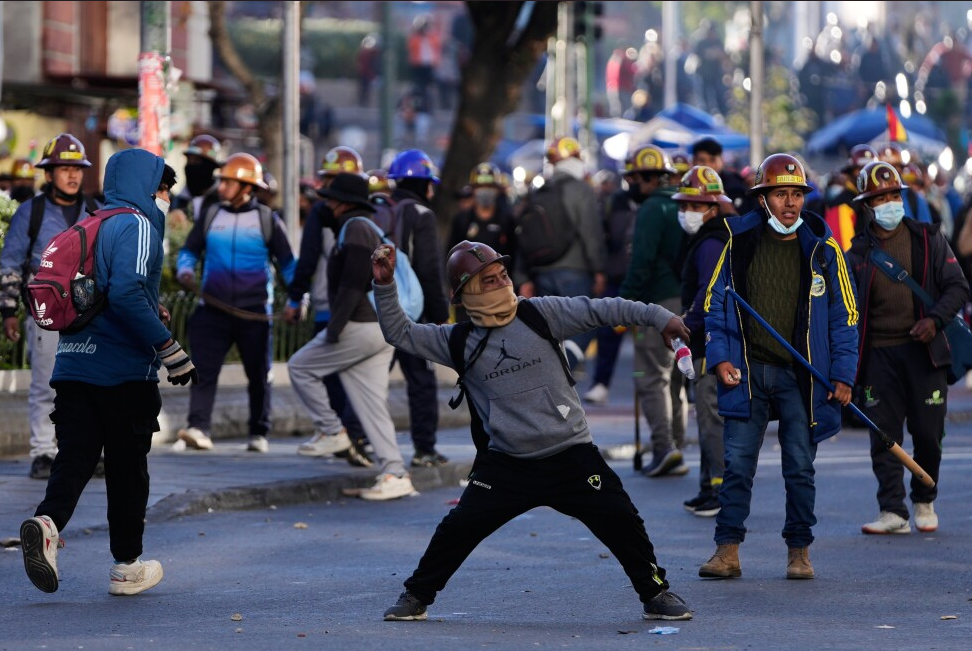
Miners, schoolteachers, transport workers, indigenous groups and unions have been blocking roads across Bolivia for two weeks, cutting off deliveries of food, medicine and essential goods to La Paz and surrounding cities. At least 57 people were arrested on Saturday alone. Tear gas, rocks, burning tyres and explosions became the backdrop of clashes in La Paz, El Alto, Cochabamba, Oruro and the constitutional capital Sucre. Remote controlled riot control robots were deployed near government buildings in Plaza Murillo, an extraordinary sight in a country already on the edge.
The core demands are a 20 percent minimum wage increase, currently set at 3,300 bolivianos ($477 per month), and the reversal of fuel subsidy cuts that have sent pump prices soaring. A litre of diesel that once cost the equivalent of $2.06 per gallon now costs $5.40. Premium petrol jumped from $2.05 to $3.84 per gallon overnight. Transport workers say the low quality fuel they are now forced to use has destroyed their engines.
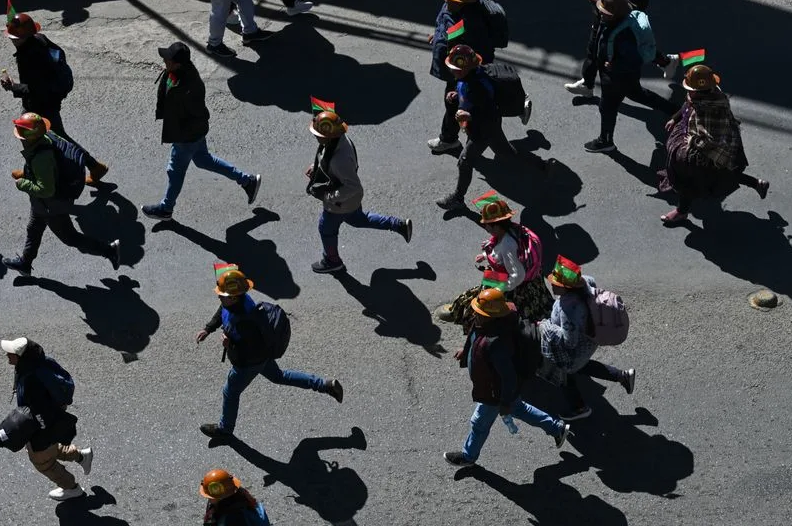
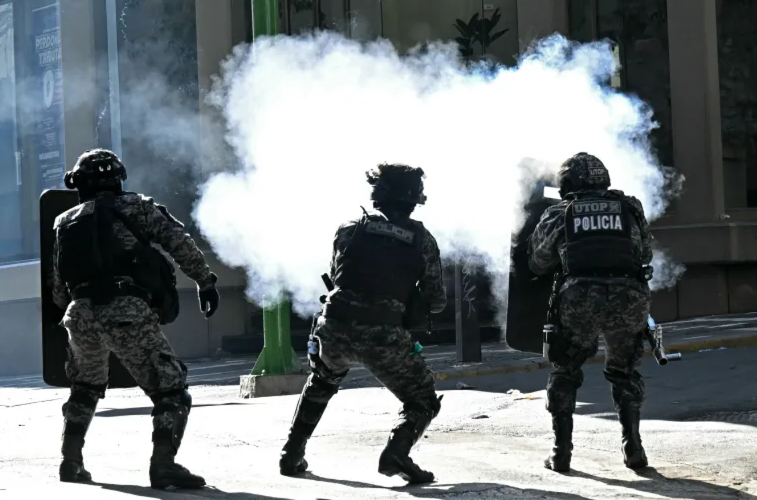
President Paz, who came to power last year ending two decades of socialist rule, has dismissed the wage demands flatly: “If you want to raise salaries, first create jobs.” But his position is weakening by the day. The powerful Central Obrera Boliviana (COB) union federation has declared an indefinite national strike, announcing a “pact of no betrayal” with indigenous and peasant organizations. In 20 of Bolivia’s provinces, the unified demand has narrowed to a single word: resignation.
Bolivia’s crisis has been dramatically worsened by the Iran war. The blockade of the Strait of Hormuz has driven global oil prices above $100 per barrel, leaving Bolivia, which depends heavily on imported diesel, spending an estimated $56 million per week on fuel imports it can barely afford. The country’s foreign currency reserves have collapsed, total debt stands at 95 percent of GDP, and the economy is in its worst crisis in four decades.