
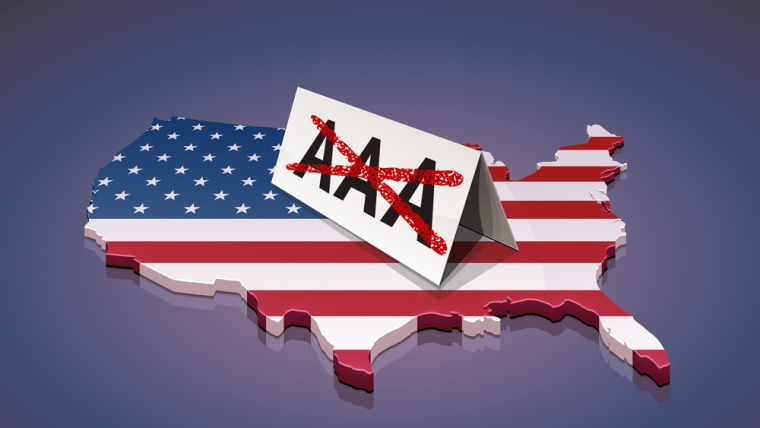
For the first time in history, the United States no longer holds a perfect credit rating from any of the three major global rating agencies. On Friday, May 16, Moody’s downgraded America’s sovereign credit rating from Aaa to Aa1, stripping the country of the last AAA it still held after S&P acted in 2011 and Fitch in 2023.
Moody’s downgraded the US government’s credit rating, citing the nation’s growing $36 trillion debt load and the rising cost of servicing that debt. The agency said it no longer believes the United States government has the fiscal discipline or political will to reverse the trajectory of its deficit spending. Wikipedia
The White House pushed back immediately. A Trump administration official called the decision “ridiculous” and accused Moody’s of political motivation. That response mirrors almost exactly the reaction from the Obama administration in 2011 when S&P made its cut, and from the Biden administration in 2023 when Fitch acted. None of those objections changed the ratings, and this one is unlikely to either.
The practical question most Americans are asking is simple: what does this actually mean for them? The answer is more nuanced than most headlines suggest. A downgrade does not mean the United States is about to default on its debt. It means a major rating agency has formally assessed that the risk of holding U.S. Treasury bonds is slightly higher than previously rated.
In the short term, that assessment can push Treasury yields higher as some investors, particularly those with mandates requiring AAA-rated assets, reduce their holdings of U.S. debt. Higher Treasury yields feed directly into mortgage rates, car loan rates, and the interest rate on the national credit card. For a country already running large deficits and paying hundreds of billions annually in interest on existing debt, even a modest rise in yields compounds quickly.
The timing is particularly sensitive. The war with Iran has kept energy prices elevated and contributed to inflation that was already proving stubborn. The Federal Reserve is navigating a difficult path between cutting rates to support the economy and holding them high enough to keep inflation from accelerating. A Moody’s downgrade that pushes bond yields higher makes that navigation harder.
Moody’s cited specifically the failure of successive Congresses and administrations to agree on measures to reverse the trend of large annual fiscal deficits and growing interest costs. The agency’s analysts noted that interest payments on the national debt are now consuming an increasingly large share of federal revenue, a dynamic that compounds itself over time regardless of which party controls Washington. Wikipedia
Does losing the last AAA rating matter, or has America’s credit been a fiction for years?