
Trump face on a $250 bill could soon become reality, after Treasury Secretary Scott Bessent held up a draft design at a White House press briefing on May 28, 2026, confirming that his department has already prepared the bill and is waiting for Congress to pass legislation making it legal.
The design, first reported by The Washington Post, features a portrait of Trump with a characteristically glowering expression, the same image that adorns his official presidential portrait. The denomination would be entirely new, no $250 bill has ever existed in US history. The bill is being framed as a commemorative note to mark the 250th anniversary of the Declaration of Independence on July 4, 2026, known as the Semiquincentennial.
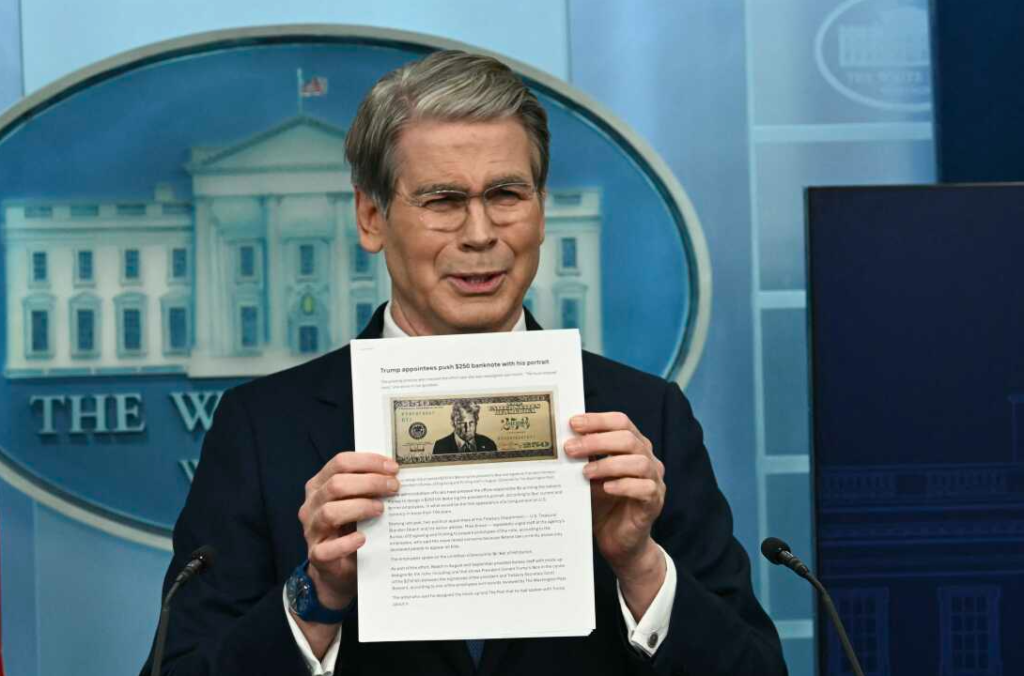
There is, however, a significant legal obstacle. US law currently prohibits any living person from appearing on American currency, a rule that has been in place since 1866. Bessent acknowledged the restriction directly: “No living person can be on US currency, and the currency must say In God We Trust. We will stick to the law.”
The legislation that would change everything is the Donald J. Trump $250 Bill Act, introduced by Republican Representative Joe Wilson of South Carolina, which would create a specific exemption allowing a sitting or former president to appear on a new denomination. The bill has been referred to the House Financial Services Committee and a GOP aide confirmed it has been greenlit for a hearing, though it has not yet passed.
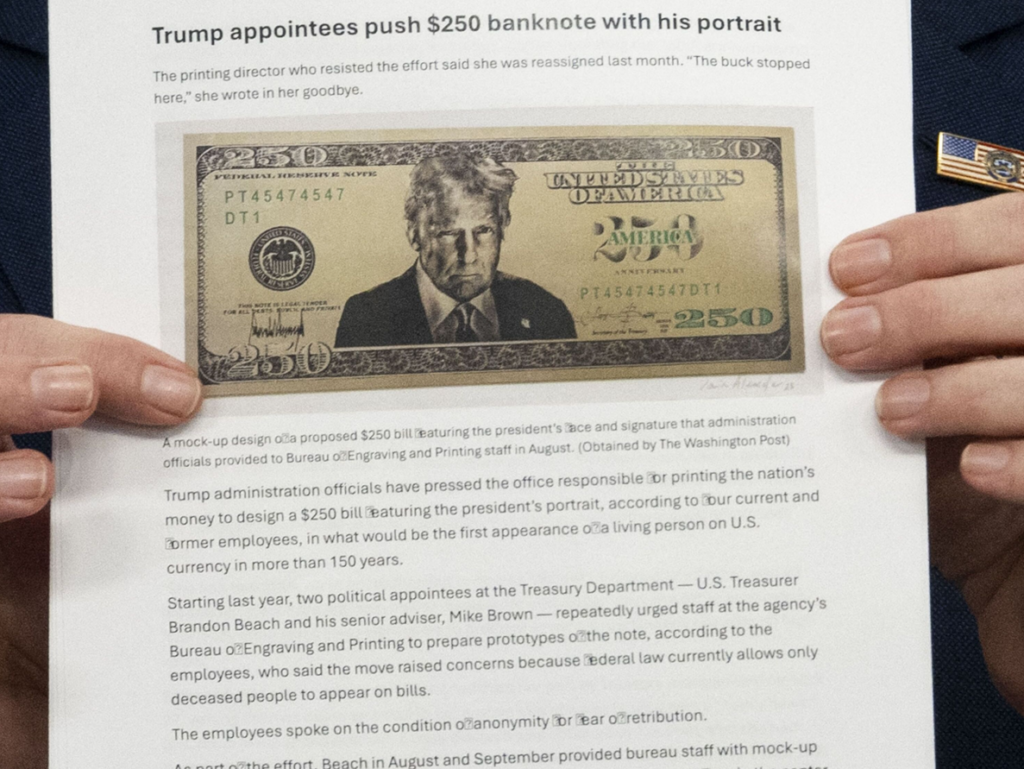
Behind the scenes, the process has not been smooth. The Washington Post reported that two Trump political appointees pressured the Bureau of Engraving and Printing to begin preparations before any legislation was passed. The bureau’s director, Patty Solimene, was abruptly reassigned after she told them the bureau was not legally authorized to move forward. Her replacement, Michael Brown, took over as acting director on May 18.
If the law is changed and the bill is printed, Trump would become the first living person to appear on US currency since 1866, when then-Treasury Secretary Salmon P. Chase briefly put his own face on a $1 bill before the practice was banned.