
The ceasefire with Iran has been fragile, contested, and riddled with contradictions since it began. On Friday morning, President Donald Trump walked into the White House Situation Room to make what he described as a “final determination” on whether to extend it.
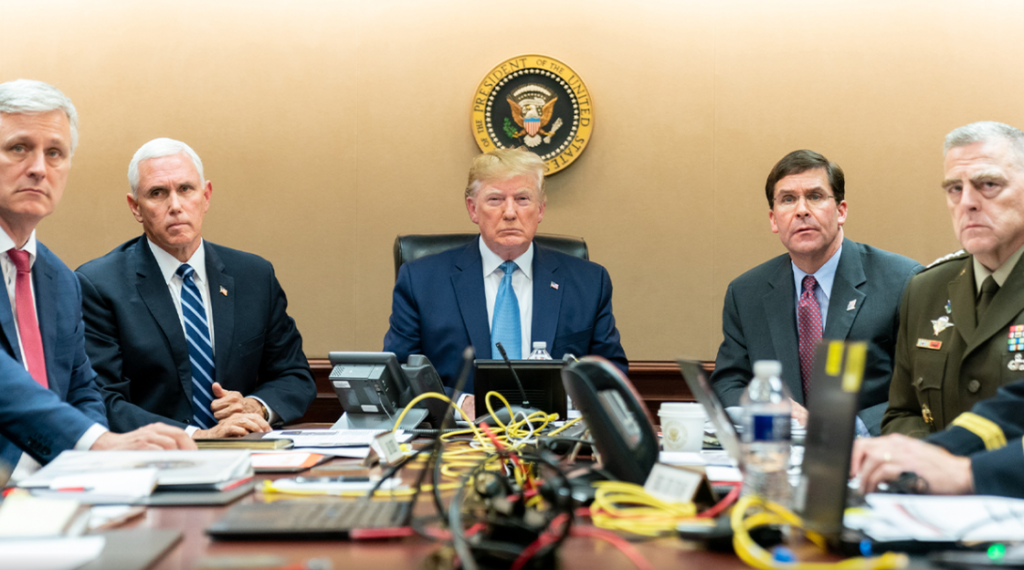
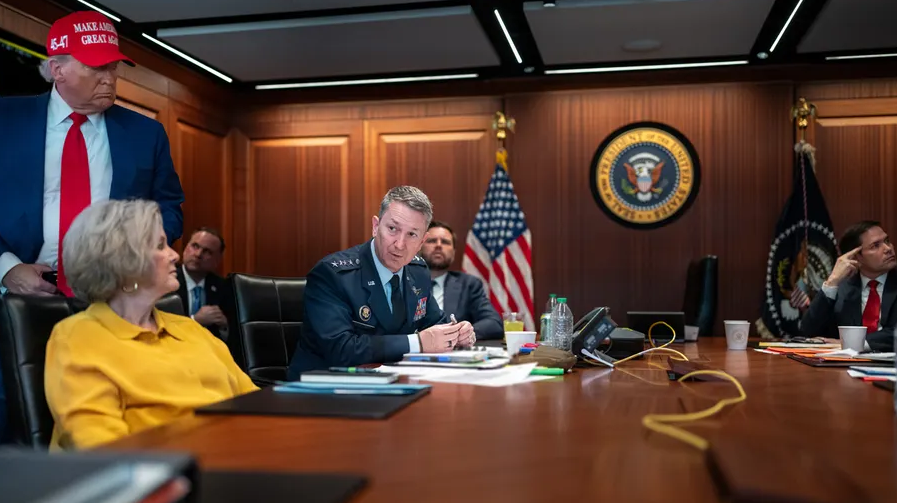
Laying out his demands in a social media post before entering the meeting, Trump wrote that Iran must agree to “never have a Nuclear Weapon or Bomb” and that the Strait of Hormuz must be “immediately open, no tolls, for unrestricted shipping traffic.” He also confirmed that “other items, of far less importance, have been agreed to,” and that “no money will be exchanged, until further notice.”
The proposed deal, confirmed to multiple outlets by U.S. sources Thursday, is a 60-day ceasefire extension. During that window, shipping through the Strait of Hormuz would be unrestricted, Iran would have to remove all mines from the strait within 30 days, and the U.S. would lift its naval blockade accordingly. Addressing Iran’s highly enriched uranium and enrichment goals would be top priorities during the 60-day negotiation period.
Then came the most extraordinary element of Trump’s announcement. He said that Iran’s enriched uranium, buried deep underground following B-2 bomber strikes last year, would be “unearthed by the United States, in close coordination and conjunction with the Islamic Republic of Iran, plus the International Atomic Energy Agency, and DESTROYED.” Military analysts have noted this would likely require a large U.S. special operations force operating on Iranian soil, a logistical and diplomatic undertaking without precedent.
Iran’s reaction was swift and contradictory. Iran’s state news agency Fars disputed Trump’s characterization of the deal entirely, asserting that the draft agreement contains no reference to Iran dismantling or destroying its nuclear materials, and that “the most important part of the agreement” is the immediate payment of $12 billion in frozen Iranian assets, something Trump explicitly ruled out.
Israel added another layer of uncertainty. Israeli officials said that Supreme Leader Mojtaba Khamenei has not signed off on the memorandum of understanding, raising doubts about whether the agreement has actually been finalized on the Iranian side.
The meeting ended without a public announcement of a “final determination.” What emerged instead was further confirmation that the two sides are describing fundamentally different agreements.
Why it matters: The gap between what Washington says the deal contains and what Tehran says it contains is not a translation problem, it is a preview of every negotiation to come. A 60-day window that begins without consensus on what was agreed to is not a foundation for peace. It is a countdown.
Do you think Trump will sign a deal with Iran this week, or is another escalation more likely?