
Quick Summary
The United Kingdom does not directly elect its prime minister. Instead, the role goes to whoever can command the confidence of the House of Commons, typically the leader of the largest party. When Keir Starmer announced his resignation in June 2026, the country entered a leadership transition process that many Americans find confusing, since it involves no public vote for the top job itself. This explainer breaks down exactly how that process works.
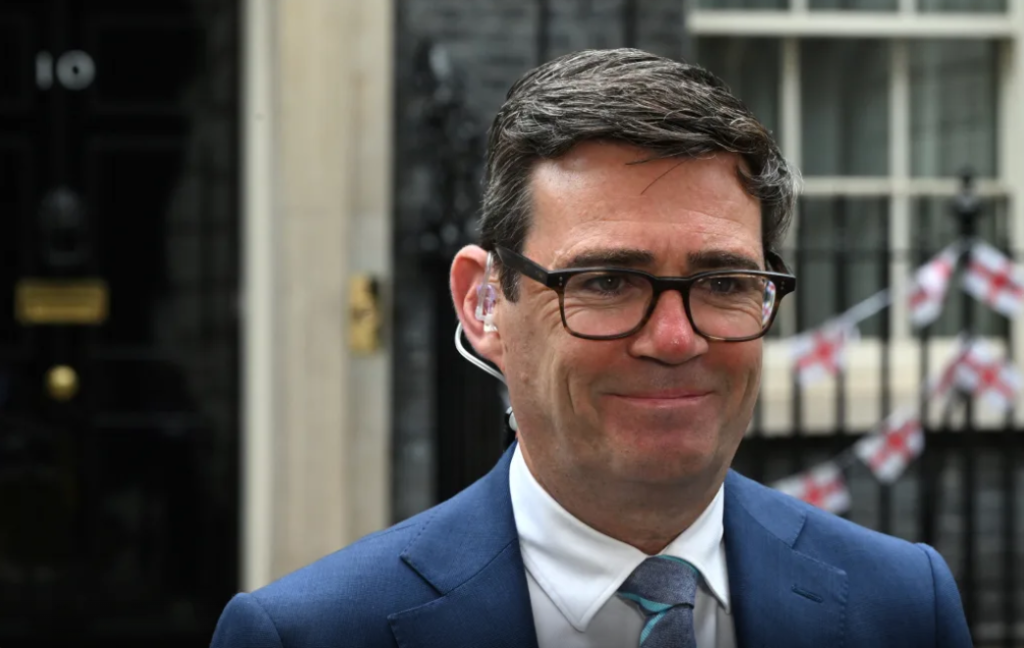
What Happened
Based on information reviewed by Edge World News from NPR and Al Jazeera, Keir Starmer announced in June 2026 that he would step down as leader of the Labour Party and, by extension, as Prime Minister, following sustained pressure from his own parliamentary party after disappointing local election results in May. His likely successor, Greater Manchester Mayor Andy Burnham, won a special parliamentary election just days earlier specifically to qualify for the leadership role, since UK convention requires a prime minister to hold a seat in Parliament.
Background: Why the UK System Works This Way
The United Kingdom operates under a parliamentary system, fundamentally different from the American presidential model. Voters in the UK do not cast a ballot for prime minister. Instead, they vote for a local Member of Parliament to represent their constituency. Whichever party wins the most seats in the House of Commons, or can form a coalition that commands a majority, gets to choose the prime minister from among its own ranks, almost always the party’s elected leader.
According to the House of Commons Library, the official document outlining these conventions is known as the Cabinet Manual, which states that prime ministers “hold office unless and until they resign.” There is no fixed term limit forcing a prime minister out partway through a parliamentary session. They can be removed by their own party, by losing a vote of no confidence in Parliament, or by choosing to resign voluntarily, which is what happened with Starmer.
Why It Matters
This system explains how the UK can change its head of government, sometimes more than once, without holding a general election. Starmer becomes the sixth UK prime minister to resign outside Downing Street in seven years, and the country is expected to have its seventh prime minister in a decade once a successor is formally appointed, a level of leadership turnover that stands out compared to most Western democracies.
For the public, the practical consequence is that a change in prime minister does not automatically trigger new elections. The same governing party remains in power; only its leader changes. Critics of this system, including some UK political commentators referenced by NPR, have argued that this allows leadership transitions to happen “internally” without the public getting a direct say, a criticism that has been raised by multiple parties during recent transitions, including the Conservative Party’s handling of Liz Truss and Rishi Sunak’s exits in 2022.
Expert Analysis
Political impact: Andy Burnham’s path to the leadership required a specially arranged by-election, the first since 1965 created specifically to provide a parliamentary seat for someone not already sitting in Parliament, according to Wikipedia’s tracking of the Labour leadership crisis. This unusual maneuver reflects how much pressure had built within the party to replace Starmer quickly.
Economic impact: Political risk analysts, including the Eurasia Group cited by NPR, have noted that Burnham’s incoming government will face many of the same structural economic pressures that challenged Starmer, including elevated global energy prices connected to the ongoing US-Iran conflict.
Institutional impact: The transition highlights how much discretion remains with the sitting monarch and political convention, rather than fixed law, in determining how and when a new prime minister takes office. The King’s role is now largely ceremonial, formally appointing whoever the governing party has already selected.
Public sentiment: According to YouGov polling referenced by Wikipedia, Starmer’s approval ratings had fallen to a net favorability of negative 57 percent by January 2026, among the lowest recorded for a sitting UK prime minister in recent history, helping explain the internal party pressure that led to his resignation.
Timeline
May 2026: Labour suffers heavy losses in UK local elections as the right-wing Reform UK party makes major gains.
June 11, 2026: Defence Secretary John Healey resigns, followed by other ministerial departures, intensifying pressure on Starmer’s leadership.
June 18, 2026: Andy Burnham wins a special parliamentary by-election in Makerfield, becoming eligible to challenge for the Labour leadership.
June 22, 2026: Starmer announces his resignation outside 10 Downing Street, with a leadership contest timetable set for nominations opening July 9.
Expected July 18-19, 2026: Andy Burnham is projected by the Eurasia Group to formally take office as the new prime minister.
What’s Next
Nominations for the Labour leadership contest are scheduled to open on July 9, 2026, with the process expected to conclude before Parliament returns from summer recess in September. Starmer has stated he will remain in his post as a caretaker prime minister until the contest concludes, to ensure what he described as an “orderly handover of power.”
FAQ
Why doesn’t the UK hold a general election when the prime minister changes?
Because UK voters elect Members of Parliament, not the prime minister directly. The governing party retains its majority in Parliament regardless of who leads it, so a change in party leadership does not legally require a new general election.
Who decides who becomes the next prime minister?
The governing political party, in this case the Labour Party, selects its own leader through an internal contest. The monarch then formally appoints that person as prime minister, following long-standing constitutional convention.
Does the King have any real power in choosing the prime minister?
In modern practice, no. The monarch is expected to appoint whoever the governing party has already chosen as its leader. The last time a monarch exercised meaningful personal discretion in this process was in 1963.
How many prime ministers has the UK had recently?
Starmer’s resignation makes him the sixth UK prime minister to resign outside Downing Street in seven years, with the country on track for its seventh prime minister in a decade.
Is Andy Burnham guaranteed to become the next prime minister?
Not officially confirmed, but reporting indicates he is the strong frontrunner, having already secured a parliamentary seat and the endorsement of his most likely rival, former Health Secretary Wes Streeting.
Sources: NPR, Al Jazeera, House of Commons Library, Wikipedia (used only for supplementary timeline detail, confirmed against NPR and Al Jazeera reporting)