
Quick Summary
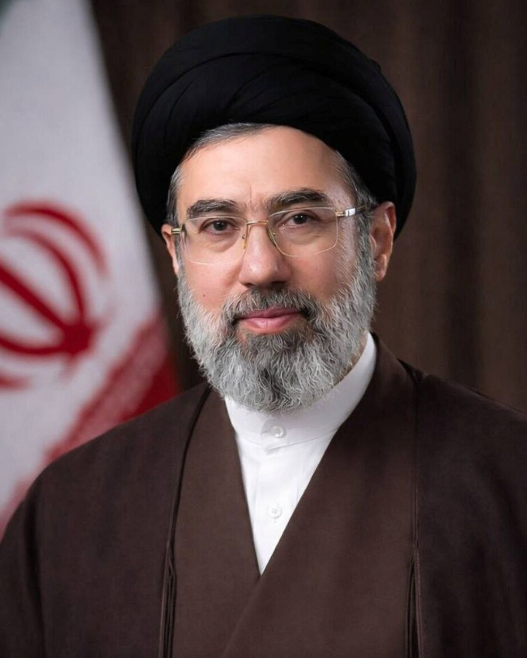
When Ayatollah Ali Khamenei was killed in February 2026, Iran’s constitution triggered a process most Americans have never heard of: a secretive body of 88 clerics called the Assembly of Experts convened to choose his successor. That body selected Khamenei’s own son, Mojtaba, within roughly a week, despite his having no prior government experience and only mid-ranking religious credentials. As Iran holds its slain leader’s state funeral this week, this explainer breaks down how the country’s leadership succession system actually works, and why critics say it was never designed to be genuinely democratic.
What It Is
The Assembly of Experts is an 88-member body of Shia Islamic clerics, popularly elected by Iranian voters every eight years, whose sole constitutional function is to select, monitor, and, in theory, dismiss the country’s supreme leader. Article 111 of Iran’s constitution grants the assembly this authority, describing the supreme leader as removable if he becomes incapable of fulfilling his duties or is found to lack the required qualifications. In practice, the assembly has never dismissed or even publicly challenged a sitting supreme leader in its more than 40-year history.
The supreme leader position itself sits at the absolute center of Iran’s government structure. The office holder serves for life, commands the armed forces including the Revolutionary Guard Corps, oversees the judiciary, controls state media, and has final say over both foreign and domestic policy. It is, by design, the most powerful position in the country, more powerful than the elected president.
Background: A System Built to Filter Out Dissent
Candidates seeking a seat on the Assembly of Experts must first pass through the Guardian Council, a 12-member body of clerics and jurists, half of whom are directly appointed by the supreme leader himself. The Guardian Council vets every candidate for the assembly, disqualifying anyone it deems insufficiently aligned with the Islamic Republic’s governing establishment. Political scientist Farideh Farhi, who has studied the assembly extensively, has noted this creates a closed loop: the supreme leader effectively influences who gets to sit on the body constitutionally empowered to select his own successor.
This structure has been used before. In 2024, the Guardian Council excluded former President Hassan Rouhani, considered a relative moderate, from even running for an assembly seat. The result is a body that Brookings researchers and multiple Iran scholars describe as heavily weighted toward hardline and traditional conservative clerics, elected through a process that limits genuine political competition from the outset.
How the 2026 Succession Actually Unfolded
When Khamenei was killed on February 28, Iran’s constitution required an interim Leadership Council to temporarily assume his duties. That council initially included President Masoud Pezeshkian, Chief Justice Gholam-Hossein Mohseni-Eje’i, and Ayatollah Alireza Arafi, with Iran’s constitution requiring the Assembly of Experts to select a permanent successor “as soon as possible,” though without specifying a strict deadline.
What followed, according to reporting from Iran International, involved the Revolutionary Guard Corps applying direct pressure on Assembly of Experts members in the days before the vote, described as “repeated contacts and psychological and political pressure” aimed at securing support for Mojtaba Khamenei specifically. The assembly convened an emergency online session on March 3 and announced Mojtaba as the new supreme leader on March 8, roughly a week after his father’s death, making this only the second leadership transition in the Islamic Republic’s 47-year history, following Khomeini’s death in 1989.
Mojtaba’s selection required the same workaround used for his father decades earlier. Iran’s constitution technically requires a supreme leader to hold the religious rank of marja, a senior authority on Islamic law. Like his father before him, Mojtaba held only the lower rank of hojatoleslam at the time of his selection, meaning the assembly had to elevate his religious status specifically to accommodate the succession, a maneuver Iran used once before when Khamenei himself succeeded Khomeini in 1989.
Why It Matters
The speed and outcome of this succession, a son inheriting his father’s position within days, despite having no government experience and thin religious credentials, has reinforced longstanding criticism that Iran’s clerical succession system functions less as a genuine deliberative process and more as a mechanism for preserving continuity within a narrow, self-selecting elite. Scholar Farideh Farhi has argued the process “has never been free or transparent,” a characterization that predates this year’s events but was arguably reinforced by them.
Expert Analysis
Institutional impact: The Revolutionary Guard Corps’ reported role in pressuring Assembly members represents a significant data point for analysts studying where real power sits within Iran’s system. If accurate, it suggests the military and security apparatus, rather than the clerical establishment alone, may increasingly drive top leadership decisions.
Political impact: Mojtaba Khamenei’s complete absence from public view since being wounded in the same strike that killed his father raises questions about whether Iran currently has a functioning, publicly visible head of state at all, a highly unusual situation for a country actively engaged in sensitive negotiations with the United States.
Legitimacy impact: Iranian officials have explicitly framed public turnout at Khamenei’s funeral as a “referendum” on the regime’s legitimacy, a framing that inadvertently underscores how uncertain that legitimacy currently is, particularly following mass protests over inflation and currency collapse just weeks before Khamenei’s death.
Historical impact: This marks only the second time in the Islamic Republic’s history that the Assembly of Experts has actually exercised its core constitutional function, following the 1989 transition from Khomeini to Khamenei, meaning there is very little institutional precedent for how this kind of succession is supposed to unfold under pressure.
Statistics & Context
The Assembly of Experts has 88 members, elected by popular vote every eight years, with the current assembly’s term running from 2024 to 2032. Mojtaba Khamenei was announced as supreme leader nine days after his father’s death, on March 9, 2026. This is only the second supreme leader transition since the Islamic Republic’s founding in 1979, following the 1989 transition after Ayatollah Khomeini’s death.
What’s Next
With Khamenei’s state funeral concluding on July 9 in Mashhad, attention will likely shift to whether Mojtaba eventually appears publicly to assume full, visible leadership of the country, or whether his continued absence signals deeper uncertainty about his health or standing. How he manages Iran’s fragile negotiations with the United States over its nuclear program and the Strait of Hormuz, still ongoing at the time of his succession, will be an early test of his ability to actually govern rather than merely hold the title.
FAQ
What is the Assembly of Experts?
It is an 88-member body of Shia Islamic clerics, elected by Iranian voters every eight years, whose constitutional role is to select, monitor, and theoretically dismiss Iran’s supreme leader.
How did Mojtaba Khamenei become supreme leader so quickly?
The Assembly of Experts convened an emergency session days after his father’s death and announced Mojtaba as successor on March 9, 2026, roughly a week after Ali Khamenei was killed. Reporting from Iran International indicated the Revolutionary Guard Corps pressured assembly members ahead of the vote.
Is the Assembly of Experts truly independent?
Most Iran scholars say no. Candidates for the assembly must first be approved by the Guardian Council, half of whose members are appointed by the supreme leader himself, creating a closed loop that limits genuine political competition.
Did Mojtaba Khamenei meet the religious qualifications to become supreme leader?
Not initially. He held the lower clerical rank of hojatoleslam rather than the required marja status, requiring the assembly to elevate his religious rank specifically to accommodate his succession, the same workaround used for his father in 1989.
Has the Assembly of Experts ever removed a supreme leader?
No. In its more than 40-year history, the assembly has never dismissed or even publicly challenged a sitting supreme leader, despite holding the constitutional authority to do so.
Editorial Note: This article was prepared using publicly available information from international news organizations, academic research, and official sources available at the time of publication. Facts may be updated as authorities release new information.
Sources: