
Quick Summary
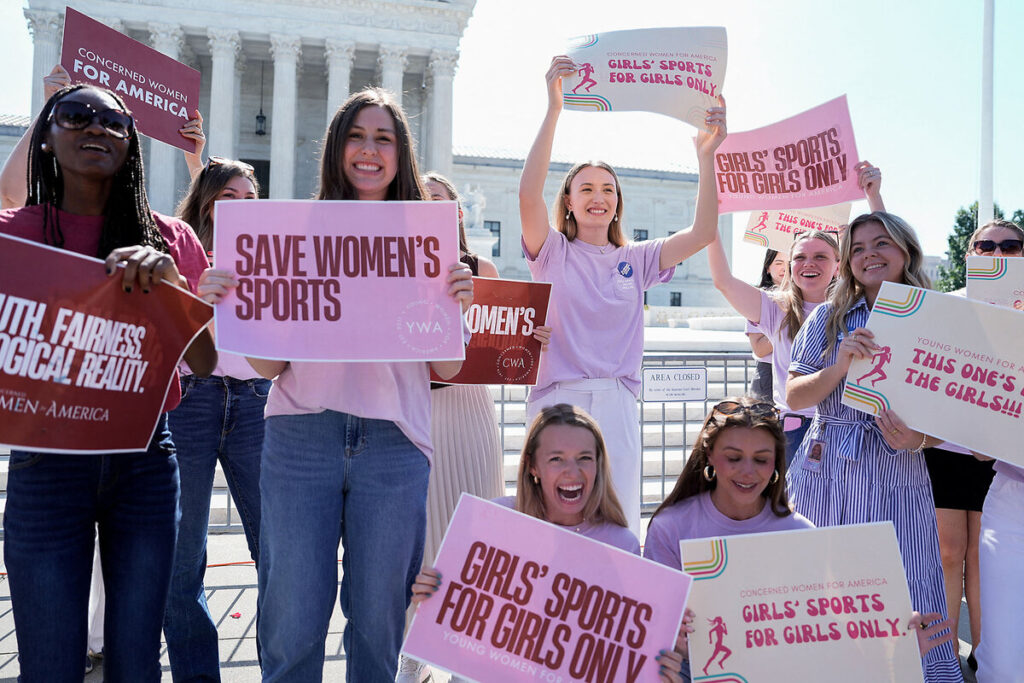
The Supreme Court ruled 6-3 on Tuesday, June 30, that states can bar transgender girls and women from competing on female school sports teams, upholding laws in Idaho and West Virginia in a decision that could affect similar bans in more than half the country. Writing for the majority, Justice Brett Kavanaugh held that states may determine sports eligibility based on biological sex without violating the Constitution’s Equal Protection Clause or Title IX. The ruling marks the latest in a string of Supreme Court decisions narrowing transgender rights protections.
What Happened
The case combined challenges from two transgender athletes: Becky Pepper-Jackson, a 16-year-old West Virginia high schooler who has taken puberty blockers and estrogen while competing in girls’ cross-country, shot put, and discus, and Lindsay Hecox, a 25-year-old Idaho college student who sought to try out for Boise State University’s women’s track and cross-country teams. Both argued their states’ bans violated the 14th Amendment’s equal protection guarantee and Title IX, the federal law barring sex discrimination in schools.
Kavanaugh’s majority opinion rejected those arguments directly. “May schools determine eligibility for women’s and girls’ sports based on biological sex? The answer is yes,” he wrote, concluding that states may maintain separate sports categories for biological females without running afoul of the Constitution or federal law. The court’s three liberal justices dissented, with Justice Sonia Sotomayor writing that the ruling denied the athletes a fair opportunity to litigate their claims and rested on insufficient evidence about any inherent competitive advantage.
Background
The ruling caps a rapid legal and political shift on transgender athletics. Just over two weeks into his second term, President Trump signed an executive order titled “Keeping Men Out of Women’s Sports,” seeking to bar transgender women and girls from female sports categories nationwide. More than half of US states have since passed laws restricting transgender athletes from girls’ and women’s teams, a wave of legislation the Idaho and West Virginia cases were widely seen as testing.
The decision follows a broader pattern at the Supreme Court in recent terms, including rulings last year upholding state bans on gender transition treatments for minors, permitting Trump administration policies barring transgender troops from the military, and allowing restrictions on gender identity markers on passports. Earlier this year, the court also sided with parents objecting to California policies related to transgender students.
Why It Matters
The ruling directly affects any transgender student athlete seeking to compete on a team matching their gender identity in states with restrictive laws, while leaving states that permit such participation, including Massachusetts and roughly 20 others, unaffected for now. Legal experts note the decision could still leave room for narrower legal challenges in individual states, since the ruling addressed the specific Idaho and West Virginia laws rather than issuing a nationwide mandate.
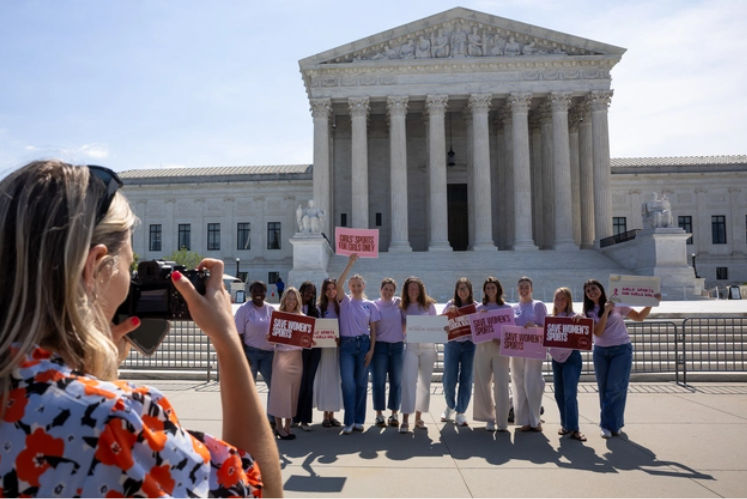
The decision also has consequences beyond K-12 and college sports. NCAA President Charlie Baker said the organization does not plan to change its own rules, which currently align with a policy set by the Trump administration, though he noted state-level policy remains “a different question” that could still create inconsistencies for athletes competing across state lines.
Expert Analysis
Legal impact: The 6-3 decision along ideological lines resolves the specific constitutional and Title IX questions raised in Idaho and West Virginia but leaves open how courts will treat differently worded state laws elsewhere, meaning further litigation is likely in states with less clear-cut statutory language.
Political impact: Trump celebrated the ruling as a “BIG WIN” on Truth Social, while LGBTQ advocacy groups, including GLAAD, condemned it as creating what they called an unfair playing field under the guise of fairness.
Practical impact: Legal experts note the ruling could create friction when athletes from states that permit transgender participation, such as Massachusetts, travel to compete in states with bans, a scenario attorneys say could generate new legal disputes even though Tuesday’s ruling did not directly address interstate competition.
Statistics & Context
The ruling passed 6-3 along ideological lines, with all six conservative justices in the majority and the three liberal justices dissenting. More than half of US states have enacted laws restricting transgender athletes from girls’ and women’s sports, while roughly 20 states, including Massachusetts, currently allow such participation. NCAA President Charlie Baker has testified that fewer than 10 openly transgender athletes currently compete in NCAA sports nationwide.
What’s Next
Attention now shifts to how individual states with less definitive laws respond to the ruling, and whether additional legal challenges emerge in jurisdictions where litigation is already underway, including a separate lawsuit against New Hampshire’s transgender athlete law proceeding under a different legal argument. Advocacy groups on both sides are expected to continue pushing state legislatures to either expand or repeal existing restrictions in the coming months.
FAQ
What did the Supreme Court rule? The Court ruled 6-3 that states can bar transgender girls and women from competing on female school sports teams, upholding laws in Idaho and West Virginia.
Does this ruling apply nationwide? Not automatically. It resolves the specific Idaho and West Virginia laws, but more than half of US states already have similar bans, while roughly 20 states, including Massachusetts, currently allow transgender participation and are not directly required to change their policies.
Did the ruling address Title IX? Yes. The Court held that determining sports eligibility based on biological sex does not violate Title IX’s prohibition on sex discrimination in education.
How is the NCAA responding? NCAA President Charlie Baker said the organization does not plan to change its current rules, which already align with federal policy set by the Trump administration.
Editorial Note: This article was prepared using publicly available information from international news organizations and official court documents available at the time of publication. Facts may be updated as authorities release new information.
Sources:
- NPR – Supreme Court upholds bans on transgender athletes in girls’ and women’s sports
- NBC News – Supreme Court upholds bans on transgender athletes in girls’ and women’s sports
- The Hill – Supreme Court upholds transgender athlete bans in schools
- CBS News – NCAA leader says no plan to change rules on transgender athletes