
Quick Summary
Most Americans celebrating the country’s 250th anniversary this year believe the Declaration of Independence was signed on July 4, 1776. Historical records tell a more complicated story. The document was approved on July 4, but the actual signing by most delegates didn’t happen until August 2, nearly a month later, and the vote for independence itself technically took place on July 2. This explainer untangles what really happened during those pivotal weeks in Philadelphia and why July 4th became the date Americans celebrate anyway.
What Actually Happened, Day by Day
The Continental Congress voted for independence on July 2, 1776, when 12 of the 13 colonies approved a resolution declaring “these United Colonies are, and of right ought to be Free and Independent States.” New York’s delegation abstained only because it hadn’t yet received authorization from Albany to vote, though it later voted affirmatively on July 15. John Adams was so confident this date would become the historic one that he wrote to his wife predicting July 2 would be “celebrated, by succeeding Generations, as the great anniversary Festival,” complete with “Pomp and Parade” and fireworks.
Adams was right about the celebration and wrong about the date. After the July 2 vote, Congress spent July 3 and most of July 4 revising the actual text of the Declaration, a document explaining the reasoning behind the vote that had already happened. Thomas Jefferson had drafted the text between June 11 and June 28, with input from a five-member committee including John Adams and Benjamin Franklin. Congress removed roughly a quarter of Jefferson’s original text during the revision process before finally approving the document on the afternoon of July 4.
Why the Signing Happened a Month Later
Once approved, the Declaration was immediately sent to Philadelphia printer John Dunlap, who produced roughly 200 copies of what’s now known as the Dunlap Broadside, distributed to the states and the Army with John Hancock’s name printed at the bottom rather than signed. No handwritten signing occurred on July 4 itself.
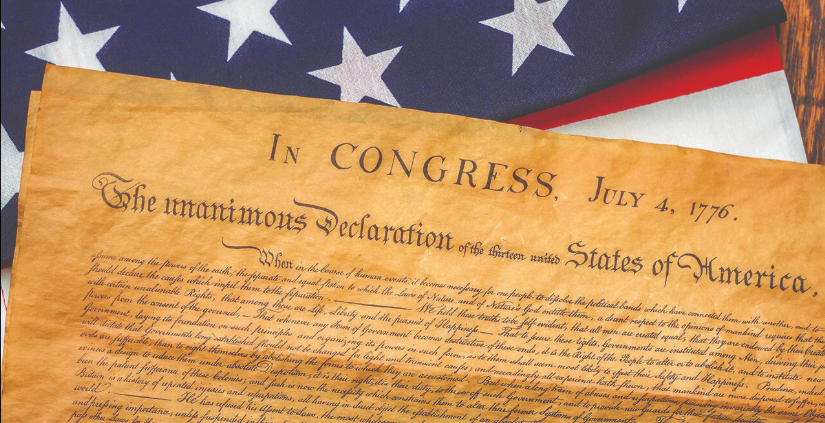
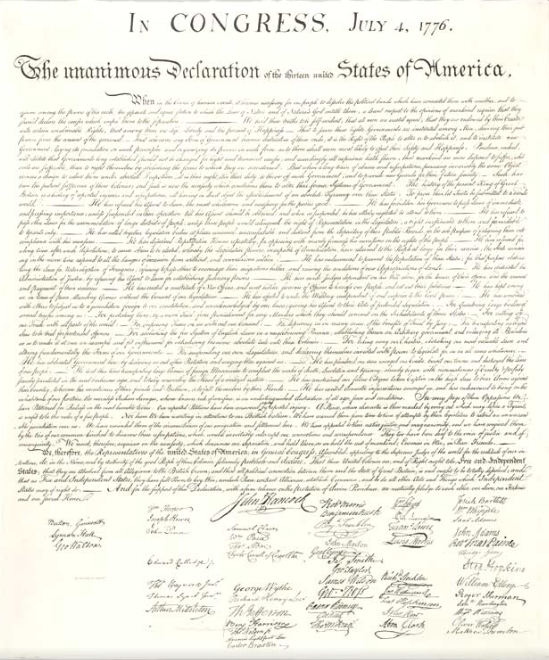
Congress wanted an official, legible version suitable for formal signatures, so on July 19 it ordered the document “engrossed,” meaning carefully copied by hand onto parchment in large, clear script. That task fell to Timothy Matlack, a Pennsylvania delegate serving as an assistant to the Congress’s secretary. The engrossing process took about two weeks. On August 2, 1776, delegates began signing that parchment copy at the Pennsylvania State House, later renamed Independence Hall. John Hancock, as president of the Congress, signed first with the large, bold signature that has become iconic.
Why It Matters
The gap between the vote, the approval, and the actual signing matters because it complicates a piece of American mythology that most people accept without question. Founders including Jefferson, Franklin, and John Adams later wrote that they believed the Declaration was signed on July 4, and the engrossed copy itself is dated July 4, which fueled the misconception for decades. It wasn’t until 1796 that signer Thomas McKean publicly disputed the July 4 signing date, pointing out that several signers weren’t present in Congress that day, and some hadn’t even been elected as delegates yet. Historians have generally accepted McKean’s account since.
Not everyone who voted for independence in early July ended up signing the document in August, and not everyone who signed in August had been present for the vote. Historian Herbert Friedenwald calculated that of 49 delegates present in Philadelphia on July 4, only 45 could theoretically have signed a document that day, and New York’s eight-member delegation couldn’t have signed anything on July 4 since it hadn’t yet voted for independence at all. Meanwhile, several new delegates who joined Congress after July 4, including Elbridge Gerry, Matthew Thornton, and Charles Carroll, still signed the engrossed document in August or later.
Expert Analysis
Historical impact: Legal historian Wilfred Ritz argued in 1986 that the traditional July 4 account may not be entirely wrong, suggesting the July 19 engrossing order simply gave the existing document a new formal title after New York joined the other colonies, rather than creating an entirely new document requiring a fresh signing ceremony. This remains a minority view among historians, most of whom accept the August 2 signing as the primary event.
Symbolic impact: The persistence of July 4 as the celebrated date, despite historical evidence favoring August 2 for the actual signing, illustrates how national commemorations often solidify around a symbolically clean date rather than the messier factual sequence of events, a pattern common across many countries’ founding myths.
Documentary impact: The distinction between the two documents, the July 4 Dunlap Broadside with Hancock’s name printed, and the August 2 engrossed parchment with actual handwritten signatures, explains why the National Archives holds the signed parchment as the official document while the earlier printed broadside exists in far greater numbers today, with 26 known surviving copies.
Statistics & Context
Fifty-six delegates ultimately signed the Declaration of Independence, though not all on the same day. Historian Friedenwald identified discrepancies suggesting many signers were not actually present in Philadelphia on either July 4 or August 2. Nine men who were present during the independence debates in early July never signed the document at all, including John Dickinson, who opposed the resolution, and Robert R. Livingston, a member of the drafting committee who was attending to other duties when the August signing occurred.
What’s Next
The engrossed, signed copy of the Declaration has resided in the National Archives exhibition hall in Washington since 1952, displayed alongside the Constitution and Bill of Rights in a case built with ballistically tested glass. As America marks its 250th anniversary, historians expect renewed public interest in the document’s actual timeline, an educational opportunity that institutions including the National Archives and the National Constitution Center have leaned into this year with expanded public programming around the distinction between the vote, the approval, and the signing.
FAQ
So was the Declaration of Independence signed on July 4, 1776?
No. The Continental Congress approved the document’s text on July 4, but the actual handwritten signing by most delegates took place on August 2, 1776, nearly a month later.
Then why do Americans celebrate July 4th instead of August 2nd?
July 4th marks the date Congress formally approved the final text of the Declaration explaining the colonies’ break from Britain, which became the date associated with the document’s public announcement and distribution, even though the vote for independence itself happened July 2 and the signing happened in August.
Did all 56 signers sign on the same day?
No. While most delegates signed on August 2, some signed later in the months that followed, and a few new delegates who joined Congress after July 4 also added their signatures despite not participating in the original vote.
Who signed the Declaration first?
John Hancock, as president of the Continental Congress, signed first, placing his signature in the center of the document in the large, bold script that has become famous.
Where is the original signed Declaration kept today?
The engrossed, signed parchment copy has been held at the National Archives in Washington, DC, since 1952, displayed alongside the Constitution and the Bill of Rights.
Editorial Note: This article was prepared using publicly available information from official archives and historical institutions available at the time of publication. Facts may be updated as authorities release new information.
Sources: