
Quick Summary
President Trump kicked off America’s 250th anniversary weekend with a speech at Mount Rushmore that veered from patriotic celebration into a stark warning about what he called a resurgent “communist menace” threatening the country, rhetoric historians noted broke sharply from the traditionally unifying tone past presidents have used for Independence Day. Hours earlier and hundreds of miles away, New York City Mayor Zohran Mamdani delivered his own address from behind George Washington’s former desk, offering an implicit rebuttal centered on immigration and inclusion without ever naming the president directly.
What Happened
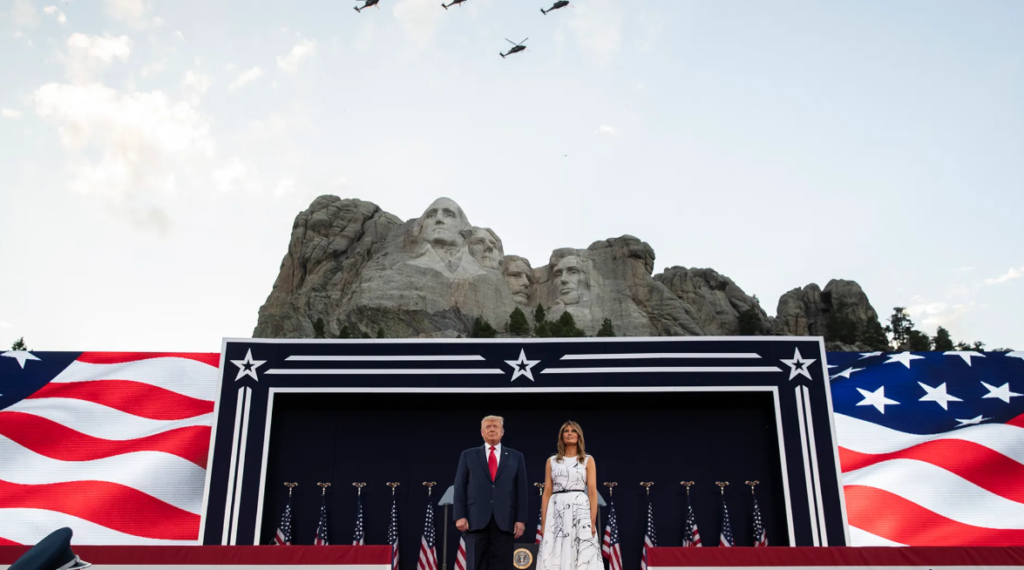
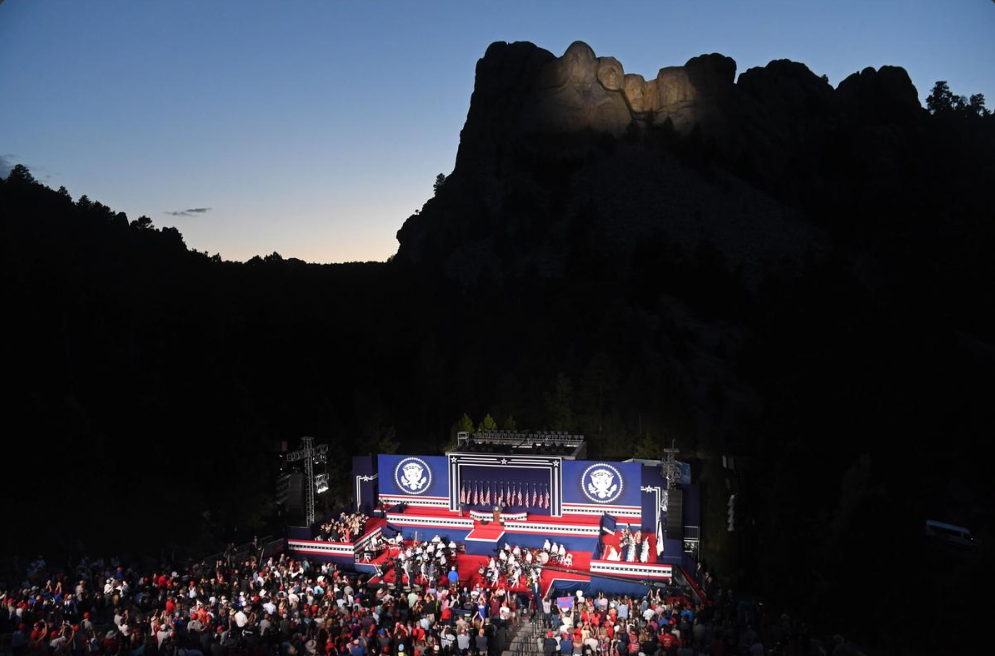
Speaking Friday evening at Mount Rushmore National Memorial in Keystone, South Dakota, Trump told the crowd that “communism is a mortal threat to American liberty,” calling it “the greatest threat to our country, including World War I, World War II, Pearl Harbor or even 9/11.” He continued, “there is now a resurgence of the communist menace in our land, including from newcomers to our country who embrace ideas totally opposed to our way of life and our great success.” The remarks were widely noted for their setting, a national park built specifically to honor four American presidents, and for breaking from the apolitical tone leaders like Gerald Ford and Ronald Reagan maintained during past milestone Independence Day addresses.
Earlier that same day in New York, Mayor Zohran Mamdani delivered what his office described as a “major address” marking the anniversary, speaking from City Hall while seated behind a desk that once belonged to George Washington and surrounded by recently naturalized US citizens waving American flags. Without naming Trump, Mamdani directly challenged the president’s framing of immigration: “For generation after generation, we have been told that when the world has sent its people to our shores, it has not sent its best.” He added, “America, they will tell you, belongs only to those with the right accent or the right shade of skin. The rest of us, they insist, should be grateful for merely being allowed to visit. How small they are. How weak, how unoriginal.”
Background
The dueling speeches arrived at a moment of unusual visibility for Mamdani, a Democrat who has increasingly positioned himself as a national foil to Trump’s immigration agenda. His address came the same week the Supreme Court upheld birthright citizenship, a ruling widely seen as a setback for the administration’s immigration priorities, and shortly after three House candidates he endorsed defeated incumbents in Democratic primaries.
Trump’s rhetoric, meanwhile, extended a pattern from recent weeks rather than representing an entirely new message; he had used similar language about communism in other speeches leading up to the anniversary. What made the Mount Rushmore remarks notable was not necessarily their content but their venue and timing, delivered at the ceremonial opening of a weekend built around national unity and historical reflection rather than contemporary partisan battles.
Why It Matters
The contrast between the two speeches captures a broader tension defining how America is marking this particular anniversary. According to an April survey from the Associated Press-NORC Center for Public Affairs Research, only about 4 in 10 US adults said they felt “proud” about the country’s 250th anniversary, with roughly 3 in 10 describing themselves as “excited,” numbers that reflect a country marking a historic milestone while remaining deeply divided over its current direction. That divide was structural as much as rhetorical this year: Freedom 250, an organization aligned with the White House, organized much of the official activity in Washington, while America250, a bipartisan group founded by Congress a decade earlier, ran separate, competing events in cities including New York and Los Angeles.
Expert Analysis
Political impact: Trump’s willingness to deliver explicitly partisan remarks at a monument built to honor presidential legacy suggests a continued blurring of the line between ceremonial head-of-state functions and campaign-style messaging, a shift multiple outlets noted as a departure from historical precedent for the holiday.
Symbolic impact: Mamdani’s choice to speak from Washington’s former desk, flanked by newly naturalized citizens, was a deliberate visual counter-narrative to Trump’s immigration rhetoric, aimed at reclaiming the symbolism of the founding era for a competing political vision.
Public sentiment impact: The AP-NORC survey findings suggest that official commemorations, however elaborate, are landing on a public that remains split on how to feel about the country’s trajectory, with pride and excitement registering as minority sentiments rather than a broad national consensus.
Institutional impact: The existence of two separate, competing 250th anniversary organizing bodies, one aligned with the White House and one bipartisan and congressionally chartered, reflects how even the logistics of national commemoration have become subject to political fragmentation.
Statistics & Context
About 4 in 10 US adults reported feeling “proud” about America’s 250th anniversary, according to an AP-NORC survey conducted in April 2026, with roughly 3 in 10 saying “excited” described their emotions. Three House candidates endorsed by Mamdani won Democratic primaries the month before his address.
What’s Next
Both figures are likely to continue occupying opposite poles of the immigration debate heading into the 2026 midterms, with Mamdani’s growing national profile and Trump’s continued use of communism-focused rhetoric both expected to remain fixtures of the political landscape through the fall campaign season. How each message resonates with voters outside their respective bases may become clearer as midterm primary results continue rolling in through the summer.
FAQ
What did Trump say at Mount Rushmore?
He warned of a “communist menace” resurging in the United States, calling it a greater threat than World War I, World War II, Pearl Harbor, or the September 11 attacks, and linked the threat to “newcomers” to the country.
What did Mayor Mamdani say in his own address?
Speaking from New York City Hall, Mamdani did not name Trump directly but challenged rhetoric suggesting immigrants are not America’s “best,” delivering his remarks while surrounded by recently naturalized citizens.
Why were Trump’s remarks considered unusual for Independence Day?
Historically, presidents including Gerald Ford and Ronald Reagan delivered largely apolitical, unifying remarks during major Independence Day commemorations. Trump’s explicitly partisan warnings marked a departure from that tradition.
How do Americans feel about the 250th anniversary overall?
An AP-NORC survey found only about 4 in 10 adults felt “proud” and roughly 3 in 10 felt “excited” about the milestone, suggesting mixed and divided public sentiment.
Are there multiple organizations running America’s 250th anniversary events?
Yes. Freedom 250, aligned with the White House, organized much of the Washington programming, while America250, a bipartisan congressionally founded group, ran separate events including celebrations in New York and Los Angeles.
Editorial Note: This article was prepared using publicly available information from international news organizations and official sources available at the time of publication. Facts may be updated as authorities release new information.
Sources: