
Israel’s military operation in southern Lebanon has entered territory that Western diplomats were certain would never be crossed. In recent days, Israeli ground forces have pushed beyond the Litani River, the line that US-brokered ceasefire agreements have for years treated as the outer limit of any Israeli ground advance, and are now approximately 20 miles inside Lebanese territory.
The latest incursion crossed every red line that had existed during the previous three years of Israel-Lebanon conflict. Israeli troops are now five kilometers from Nabatiyeh, one of southern Lebanon’s largest cities, and have ordered all residents to evacuate both Nabatiyeh and the coastal city of Tyre, Lebanon’s fourth-largest urban center.
Netanyahu described the seizure of Beaufort Castle, a 900-year-old Crusader fortress perched on a ridge overlooking the Litani River, as a “dramatic change” in Israeli policy, saying Israeli forces would deepen and expand their control over areas previously held by Hezbollah. Defense Minister Israel Katz said troops who captured the position would remain there as part of a permanent security zone inside Lebanese territory.
The Beaufort fortress has been a strategic military asset for nearly a millennium, built by the Crusaders in the 12th century, later used by Saladin, the Mamluks, the Ottomans, the French Mandate, and the Palestine Liberation Organization. Israel captured it from the PLO in 1982 during an operation led by Defense Minister Ariel Sharon, held it for 18 years, and returned it to Lebanese sovereignty in 2000 when it was partially restored and opened to visitors. Israel has now seized it again.
The timing of the advance carries an added layer of tension. A US-brokered ceasefire between Israel and Hezbollah has officially been in place since April 16. Netanyahu has made clear he considers it non-binding on Israel’s operations against Hezbollah infrastructure. Secretary of State Marco Rubio spoke to both Lebanese and Israeli leaders this week in an effort to keep negotiations from collapsing entirely, but the escalation has complicated American diplomacy at exactly the moment when the US is also trying to close a deal with Iran.
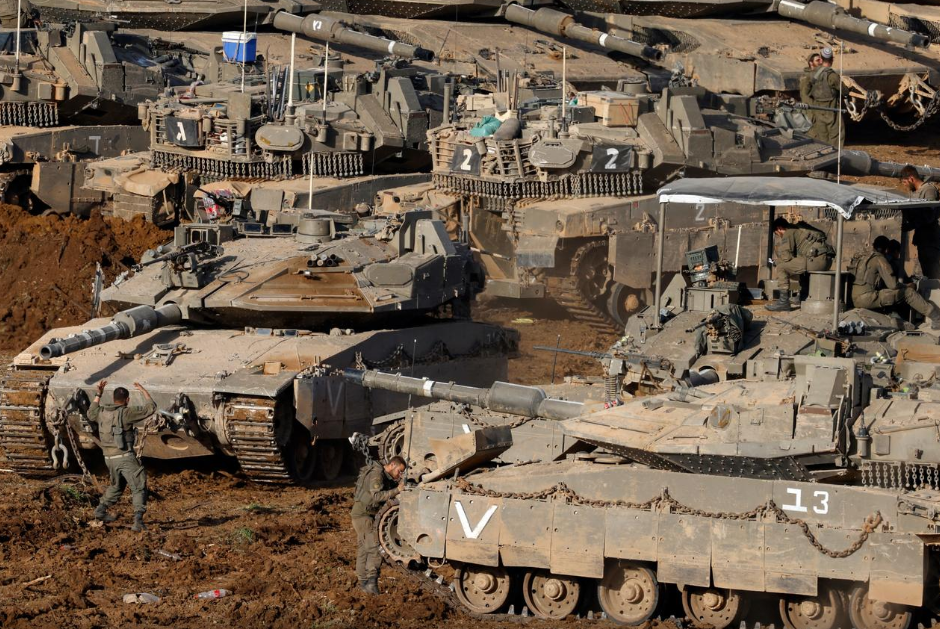
Hezbollah claimed responsibility for two separate attacks on Israeli troops and a Merkava tank in the southwestern town of Bayada, near the border, as the ground advance continued. Iran, which funds and arms Hezbollah, issues daily statements of support. Both Hezbollah and Hamas have rejected disarmament proposals in the current negotiation rounds.
Israel has designated the entire zone from the Litani to the Zahrani River, a much deeper stretch of Lebanese territory, as an active combat zone. Many residents have already fled due to relentless airstrikes, but significant civilian populations remain in the towns and villages in the path of the advance.
Why it matters: Israel crossing the Litani River is not a tactical footnote, it is the kind of escalation that changes the structure of a conflict. Lebanon’s government has no military capacity to resist. Hezbollah does, and it is fighting. The United States, simultaneously trying to negotiate a nuclear deal with Iran and a ceasefire extension in the Persian Gulf, now faces a third front in its Middle East diplomacy with no clear endgame in Lebanon and a partner in Netanyahu who is ignoring the red lines Washington set.
Is Israel building a permanent security zone in Lebanon, and can the US do anything to stop it?