
At 9 p.m. on Thursday, May 28, something went catastrophically wrong at Launch Complex 36 at Cape Canaveral Space Force Station. Blue Origin’s New Glenn rocket, preparing for a critical engine test ahead of a satellite launch scheduled for the following week, erupted into a massive fireball visible across the Florida Space Coast.
The explosion occurred during a static fire engine test, a standard pre-launch procedure in which engines are ignited while the rocket remains secured to the pad. The New Glenn was gearing up for a launch in early June to deploy a batch of Amazon “Leo” internet satellites into orbit. The Amazon Leo satellites were not on board for the test and were not damaged in the explosion.
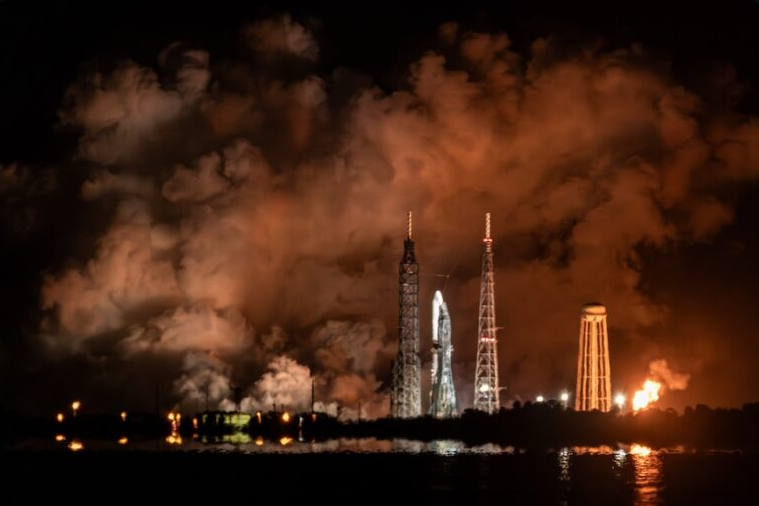
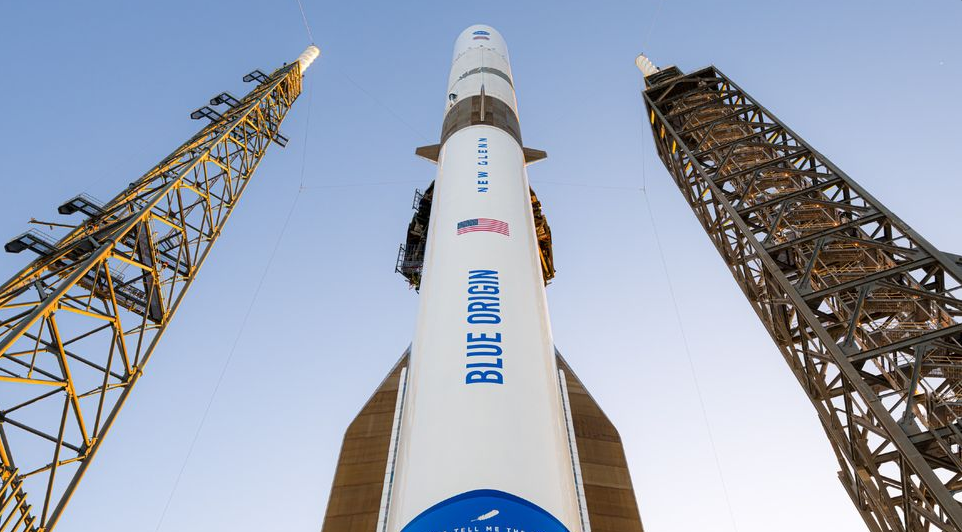
The launchpad at Cape Canaveral was heavily damaged by the explosion. As smoke cleared, there was no sign of the erector-gantry used to move the rocket from its hangar to the pad. One of two tall lightning towers was also no longer visible. Multiple fires burned across the complex in the aftermath.
The shockwave traveled far beyond the launch site. People up and down the Space Coast said the explosion was so powerful they didn’t just see it light up the night sky, they felt it shake their homes. Many residents shared videos captured on their phones of the fireball visible from miles away.
Blue Origin confirmed that all personnel were accounted for. Jeff Bezos posted on X: “All personnel are accounted for and safe. It’s too early to know the root cause but we’re already working to find it. Very rough day, but we’ll rebuild whatever needs rebuilding and get back to flying. It’s worth it.”
The explosion arrives at a deeply difficult moment for Blue Origin. The company had been planning as many as 12 New Glenn launches this year. The upcoming launch was set to be the first of 24 launches for which Amazon has contracted Blue Origin to build out its Leo satellite internet network, a direct competitor to SpaceX’s Starlink. That timeline is now in serious question.
NASA Administrator Jared Isaacman acknowledged the severity of the setback, noting that “spaceflight is unforgiving, and developing new heavy-lift launch capability is extraordinarily difficult.” The explosion is also likely to delay NASA’s moon program, which relies on the New Glenn to launch lunar landers under the Artemis program. Elon Musk responded on X with characteristic brevity: “Most unfortunate. Rockets are hard.”
Why it matters: Blue Origin’s New Glenn was supposed to be America’s answer to SpaceX’s dominance in heavy-lift orbital launch. Thursday’s explosion does not end that ambition, but it sets it back significantly. For Amazon’s Leo network, for NASA’s Artemis lunar program, and for the broader goal of breaking SpaceX’s near-monopoly on commercial launch, the timeline just got considerably longer and considerably less certain.
Do you think Blue Origin can recover from this setback and become a real competitor to SpaceX?