
Quick Summary
Iran began a seven-day state funeral for Ayatollah Ali Khamenei on July 3, more than four months after he was killed in the US-Israeli strikes that opened the war on February 28. Public ceremonies in Tehran began July 4, the same day the United States marked 250 years of independence, with crowds chanting “Death to America” as Khamenei’s coffin lay in state. His son and successor, Mojtaba Khamenei, has not appeared publicly since being wounded in the same attack that killed his father.
What Happened
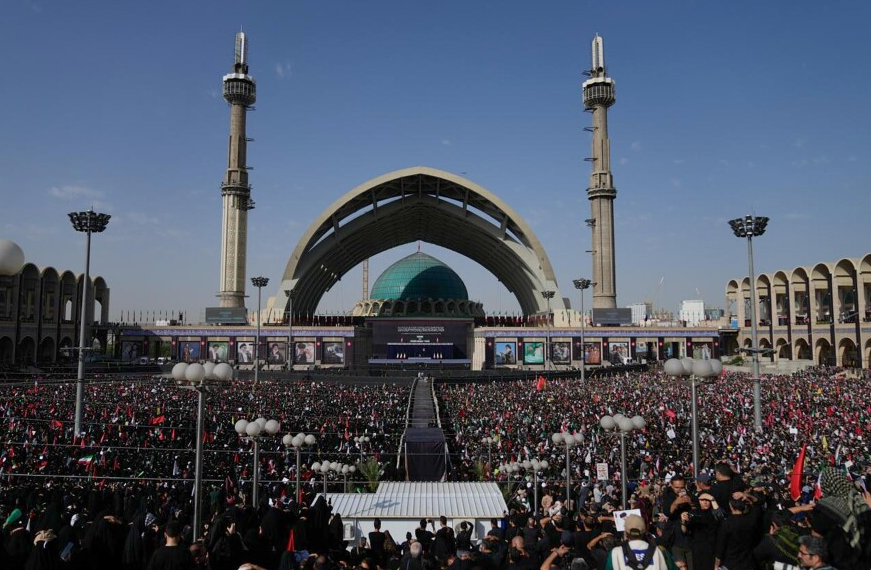
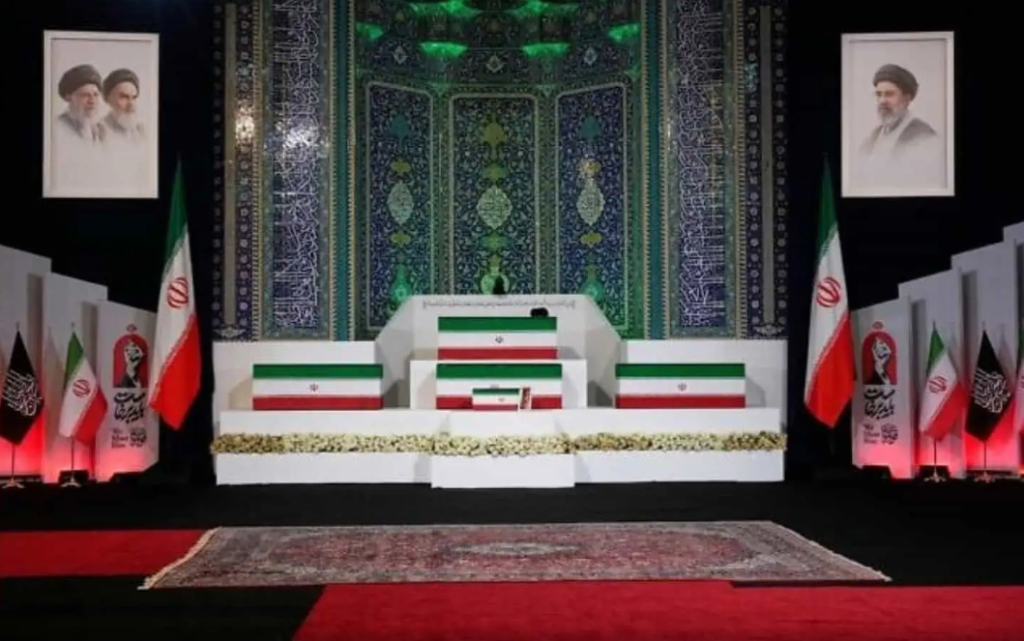
Khamenei’s flag-draped casket arrived at Tehran’s Grand Mosalla mosque on July 3, alongside the coffins of several family members killed in the same strike, including his wife, who died later from her wounds. His black turban, marking him as a direct descendant of the Prophet Muhammad, sat atop the casket. Volunteers sprayed cooling water over crowds gathering in the summer heat, and men and women passed through metal detectors and body searches before entering separately to pay respects.
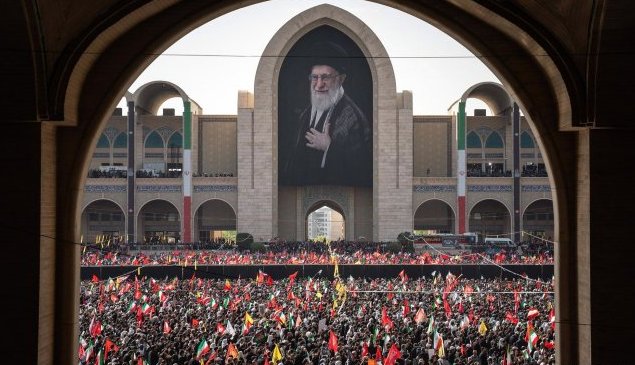
Authorities did not publicly acknowledge choosing July 4 for the start of public ceremonies in Tehran, but the symbolism was unmistakable to observers. As the ceremony unfolded, crowds chanted the decades-old refrain “Death to America,” a staple of Iranian political rhetoric since the 1979 revolution. One mourner who traveled more than 300 miles from Tabriz said he came “to show that we are all committed to defend our country and religion.”
Background
Khamenei had led Iran since 1989, following the death of Ayatollah Ruhollah Khomeini, the cleric who spearheaded the Islamic Revolution a decade earlier. Where Khomeini provided the ideological foundation of the Islamic Republic, Khamenei spent nearly four decades building and shaping the military and paramilitary apparatus that has defined Iranian power projection across the Middle East, including the Revolutionary Guard Corps.
His death on February 28 marked only the second time Iran has lost a supreme leader since the 1979 revolution, and it came at the opening moment of a war that has since reshaped the region. The Assembly of Experts, the clerical body responsible for selecting Iran’s supreme leader, named his son Mojtaba as successor just over a week later, on March 8. The funeral itself was delayed for months, first postponed in early March over fears of what officials described as unprecedented turnout, then repeatedly pushed back as Iran struggled to determine a fitting burial location and manage security concerns during active conflict.
Why It Matters
The choice of Mashhad, Iran’s holiest city and Khamenei’s birthplace, for his final burial at the Imam Reza shrine on July 9 reflects his dual identity as both the country’s top political authority and its highest religious figure. But the funeral is unfolding against a backdrop of real vulnerability for the regime it aims to project strength for. Iranian leaders have explicitly framed the size of the funeral crowds as a “referendum” on public support for the Islamic Republic, a framing that itself hints at anxiety about legitimacy after a war that killed thousands of Iranians, including dozens of senior officials, and devastated the economy.
That anxiety is not unfounded. In December and January, before Khamenei’s death, millions of Iranians had taken to the streets protesting inflation and the collapsing currency, with many explicitly calling for Khamenei’s death, only to be met with a violent government crackdown. The funeral, in other words, is being staged for a public whose relationship with the regime remains deeply unresolved.
Expert Analysis
Political impact: Mojtaba Khamenei’s continued absence from public view, now stretching more than four months since he was wounded in the strike that killed his father, raises real questions about the new supreme leader’s health and his ability to project authority at a moment when Iran’s leadership needs to appear stable. State media has cited security concerns for his non-appearance at the funeral itself.
Diplomatic impact: The funeral is unfolding alongside active, fragile negotiations between the US and Iran over a comprehensive deal covering Iran’s nuclear program and the Strait of Hormuz. Iran’s chief negotiator used the funeral proceedings to publicly warn Britain and France against any plan to patrol the strait militarily, a sign that diplomacy and mourning are occurring on parallel, intersecting tracks.
Regional impact: Iranian and Iraqi officials have arranged for Khamenei’s body to travel through Najaf and Karbala, two of Shia Islam’s holiest cities, before returning to Iran for burial, a route intended to reinforce Iran’s religious and political influence across the border despite the war having strained relations with several Gulf neighbors that were targeted in Iranian retaliatory strikes.
Economic impact: Iran’s economy remains severely weakened by the naval blockade that was only lifted on June 18 following a memorandum of understanding with the US, meaning the state is staging one of the largest funerals in its history while managing a currency crisis and infrastructure damaged by months of strikes.
Statistics & Context
Iranian officials have projected as many as 35 million people could attend some portion of the week-long funeral proceedings. The ceremonies span July 3 through July 9 across multiple cities in Iran and Iraq, with final burial scheduled at the Imam Reza shrine in Mashhad. Khamenei’s death marks only the second supreme leader transition in Iran’s 47-year history as an Islamic Republic.
What’s Next
Khamenei’s body is scheduled to travel to Najaf International Airport in Iraq on July 8 for public processions through Najaf and Karbala before returning to Iran for burial in Mashhad on July 9. Whether Mojtaba Khamenei appears at any point during the remaining proceedings will be closely watched as an indicator of his health and his capacity to eventually assume full public leadership of the country.
FAQ
When did Ayatollah Khamenei die?
He was killed on February 28, 2026, in US-Israeli strikes that opened the broader war on Iran.
Why did it take more than four months to hold his funeral?
The funeral was postponed multiple times, first over fears of extraordinary turnout, then due to unresolved questions about burial location and security concerns amid active conflict.
Who succeeded Khamenei as supreme leader?
His son, Mojtaba Khamenei, was named successor by Iran’s Assembly of Experts on March 8, 2026.
Why hasn’t the new supreme leader appeared publicly?
Mojtaba Khamenei was reportedly wounded in the same strike that killed his father and has not been seen publicly since the war began, with state media citing security concerns for his continued absence.
Where will Khamenei be buried?
He will be buried on July 9 at the Imam Reza shrine in Mashhad, Iran’s holiest city and his birthplace.
Editorial Note: This article was prepared using publicly available information from international news organizations and official sources available at the time of publication. Facts may be updated as authorities release new information.
Sources: