
Secretary of State Marco Rubio touched down in Kolkata, India, this morning for a four-day visit that could reshape the strategic balance of the Indo-Pacific. It is his first trip to the country since taking office, and the timing is anything but coincidental.
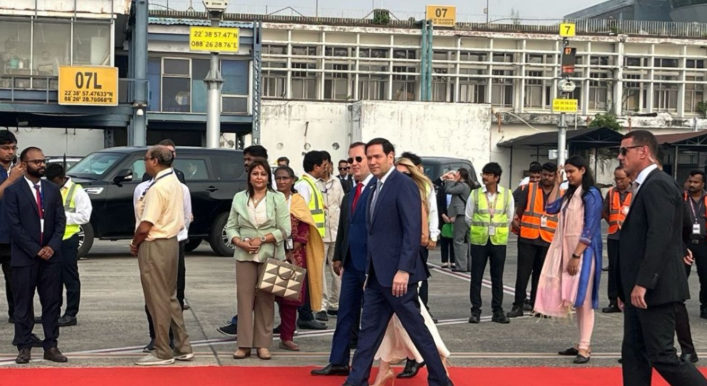
Rubio arrived for a four-day visit, his first to India since taking office, aiming to repair bilateral ties that have been under strain in recent months. The agenda is dense: trade negotiations, defense cooperation, energy security, and the centerpiece of the entire trip, a Quad Foreign Ministers’ meeting scheduled for May 26 in New Delhi.
The Quad brings together four democracies, the United States, India, Australia, and Japan, united by a shared concern: China’s growing military and economic dominance across the Indo-Pacific. Rubio will participate in the ministerial meeting of the Quad, which has repeatedly accused China of flexing its military muscles in the South China Sea and aggressively pushing its maritime territorial claims.
But beneath the diplomatic pageantry, tensions between Washington and New Delhi are real. Trade friction is reaching a boiling point, with Washington using the threat of sweeping domestic tariffs to force major concessions on a stalled interim trade deal. The two nations missed a critical April deadline after sudden shifts in U.S. trade policy made the initial terms obsolete.
The Iran crisis adds another layer of complexity. Responding to a question about India being affected by high energy prices due to the closure of the Strait of Hormuz, Rubio described India as a “great partner.” India has felt the economic pain of the Hormuz blockade acutely, as it relies heavily on Gulf oil imports. Washington wants New Delhi to reduce its dependence on Russian energy and pull back from its ties with Tehran — a difficult ask for a country that has long prided itself on strategic independence.
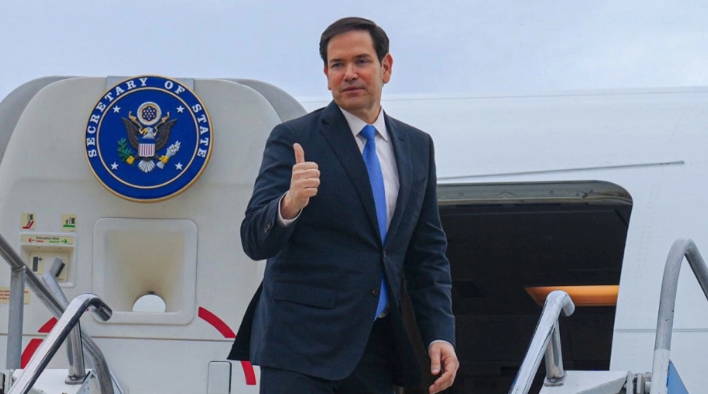
The Quad meeting agenda highlights a new Critical Minerals Initiative to diversify tech supply chains away from Beijing. This is where the real long game is being played. Control over rare earths and critical minerals, essential for semiconductors, electric vehicles, and advanced weapons systems, has become one of the defining strategic contests of the decade. The United States wants to build a supply chain that does not run through China, and India is central to that plan.
Why it matters: Rubio’s visit is not a courtesy call. It is a direct message to Beijing that the United States is investing in its alliances across Asia at exactly the moment when China is watching the Iran situation closely and reassessing its own regional ambitions. For the American public, the stakes are simpler: stronger ties with India mean more resilient supply chains, lower tech costs over time, and a more stable Pacific. The Quad is not a military alliance, but it is becoming something arguably more durable, a network of shared economic and strategic interests that China cannot easily break.
As China watches from the sidelines, will the Quad deliver real results or remain a diplomatic photo opportunity?