
Quick Summary
Israel’s Cabinet voted unanimously on Sunday, June 28, to formally recognize the mass killings of Armenians by the Ottoman Empire during World War I as a genocide, a designation Israel had avoided for decades to preserve relations with Turkey. The decision, which still requires approval by Israel’s Parliament, comes as ties between Jerusalem and Ankara have deteriorated sharply since the war in Gaza began, with Turkey now condemning the move as a politically motivated distraction from accusations it has leveled against Israel.
What Happened
Based on information reviewed by Edge World News from multiple international news organizations, Israel’s Cabinet voted unanimously to designate the killing of Armenians under the Ottoman Empire during World War I as genocide, following a resolution introduced by Foreign Minister Gideon Sa’ar. “It’s never too late to do the right thing,” Sa’ar wrote after the vote, adding that Israel had joined 32 countries that have “fulfilled a moral duty by recognizing the historical truth, and rejecting attempts to deny it.”

In a statement explaining the decision, Sa’ar said the genocide “included the murder of 1.5 million people and the destruction of an ancient cultural and historical heritage,” and described recognizing it as “our moral obligation as Jews, and certainly as the state of the Jewish people.”
Turkey responded with sharp condemnation, branding the recognition a “political” decision designed to deflect from accusations against Israel’s own conduct. Turkish officials accused the Israeli government of using the move to distract from what Ankara describes as Israel’s actions against Palestinians, a characterization Israel firmly rejects.
Background
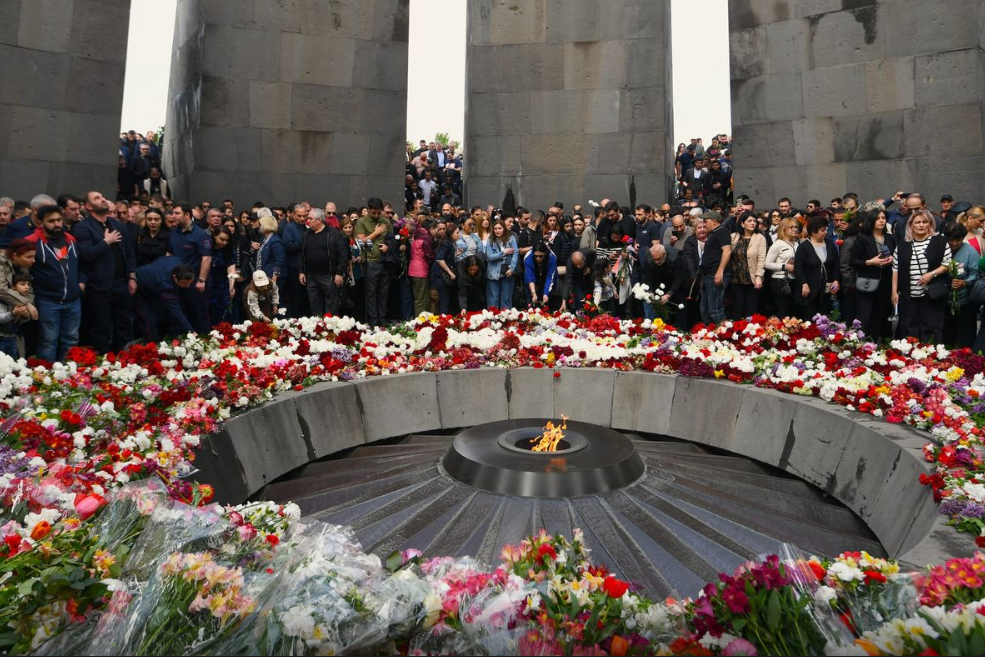
The killings being recognized took place between 1915 and 1917, when the Ottoman Empire, the precursor state to modern Turkey, killed, imprisoned, and forcibly deported large numbers of its Armenian population during the final years of World War I. Historians widely regard the events as the first genocide of the 20th century, with most scholarly estimates placing the death toll at approximately 1.5 million people. Turkey has consistently denied that the killings constituted genocide, arguing the death toll has been inflated and that both Armenians and Turks died amid the broader chaos and civil conflict of the era.
For decades, successive Israeli governments deliberately avoided using the term “genocide” to describe the events, specifically to avoid antagonizing Turkey, once one of Israel’s closest strategic and military partners in the region. That relationship began deteriorating significantly after Hamas’s October 7, 2023, attack on Israel triggered the war in Gaza, with Turkey emerging as one of Israel’s most vocal critics on the international stage, repeatedly accusing Israel of committing genocide against Palestinians, an accusation Israel strongly denies.
Why It Matters
The timing of Israel’s recognition, more than a century after the events themselves but in the midst of acute diplomatic hostility with Turkey, has led many observers to interpret the move as at least partly a response to Turkey’s own genocide accusations against Israel over Gaza. Sa’ar’s office has pushed back on that framing, with Israeli officials stating the decision was not intended as an act of retaliation against Turkey specifically.
The decision also places Israel among a relatively small group of nations willing to formally use the word “genocide” for the Armenian case despite Turkish diplomatic pressure. As of 2026, 32 UN member states, including the United States, Canada, Russia, France, and Germany, have made the same recognition. Notably, President Donald Trump has not used the term “genocide” to describe the Armenian killings, a contrast with his predecessor Joe Biden, who formally recognized the genocide during his presidency.
Expert Analysis
Diplomatic impact: The recognition is likely to further strain an already deeply damaged relationship between Israel and Turkey, two countries that were once significant regional security partners. Turkey’s framing of the decision as politically motivated suggests Ankara has no intention of softening its criticism of Israel over Gaza in response.
Political impact: Within Israel, the unanimous Cabinet vote suggests broad domestic political consensus on the decision, notable given how contentious many foreign policy questions have become within Israeli politics during the prolonged regional conflicts of recent years.
Historical and symbolic impact: For Armenia and Armenian communities worldwide, formal recognition by additional states carries significant symbolic weight in their decades-long campaign for international acknowledgment of the genocide, regardless of the specific geopolitical motivations behind any individual country’s decision to recognize it.
Regional impact: The decision adds another layer of complexity to an already fractured Middle Eastern diplomatic landscape, where alliances and hostilities have been actively reshaped by the Gaza war, the broader Iran conflict, and shifting relationships among regional powers.
Statistics & Context
Historians estimate that up to 1.5 million Armenians were killed by Ottoman forces during and after World War I. As of the Cabinet’s vote, 32 UN member states have formally recognized the events as genocide, including the United States, Canada, Russia, France, and Germany.
What’s Next
The Cabinet’s resolution must still be approved by Israel’s Parliament, the Knesset, before the recognition becomes formal government policy rather than an executive decision. The timeline for that parliamentary vote has not been independently confirmed. Turkey’s response in the days following the Cabinet vote, and whether it leads to further diplomatic or economic measures between the two countries, will be an important indicator of how seriously Ankara intends to escalate its objections.
FAQ
What did Israel’s Cabinet actually vote on?
Israel’s Cabinet voted unanimously to formally recognize the mass killing of Armenians by the Ottoman Empire during World War I as genocide.
Is this recognition final?
Not yet. The Cabinet’s resolution must still be approved by Israel’s Parliament, the Knesset, before it becomes official government policy.
Why did Israel wait until 2026 to recognize the Armenian genocide?
Israeli governments had historically avoided the recognition to preserve strategic relations with Turkey, a relationship that has deteriorated significantly since the war in Gaza began in 2023.
How has Turkey responded?
Turkey condemned the recognition as a “political” decision, accusing Israel of using it to deflect attention from accusations of genocide against Palestinians in Gaza.
How many countries recognize the Armenian genocide?
As of 2026, 32 UN member states have formally recognized the events as genocide, including the United States, Canada, Russia, France, and Germany.
Editorial Note: This article was prepared using publicly available information from international news organizations and official sources available at the time of publication. Facts may be updated as authorities release new information.
Sources: