
Quick Summary
When the United States deploys Marines, ships, or aircraft to help after a major earthquake or hurricane in another country, that response follows a specific legal and bureaucratic process built over decades, not a spontaneous decision by the president. The system involves multiple federal agencies working together, with the Department of Defense typically stepping in only when its unique logistical capabilities, like helicopters, cargo planes, or naval assets, are needed to save lives faster than civilian agencies could manage alone. The deployment of US Marines to Venezuela following last week’s devastating earthquakes offers a current, real-world example of how this process unfolds.
What Happened
US Marines were sent to Venezuela following twin earthquakes that struck the country last week, with the death toll continuing to climb past 1,700 people and tens of thousands still reported missing. The deployment came as part of a broader international rescue effort that has also included teams from Mexico, Brazil, and Cuba, working alongside Venezuelan emergency crews in the hardest-hit coastal areas, particularly La Guaira state.
Background: The System Behind Foreign Disaster Relief
Unlike domestic disaster response in the United States, which operates under the Stafford Act and is led primarily by the Federal Emergency Management Agency, the system for responding to disasters abroad runs through a different chain of command entirely. The lead agency overseas is typically the State Department, working alongside the US Agency for International Development’s humanitarian assistance bureau, which coordinates most federal disaster relief efforts in foreign countries.
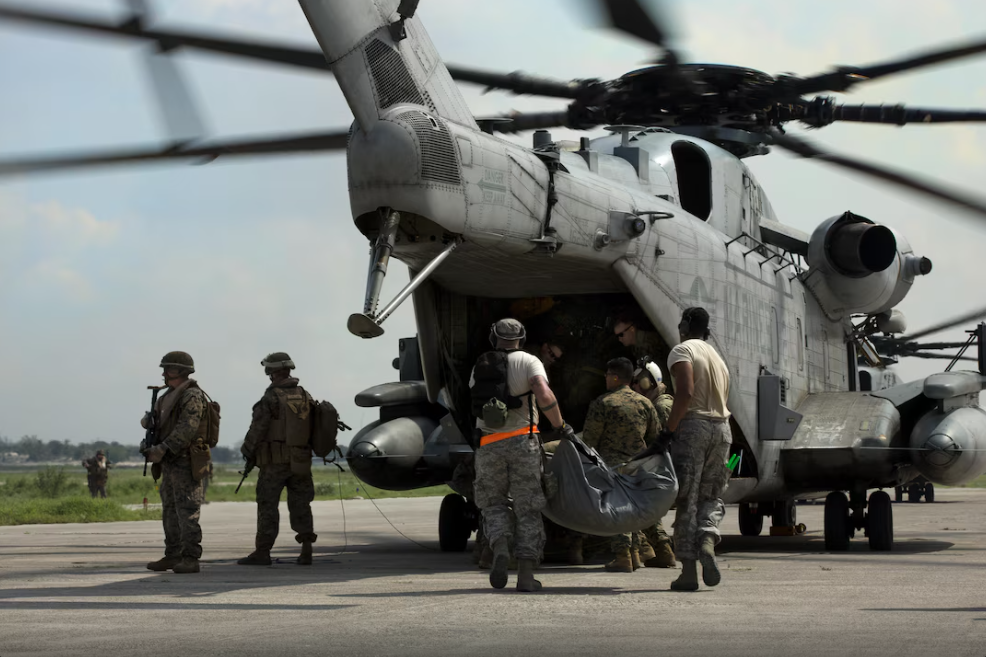
The Department of Defense becomes involved only under specific circumstances. According to the Defense Security Cooperation Agency, the military provides foreign disaster relief assistance specifically when unique DoD capabilities are required to save human lives, capabilities that civilian agencies and international organizations cannot easily replicate on their own. That typically means logistics, transportation, delivery of relief supplies, aerial reconnaissance, and search and rescue operations, the kind of large-scale, rapid mobilization that only a military possesses on short notice.
The process itself follows a defined sequence. The State Department submits a formal request to the Pentagon for disaster relief support. The Secretary of Defense then provides an authorization memo and tasks the relevant regional combatant command, in Venezuela’s case, US Southern Command, which oversees military operations throughout Latin America and the Caribbean. Funding for these operations typically flows through a specific appropriation known as Overseas Humanitarian, Disaster, and Civic Aid, which exists precisely to cover this kind of mission without requiring a separate act of Congress each time a disaster strikes.
Why It Matters
This system matters because it determines how quickly and how extensively the United States can respond when a catastrophic event overwhelms a foreign government’s own capacity to manage it, which is increasingly the situation facing Venezuela given the scale of destruction from last week’s earthquakes. The country’s economy and government institutions were already under significant strain before the quakes hit, and search and rescue operations to date have faced specific complications tied to existing US sanctions on Venezuela, which have created practical obstacles for moving equipment and personnel into the country quickly.
That tension, between maintaining sanctions policy and enabling humanitarian access, is not unique to Venezuela. It reflects a recurring challenge in US foreign disaster relief: balancing broader foreign policy considerations against the urgent, apolitical need to save lives in the immediate aftermath of a catastrophe.
Expert Analysis
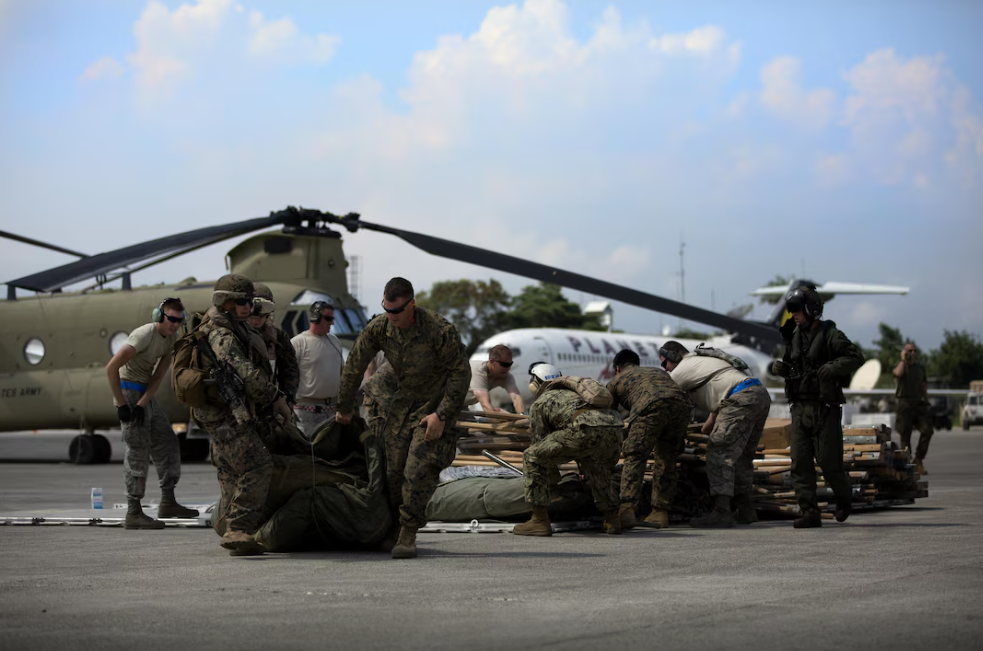
Operational impact: Marines deployed for disaster relief typically bring capabilities that dramatically expand what is possible in the earliest, most critical hours of a rescue operation, amphibious vehicles, heavy-lift helicopters, field medical units, and engineering teams capable of clearing debris or restoring basic infrastructure faster than most civilian relief organizations can mobilize alone.
Diplomatic impact: Military-led disaster relief abroad has historically served a dual purpose beyond the immediate humanitarian mission. It also tends to function as a form of soft power, reinforcing US relationships with affected nations during moments when goodwill and trust matter enormously, even amid otherwise complicated diplomatic relationships, as is the case between Washington and Caracas.
Political and economic impact: The intersection of sanctions policy and disaster response in Venezuela illustrates how broader geopolitical positions can directly affect humanitarian outcomes on the ground. Analysts who track this dynamic note that the practical friction created by sanctions, even when not the primary intent of those policies, can meaningfully slow relief efforts at the exact moment speed determines whether trapped survivors are found alive.
Humanitarian impact: With the Venezuela earthquake death toll continuing to rise past 1,700 and tens of thousands still missing, the window for finding additional survivors under collapsed structures narrows with each passing day, making the speed of international deployment, including the US Marine response, directly consequential for the outcome of the broader rescue effort.
Statistics & Context
The Venezuela earthquake death toll has surpassed 1,700, according to the latest figures, with tens of thousands of people still reported missing. International rescue teams currently operating in the country include personnel from Mexico, Brazil, Cuba, and the United States, working primarily in the hardest-hit region of La Guaira state.
What’s Next
As search and rescue operations in Venezuela continue, the coming days will likely determine how much additional US military support, if any, gets authorized through the formal interagency process described above. Whether the practical obstacles created by existing sanctions get addressed, even temporarily, to speed up the delivery of equipment and personnel will be an important indicator of how the Trump administration is choosing to balance its broader Venezuela policy against the immediate humanitarian crisis unfolding on the ground.
FAQ
Why doesn’t the US military just deploy automatically when a disaster happens abroad?
Because foreign disaster relief in the United States runs through a formal interagency process. The State Department must request Pentagon support, and the Secretary of Defense must authorize it, ensuring military involvement is reserved for situations where its specific capabilities are genuinely needed.
Which US agency leads disaster response in foreign countries?
The State Department and USAID’s humanitarian assistance bureau typically lead the overall US response abroad, with the Department of Defense providing support only when unique military capabilities, like air transport or large-scale logistics, are required.
How is this different from FEMA’s role in the United States?
FEMA operates domestically under the Stafford Act and leads disaster response within the United States. Overseas, that role shifts to the State Department and USAID, with the military serving a supporting rather than leading function.
Are US sanctions affecting earthquake relief efforts in Venezuela?
Reporting from international rescue teams indicates that existing US sanctions on Venezuela have created logistical obstacles for relief operations, though the precise scope of that impact has not been independently quantified.
What kind of support do Marines typically provide in these missions?
Marines deployed for foreign disaster relief commonly provide helicopter transport, amphibious vehicles, field medical care, and engineering support for clearing debris and restoring basic infrastructure in the earliest phase of a disaster response.
Editorial Note: This article was prepared using publicly available information from international news organizations and official sources available at the time of publication. Facts may be updated as authorities release new information.
Sources: