
Saturday evening in Washington felt ordinary until it didn’t. Just after 6 p.m., a 21-year-old man named Nasire Best walked up to a Secret Service security checkpoint on 17th Street and Pennsylvania Avenue NW, reached into his bag, pulled out a revolver, and opened fire on the officers standing guard.
Secret Service officers returned fire and hit the suspect, who later died at an area hospital. A bystander was also struck during the exchange of gunfire and remains in critical condition. It remains unclear whether the bystander was struck by Best’s initial gunfire or during the subsequent exchange. President Trump, who had changed his weekend plans at the last minute and stayed at the White House instead of traveling to his New Jersey golf club, was inside the complex and was not impacted.
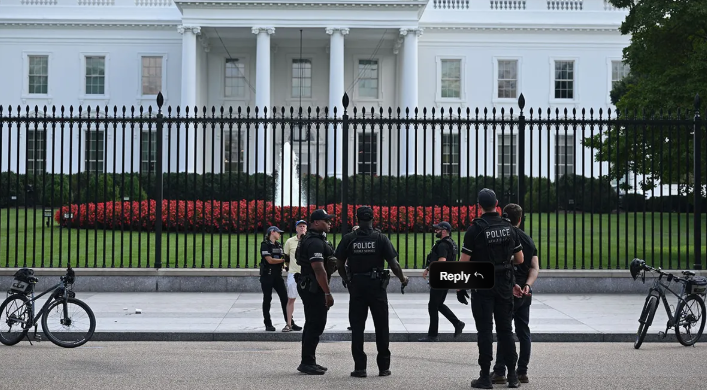
Between 15 and 30 gunshots were fired in total. The White House was placed on immediate lockdown, trapping journalists and reporters on the North Lawn. The lockdown was lifted after Best’s death was confirmed.
What makes this incident particularly alarming is not just the shooting itself — it is the history that preceded it. Best had previous encounters with the Secret Service. In June 2025, he blocked an entry lane at the White House. After claiming he was “God,” he was detained and committed to the Psychiatric Institute of Washington for mental evaluation. The following month, in July 2025, the Secret Service arrested Best again after he attempted to enter a White House complex driveway. A judge issued an order demanding he stay away from the White House grounds.
Social media belonging to Best includes one post that appeared to threaten violence against President Trump and another post where he wrote, “I’m actually the son of God.” Court records show one occasion where he was involuntarily committed to a psychiatric hospital and another where local police arrested him while he claimed “he was Jesus Christ.”
Despite all of this, Best managed to walk up to the most protected building in the United States carrying a loaded weapon and open fire.
This was not an isolated incident. It was the third time in the past month that shots were fired near the president, following an incident at the White House Correspondents’ Association Dinner in April and another near the Washington Monument earlier in May. That pattern is what is now drawing the sharpest scrutiny. How does a man with a documented history of mental health crises, prior Secret Service arrests, a court-issued stay-away order, and online posts threatening the president walk up to a checkpoint and open fire?
Why it matters: The shooting raises serious questions about how the United States handles individuals who are clearly on a dangerous trajectory. Best was known to law enforcement. He had been arrested, hospitalized, and ordered to stay away. The system flagged him repeatedly and still could not prevent what happened Saturday evening. As threats against elected officials continue to rise, the gap between what authorities know and what they can legally prevent is becoming impossible to ignore.
Should the US adopt stricter laws preventing mentally disturbed individuals with a documented history of threats from accessing firearms?