
NASA’s X-59 supersonic jet is preparing to break the sound barrier for the first time in early June 2026, in a historic milestone that could reshape commercial aviation as we know it.
The experimental aircraft, built by Lockheed Martin under NASA’s Quesst mission, is scheduled to exceed Mach 1 at approximately 43,000 feet, traveling at over 630 mph, during a series of test flights over California’s Mojave Desert. Engineers will then push the aircraft to Mach 1.4 at 55,000 feet, reaching roughly 925 mph, before eventually targeting a top speed of Mach 1.6.
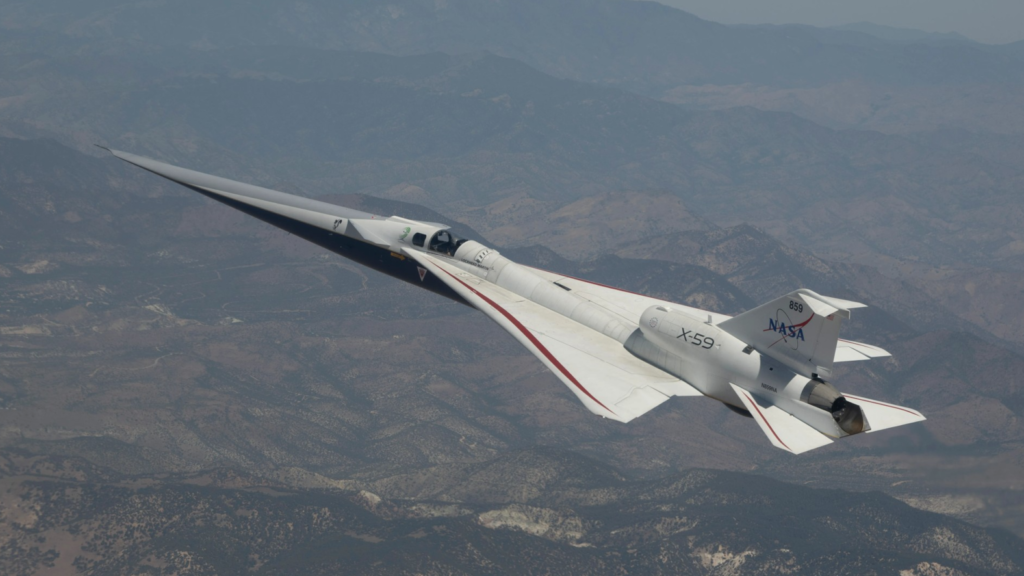
What makes the X-59 unlike anything that has flown before is not its speed but its silence. Traditional supersonic aircraft like the Concorde produced sonic booms of 105 to 110 decibels, roughly equivalent to a clap of thunder directly overhead. The X-59 is engineered to reduce that to just 75 decibels, roughly as loud as a car door closing. Instead of a boom, it produces what NASA calls a “sonic thump.”
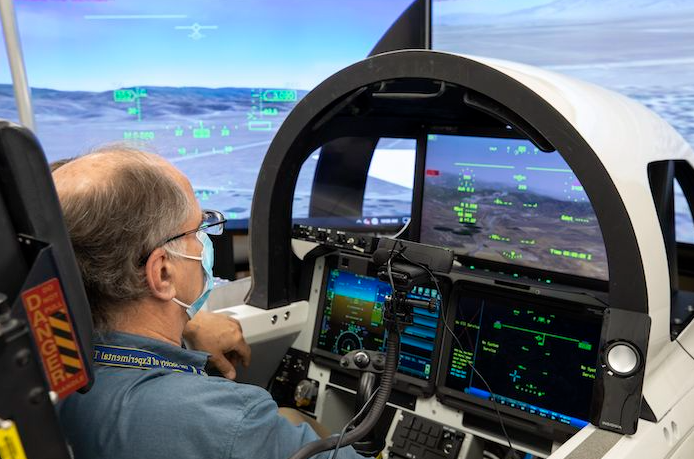
The aircraft’s extraordinary design makes this possible. Its nose occupies nearly one third of the plane’s total length, an extreme taper that scatters shockwaves before they can merge into a single loud boom. There is no forward windshield: the pilot navigates entirely via an augmented reality cockpit display fed by external cameras, known as the eXternal Vision System.
The X-59 completed its maiden flight in October 2025 and has since logged 14 additional test flights, reaching altitudes of 43,000 feet and speeds of Mach 0.95, just under the sound barrier. Project manager Cathy Bahm said: “What comes next is the first time this one-of-a-kind aircraft will fly supersonic. We are starting toward the mission conditions test point that X-59 was designed for.”
The stakes go far beyond one test flight. A June 2025 Executive Order by President Trump scrapped the FAA’s 52-year ban on supersonic flight over the continental United States. Congress followed with the Supersonic Aviation Modernization Act, passed by the House in March 2026, setting an April 1, 2027 deadline for new noise-based FAA rules. American Airlines and United Airlines have already placed pre-orders for jets from Boom Technology, the Colorado startup building the Overture supersonic airliner. A New York to Los Angeles flight on Overture would take approximately 3.5 hours, compared to over 5 hours today.
If the X-59’s quiet boom holds up in testing, it could rewrite aviation rules that have kept supersonic passenger planes off US skies since 1973 and bring back an era of fast commercial flight, this time without waking up the people below.