
Two developments in the Russia-Ukraine war within 24 hours have sent a clear message to the world: something significant is shifting, and neither side feels safe anymore.
On Monday, Russian Foreign Minister Sergei Lavrov called U.S. Secretary of State Marco Rubio with an unusually direct warning. A day after Moscow pummeled the Kyiv region with hundreds of drones and a powerful new hypersonic missile, Lavrov advised Rubio to pull American diplomatic staff and U.S. citizens out of Kyiv. Russia’s Foreign Ministry said Lavrov warned that Moscow was planning to launch “systematic and consistent strikes” against Ukrainian military sites in Kyiv and “relevant decision-making centers.”
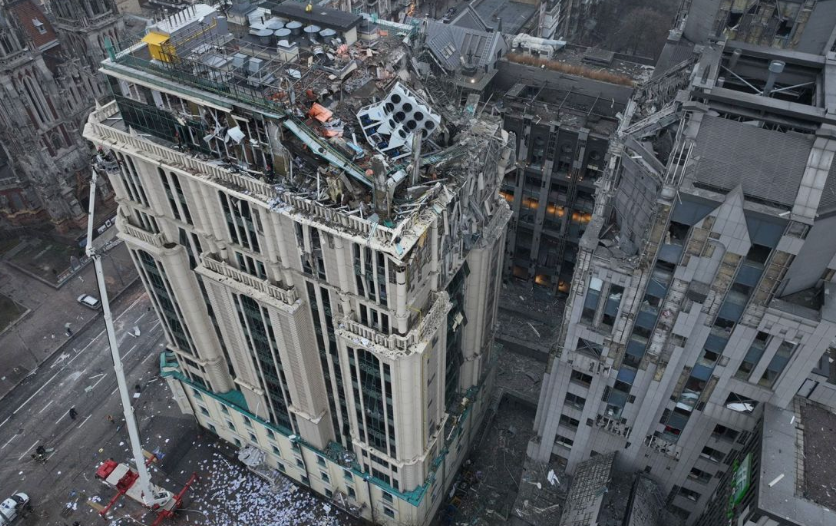
Lavrov told Rubio that the United States, along with other states with missions in Kyiv, should “ensure the evacuation of their diplomatic personnel and other citizens from the Ukrainian capital.” Rubio confirmed the call to reporters traveling with him in India, downplaying it as a personal advisory rather than a formal demand, but the message was received.
The trigger for Russia’s escalation was a Ukrainian strike on the town of Starobilsk in Russian-occupied Luhansk. Putin claimed Ukrainian drones struck a college dormitory, killing at least 21 people including children, and accused Kyiv of a deliberate “terrorist” act. Ukraine rejected that framing entirely, saying its forces had targeted the headquarters of a Russian drone military unit, not a civilian facility.
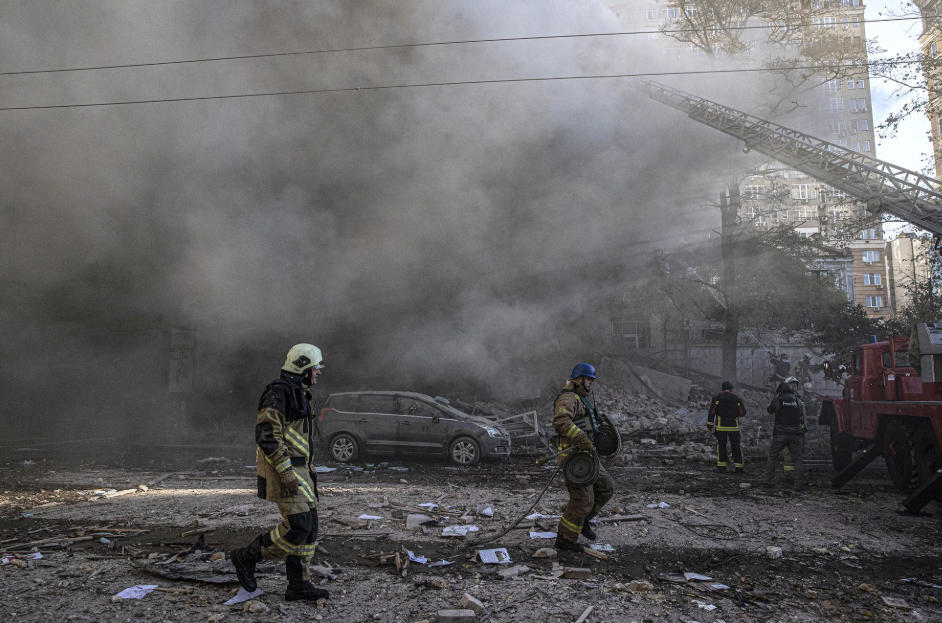
What followed was one of Russia’s most intense attacks on Kyiv in months. The overnight attack on the capital killed at least two people and wounded 91, according to authorities. Residents and authorities were seen cleaning up rubble on Monday left by Russia’s Sunday assault.
Then came the second story, one that says as much about the situation inside Russia as it does about the war itself. Vladimir Putin has closed Moscow airspace to all private planes and helicopters as fears of an assassination attempt mount. The area slated for closed airspace, up to an altitude of 16,700 feet, is roughly four times the size of the United Kingdom, stretching over a wide swath of central Russia from the border with Belarus in the west.
This is not a routine security measure. Closing airspace on that scale, over the capital of a nuclear power, in response to fears of an assassination attempt, signals a level of internal vulnerability that Moscow rarely acknowledges publicly. The timing, simultaneous with Russia’s most aggressive threats against Kyiv in months, suggests a leadership under pressure from multiple directions at once.
Despite everything, Rubio said the United States remains willing to help mediate an end to Russia’s war against Ukraine. Zelensky thanked Washington and urged stronger American leadership, saying the US is the country “which Russia fears.”
Why it matters: Russia warning Americans to leave Kyiv is not a diplomatic courtesy. It is a pre-strike notification, the kind that precedes major escalation. Combined with Putin sealing Moscow’s skies over assassination fears, the picture emerging is of a war entering a more dangerous and unpredictable phase, at the exact moment when American attention is split between Ukraine, Iran, and domestic political turmoil. The next 72 hours in Kyiv could define the next phase of a conflict that much of the world had hoped was winding down.