
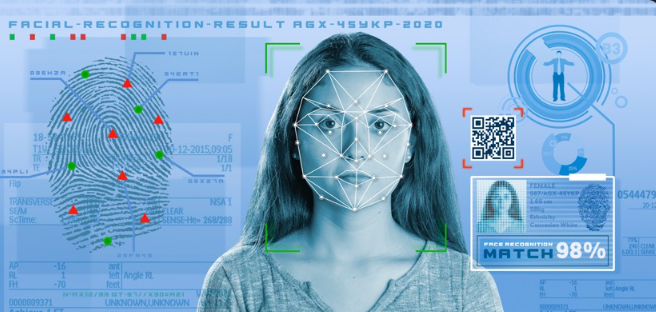
It started with facial recognition at airports. Then license plate readers on highways. Now, the Trump administration is deploying the next layer of biometric surveillance across the United States: iris scanners operated by ICE agents directly in the field, capable of identifying a person in real time using nothing more than a smartphone.
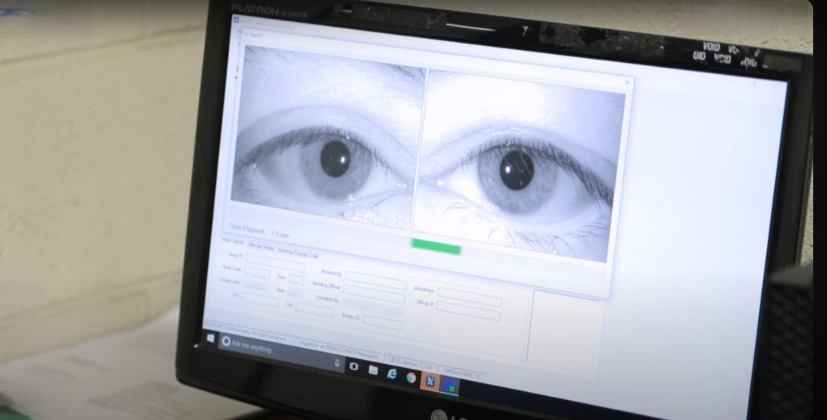
The Department of Homeland Security is expanding its capacity to scan irises as part of its mass deportation efforts. DHS awarded a $25 million no-bid contract to BI2 Technologies, a company that specializes in iris scanning. The scale of the expansion is significant.
Federal spending records show DHS awarded BI2 a $4.6 million contract in September 2025 for iris biometric recognition technology. That earlier award required BI2 to provide 200 biometric devices. The new contract calls for 1,570 devices, suggesting ICE is seeking to scale up the system’s physical deployment while maintaining nationwide access.
The technology itself is straightforward in theory and troubling in practice. The proposed system would give ICE agents the ability to scan a person’s iris using a smartphone and compare the result against a database containing more than five million criminal booking records, designed to return matches in real time during field operations. That means an agent on a street corner, at a bus stop, or outside a school can scan someone’s eyes and get an instant identity check, no warrant, no fingerprint card, no formal detention required to initiate the process.
Privacy experts are raising alarms about what this database could become over time. Marianna Poyares, a researcher at the Center on Privacy and Technology at Georgetown Law, says the implications change when sensitive biometric information is stored alongside other sensitive information. “What else is being collected? Is there any kind of oversight as to who is overseeing these databases? What kind of data is being combined and aggregated and for what use?” she asked.
DHS pushed back on those concerns with a brief statement, telling reporters it is using “every tool available” in its efforts to find, detain, and deport undocumented immigrants. The contract does include some data protection requirements, BI2 would be prohibited from using ICE query data for commercial purposes or sharing it with outside parties. But critics argue that internal prohibitions are not the same as independent oversight, and that a database of five million iris scans is exactly the kind of infrastructure that is difficult to dismantle once it exists.
The rollout is already underway. According to procurement documents, the deployment covers all 50 states. ICE has not publicly disclosed which locations will receive devices first, or what protocols agents must follow before initiating a scan on someone who has not been detained.
Why it matters: Iris recognition is considered one of the most accurate biometric identifiers in existence, more precise than fingerprints and far harder to defeat than facial recognition. Unlike a photograph, your iris cannot be changed, disguised, or grown back differently. Once your iris is in a government database, it is there permanently. The question the Trump administration has not publicly answered is whether this system will remain limited to people ICE detains, or whether it will expand, as facial recognition technology has, into routine encounters with the general public. The infrastructure being built right now will outlast any single administration, and the decisions made about it today will define the boundaries of biometric surveillance in America for decades to come.
Do you think the government should be allowed to scan your eyes on the street without a warrant?