
Quick Summary
The Vatican formally declared the Society of St. Pius X to be in schism on Wednesday, excommunicating four newly consecrated bishops along with two others who participated in the ceremony. The traditionalist group, which celebrates the old Latin Mass and has long rejected the modernizing reforms of the Second Vatican Council, defied a direct appeal from Pope Leo XIV to postpone the consecrations, proceeding anyway before a crowd of roughly 15,500 people.
What Happened
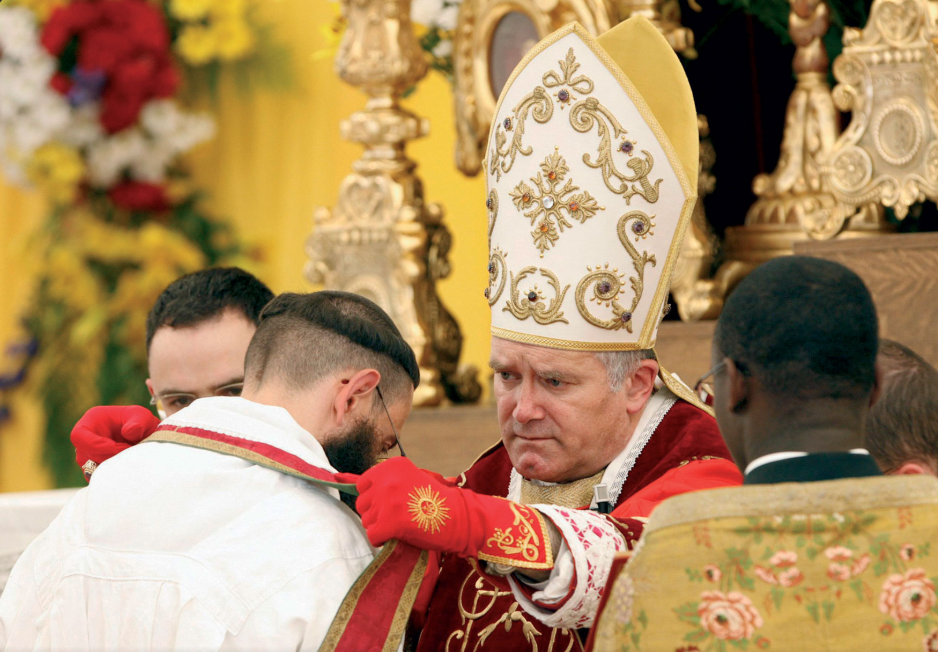
The Society of St. Pius X, commonly known by its acronym SSPX, held a five-hour Mass on Wednesday during which it consecrated four new bishops without papal approval, a direct act of defiance against Pope Leo XIV, who had specifically urged the group to hold off for the sake of the Catholic Church’s unity. The ceremony drew a large crowd, including many families with children, reflecting the society’s substantial following among Catholics who favor traditional liturgical practices over the changes introduced by the Second Vatican Council in the 1960s.
In response, the Vatican issued a decree excommunicating the four newly consecrated bishops and the two additional bishops who participated in performing the consecrations. The decree formally declared the consecrations a “schismatic act” and stated that the society itself had created a schism, an intentional rupture with the Catholic Church.
Background
The Society of St. Pius X was founded in 1970 by Archbishop Marcel Lefebvre in opposition to the liturgical and doctrinal reforms of the Second Vatican Council, which modernized many aspects of Catholic worship and practice, including shifting the Mass from Latin to vernacular languages. The society considers many of those reforms to constitute heresy and has operated in a state of tension with official Rome for decades.
That tension has flared into open schism before. In 1988, Lefebvre himself was excommunicated by Pope John Paul II after consecrating four bishops without Vatican authorization, a nearly identical scenario to Wednesday’s events. Pope Benedict XVI lifted those excommunications in 2009 in an attempt at reconciliation, though the society was never fully reintegrated into the Church’s official structure, continuing to operate largely outside standard diocesan authority.
Why It Matters
Wednesday’s declaration represents one of the most significant internal ruptures within the Catholic Church in recent memory, formally severing a traditionalist movement that, despite its unofficial status, has maintained a substantial global following of Catholics attached to the pre-Vatican II Latin Mass. The Vatican’s decree explicitly warned the faithful who attend SSPX Masses that those who “adhere formally” to the society are placing themselves outside communion with the Catholic Church, a serious spiritual and institutional consequence for practicing Catholics connected to the group.
Expert Analysis
Institutional impact: The excommunications formalize a break that has been building for decades, removing any ambiguity about the SSPX’s canonical status and forcing Catholics who attend its Masses to confront the question of their own standing within the Church.
Historical impact: The parallel to the 1988 Lefebvre excommunications, followed by their eventual lifting in 2009, suggests this schism could theoretically be reversed through future reconciliation efforts, though Wednesday’s defiance of a direct papal appeal indicates deeper resistance than existed even in the earlier episode.
Religious impact: For the estimated tens of thousands of SSPX adherents worldwide, the declaration creates immediate uncertainty about the validity of sacraments received through the society and their broader relationship with the institutional Church going forward.
Statistics & Context
Approximately 15,500 people attended Wednesday’s consecration ceremony. Six bishops in total were excommunicated: the four newly consecrated bishops and two others who participated in the ceremony. The SSPX was founded in 1970, and its previous excommunication crisis in 1988 was resolved through a Vatican reconciliation process in 2009.
What’s Next
It remains unclear whether Pope Leo XIV’s Vatican will pursue a reconciliation path similar to the one Pope Benedict XVI initiated in 2009, or whether Wednesday’s defiance signals a more permanent rupture. The society’s response to the excommunications, and whether it seeks any form of dialogue with Rome, will likely shape whether this schism follows the earlier precedent toward eventual resolution or becomes a more lasting division.
FAQ
What is the Society of St. Pius X?
The SSPX is a traditionalist Catholic organization founded in 1970 that celebrates the Latin Mass and rejects many reforms introduced by the Second Vatican Council, which it considers doctrinally problematic.
Why did the Vatican excommunicate these bishops?
The Vatican excommunicated six bishops after the SSPX consecrated four new bishops without papal approval, defying a direct request from Pope Leo XIV to postpone the ceremony, an act the Vatican declared schismatic.
Has this happened before?
Yes. In 1988, SSPX founder Marcel Lefebvre was excommunicated by Pope John Paul II under nearly identical circumstances, consecrating bishops without Vatican authorization. Those excommunications were lifted in 2009.
What does excommunication actually mean for Catholics who attend SSPX Masses?
The Vatican’s decree warned that those who formally adhere to the society are placing themselves outside communion with the Catholic Church, though the practical and spiritual implications can vary depending on individual circumstances and canon law interpretation.
Could this schism eventually be resolved like the 1988 case?
It’s possible but not guaranteed. The 2009 reconciliation followed years of dialogue after the 1988 crisis, and no similar process has been announced following Wednesday’s excommunications.
Editorial Note: This article was prepared using publicly available information from international news organizations and official sources available at the time of publication. Facts may be updated as authorities release new information.
Sources: