
Quick Summary
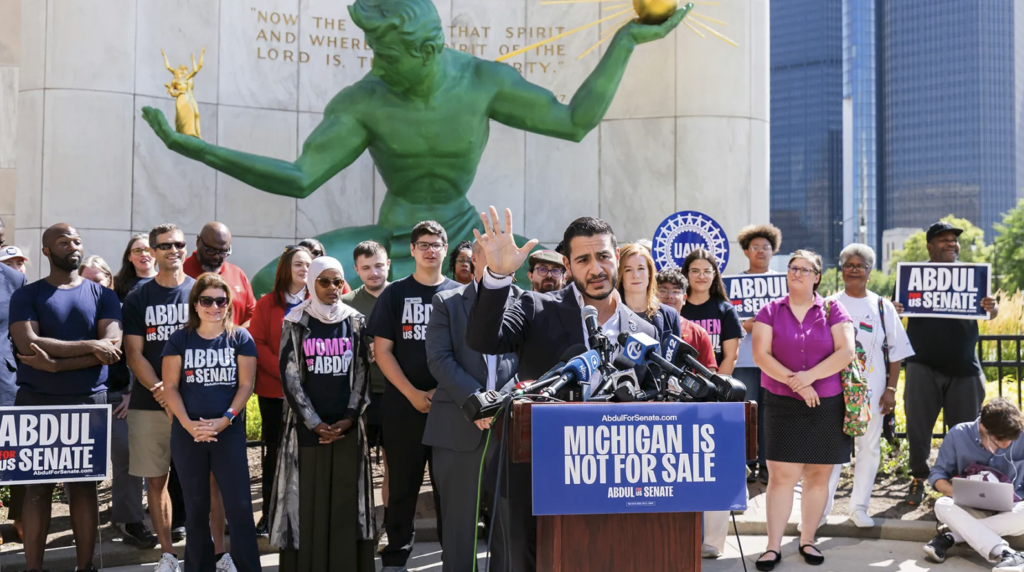
Progressive public health advocate Abdul El-Sayed narrowly won Michigan’s Democratic Senate primary on Wednesday, overcoming nearly $65 million in outside spending, most of it from pro-Israel groups aligned with AIPAC, to defeat U.S. Representative Haley Stevens by roughly one percentage point. According to Al Jazeera, the race was called by the Associated Press and other major outlets more than 12 hours after polls closed Tuesday night, following an unusually expensive and closely watched primary. El-Sayed now advances to face former Republican Congressman Mike Rogers in November, in a general election expected to be one of the most competitive Senate races in the country and potentially decisive for which party controls the chamber.
What Happened
El-Sayed, an epidemiologist and former Detroit and Wayne County health director, defeated Stevens in a race that vote counters worked through the night and into Wednesday morning to resolve, according to NPR. With nearly all votes counted, El-Sayed held roughly a one percent lead, according to Al Jazeera. Stevens called El-Sayed to concede and released a public statement congratulating him, describing him as a doctor, community health official, Rhodes Scholar, and dedicated Michigander, and pledging her support as he moves on to face Rogers, according to CNN.
The financial imbalance in the race was stark. According to NBC News, El-Sayed overcame a nearly $65 million onslaught of outside money backing Stevens, including more than $30 million specifically from AIPAC, and an establishment coalition that rallied around her candidacy. Michigan Governor Gretchen Whitmer, a popular Democrat in the state, endorsed Stevens late in the campaign in what NBC News described as a last-ditch effort to slow El-Sayed’s rise, though she later issued a separate statement congratulating El-Sayed and calling for party unity heading into November.
Background
El-Sayed previously ran for Michigan governor in 2018, finishing second in the Democratic primary behind Whitmer by more than 20 points, while beating future U.S. Representative Shri Thanedar by more than 12 points in that same race, according to The Associated Press via Yahoo News. He entered the Senate race in 2025 to succeed retiring Democratic Senator Gary Peters, framing his campaign around Medicare for All and opposition to what he described as the outsized influence of billionaires and corporate money in politics.
His campaign drew high-profile progressive support throughout the race, including a joint appearance in Detroit with Senator Bernie Sanders and Representative Alexandria Ocasio-Cortez in mid-July, according to NBC News. That backing became a point of attack from Republicans as well: the National Republican Senatorial Committee produced a digital ad highlighting El-Sayed’s progressive credentials and his endorsement from Sanders, a move NBC News reported many viewed as an attempt to help El-Sayed win the primary specifically because Republicans believed he would be an easier general election opponent than Stevens. President Trump told Fox News on primary day that he believed Rogers would perform better against El-Sayed than against Stevens.
Why It Matters
El-Sayed’s win represents a significant setback for AIPAC’s electoral strategy, which had made defeating him one of its central priorities in this year’s midterm cycle. Al Jazeera’s reporting frames the result as an enormous blow to the organization, given the scale of spending it directed against a single primary race. Maya Berry, executive director of the nonpartisan Arab American Institute, described the outcome as a big deal, telling Al Jazeera that voters did not buy the wave of advertising that avoided discussing substantive policy differences.
The race also carries significant national implications beyond Michigan itself. El-Sayed, who is of Egyptian descent, would become the first Muslim senator in American history if he wins in November. He has publicly characterized Israel’s actions in Gaza as genocide and has argued that money currently spent on conflicts benefiting Israel should instead be redirected toward addressing healthcare, housing, and infrastructure needs in American communities, positions that are likely to make his general election campaign a closely watched proxy battle over the Democratic Party’s direction on Middle East policy. Michigan, a swing state that voted for Trump in 2024, adds further weight to how the race’s outcome could shape broader political narratives heading into 2028.

Expert & Official Reaction
Arab American Institute: Executive Director Maya Berry called El-Sayed’s victory a big deal, arguing that voters rejected an advertising campaign that failed to engage with actual policy substance.
Stevens’ concession: Representative Haley Stevens congratulated El-Sayed in her concession statement, writing that primaries exist for exactly this reason, and pledged to keep working to ensure the Senate seat remains in Democratic hands in November.
Governor Whitmer: After backing Stevens late in the race, Whitmer issued a follow-up statement urging party unity, saying Michigan’s other senator, Elissa Slotkin, deserves a partner like El-Sayed in the U.S. Senate.
Presidential commentary: President Trump told Fox News ahead of the results that he believed Republican nominee Mike Rogers would perform better against El-Sayed in November than he would have against Stevens.
Statistics & Context
- El-Sayed’s margin of victory: approximately 1 percentage point
- Outside spending against El-Sayed, mostly from pro-Israel groups: nearly $65 million
- Spending specifically from AIPAC-aligned groups: more than $30 million
- El-Sayed’s age: 40
- El-Sayed’s prior statewide result (2018 governor’s primary): finished second, losing to Whitmer by more than 20 points
- Hours after polls closed before the race was called: more than 12
What’s Next
El-Sayed now heads into a general election campaign against former Republican Congressman Mike Rogers, in a race widely regarded as one of the most competitive Senate contests in the country and one that could help determine which party controls the chamber for the remainder of President Trump’s term. Democratic Party unity, given the closely contested and sometimes bitter primary, is expected to be an early test heading into the fall, with figures like Whitmer and Stevens already publicly signaling support for El-Sayed’s candidacy. His positions on Middle East policy are likely to remain a significant point of contrast with Rogers throughout the general election campaign.
FAQ
Who won the Michigan Democratic Senate primary?
Abdul El-Sayed, a progressive public health advocate and epidemiologist, narrowly defeated Representative Haley Stevens.
How much money was spent against El-Sayed?
Nearly $65 million in outside spending backed Stevens, including more than $30 million from AIPAC-aligned groups.
Who will El-Sayed face in the general election?
Former Republican Congressman Mike Rogers, who won the Republican nomination unopposed.
Why is this race considered historically significant?
If El-Sayed wins in November, he would become the first Muslim senator in U.S. history.
What are El-Sayed’s key policy positions?
He supports Medicare for All, has described Israel’s actions in Gaza as genocide, and argues for redirecting funds from conflicts benefiting Israel toward domestic healthcare, housing, and infrastructure needs.
Editorial Note: This article was prepared using publicly available information from news organizations available at the time of publication.
Sources:
Al Jazeera:Abdul El-Sayed wins Michigan Democratic primary for Senate in blow to AIPAC