
Quick Summary
Air conditioning changed America more than almost any other invention of the twentieth century, and the story begins with a young engineer named Willis Carrier solving a humidity problem in a Brooklyn printing plant in 1902. What started as an industrial fix went on to reshape the nation’s map, powering the rise of the Sun Belt, transforming Phoenix, Houston, Las Vegas, and Miami from hot outposts into some of the fastest growing metropolitan areas in the country. Today 88 percent of American households use air conditioning, a figure unmatched almost anywhere in the world, and researchers credit the technology with driving down heat related deaths by roughly 75 percent since 1960. This is the story of how cooled air rewrote American politics, architecture, work, and daily life.

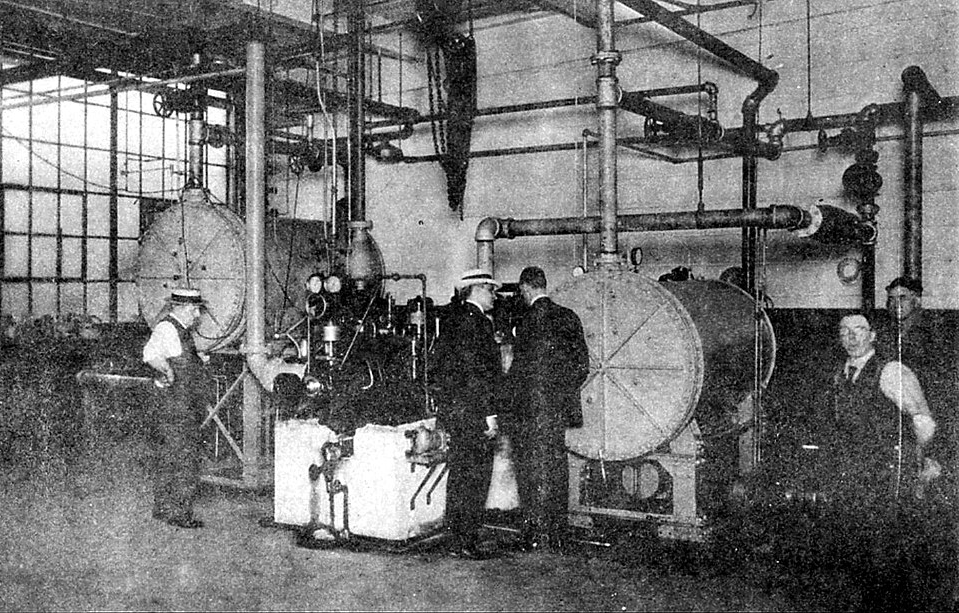
Where It All Began
The invention was never meant to cool people. In the summer of 1902, the Sackett-Wilhelms Lithographing and Publishing Company in Brooklyn had a production crisis: humid air kept swelling the paper and misaligning the colored inks in its printing presses. A 25 year old engineer named Willis Haviland Carrier, one year out of Cornell University, designed a system that blew air across chilled coils to control both temperature and humidity. The machine worked, and on July 17, 1902, Carrier’s drawings for what became the world’s first modern air conditioning system were complete.
Carrier patented his “Apparatus for Treating Air” in 1906, the same year textile engineer Stuart Cramer coined the phrase “air conditioning” to describe humidity control in Southern cotton mills. In 1915 Carrier and six colleagues pooled their savings to found the Carrier Engineering Corporation, the company that still bears his name today.
For its first two decades, air conditioning served machines and products, not people. Printing plants, textile mills, film studios, and candy factories bought the systems to protect their goods. The turning point for ordinary Americans came in 1925, when Carrier installed a cooling system at the Rivoli Theatre in Times Square. Movie theaters became the first air conditioned spaces most Americans ever experienced, and studios began releasing their biggest films in the hottest months to draw sweltering crowds indoors. The summer blockbuster was born in a cooled room.
Read also: Why Does America Have Time Zones? The Railroad History Behind Standard Time
How the Technology Spread Through American Life
Government adopted cooling early. The House and Senate chambers were air conditioned by 1929, and the White House followed in the early 1930s under President Hoover. But homes lagged far behind. Early residential systems were enormous and priced like luxury cars. The breakthrough came after World War II, when compact window units hit the mass market. Roughly 43,000 window units sold in 1947. By 1965, still only about one in ten American homes had any cooling at all. Then central air became standard in new construction across the South and West, and adoption exploded. The Energy Information Administration’s Residential Energy Consumption Survey now puts household air conditioning use at 88 percent nationwide, with the South at 93 percent and the Midwest at 92 percent, while about two thirds of households rely on central systems or heat pumps.
Why It Matters: The Invention That Redrew the Map
No technology did more to build the modern Sun Belt. In 1940, Phoenix was home to about 65,000 people. Today the Phoenix metropolitan area holds nearly five million. Houston, Las Vegas, Orlando, Tampa, Atlanta, and Dallas all rode the same wave. Between 1950 and 2000, the share of Americans living in the South and West climbed steadily as retirees, workers, and corporations moved toward sunshine that had suddenly become livable year round.
The political consequences were just as large. Population shifts moved dozens of electoral votes and congressional seats from the Northeast and Midwest to Southern and Western states over the second half of the twentieth century, a reallocation of power that continues with every census. Historians have argued that without air conditioning there is no modern Florida, no Houston energy corridor, and no Las Vegas as we know it.
Read also: The Real Story of Lady Liberty: Why France Gave America Its Most Famous Statue
A Deeper Look at the Impacts
Public health may be the most underappreciated effect. A landmark study published in the Journal of Political Economy by economists Alan Barreca, Karen Clay, Olivier Deschenes, Michael Greenstone, and Joseph Shapiro found that the spread of residential air conditioning after 1960 explains essentially the entire decline in heat related mortality in the United States, a drop of roughly 75 percent. On days above 90 degrees, the death rate before air conditioning was dramatically higher than it is today.
Architecture changed too. Front porches, high ceilings, transom windows, and sleeping porches, all designs meant to catch breezes, faded from American homebuilding once mechanical cooling made them unnecessary. Office towers with sealed glass walls became possible only because chilled air could be pumped through them. Economists have also linked air conditioning to measurable gains in worker productivity, school performance in hot months, and even reduced summer crime.
The trade off is energy. Air conditioning accounts for a substantial share of summer electricity demand, and grid operators across Texas and the Southwest now plan their entire year around peak cooling load during heat waves.
By the Numbers
The essential figures: 88 percent of U.S. households use air conditioning per the EIA’s Residential Energy Consumption Survey, versus roughly 20 percent of homes in Europe. The South leads at 93 percent, the West trails at 73 percent. Phoenix grew from 65,000 residents in 1940 to a metro area of almost five million. Heat related mortality fell about 75 percent after 1960, with researchers attributing nearly all of that decline to residential cooling. Willis Carrier completed his first system design on July 17, 1902, meaning the invention just turned 124 years old this week.
Looking Ahead
As summers grow hotter, air conditioning is shifting from comfort to survival infrastructure. Cities like Phoenix have opened publicly funded cooling centers, and the Census Bureau released a tool this June identifying communities with limited cooling access that are most vulnerable during heat waves. The next challenge is efficiency: heat pumps, smart thermostats, and updated building codes are all aimed at keeping Americans cool without overwhelming the grid that Willis Carrier’s invention now defines every July.
FAQ
Who invented air conditioning?
Willis Haviland Carrier, a 25 year old engineer from upstate New York, designed the first modern system in 1902 to control humidity at a Brooklyn printing plant. He patented his “Apparatus for Treating Air” in 1906 and co-founded Carrier Engineering Corporation in 1915.
When did air conditioning become common in American homes?
Slowly. Only about 10 percent of homes had cooling in 1965. Mass produced window units after World War II and central air in postwar Sun Belt construction pushed adoption to 88 percent of households today.
How did air conditioning create the Sun Belt?
It made year round life and work tolerable in the hot South and Southwest. Phoenix grew from 65,000 people in 1940 to a metro area of nearly five million, and similar booms transformed Houston, Las Vegas, Orlando, and Atlanta, shifting population, congressional seats, and electoral votes southward.
Does air conditioning really save lives?
Yes. Peer reviewed research found the spread of residential cooling after 1960 explains essentially the entire decline in U.S. heat related deaths, a drop of roughly 75 percent.
What percentage of American homes have air conditioning compared to other countries?
About 88 percent of U.S. households use it, among the highest rates in the world. In Europe the figure is closer to 20 percent, which is why severe European heat waves often produce far higher death tolls.
Editorial Note: This article was prepared using publicly available information from international news organizations and official sources available at the time of publication. Facts may be updated as authorities release new information.
Sources:
- U.S. Energy Information Administration, Nearly 90% of U.S. households used air conditioning in 2020
- U.S. Census Bureau, New Census Tool Pinpoints Communities With Limited Access to Air Conditioning
- ASME, Willis Haviland Carrier
- Time, These 5 Charts Show Just How Much the U.S. Relies on Air Conditioning