
Quick Summary
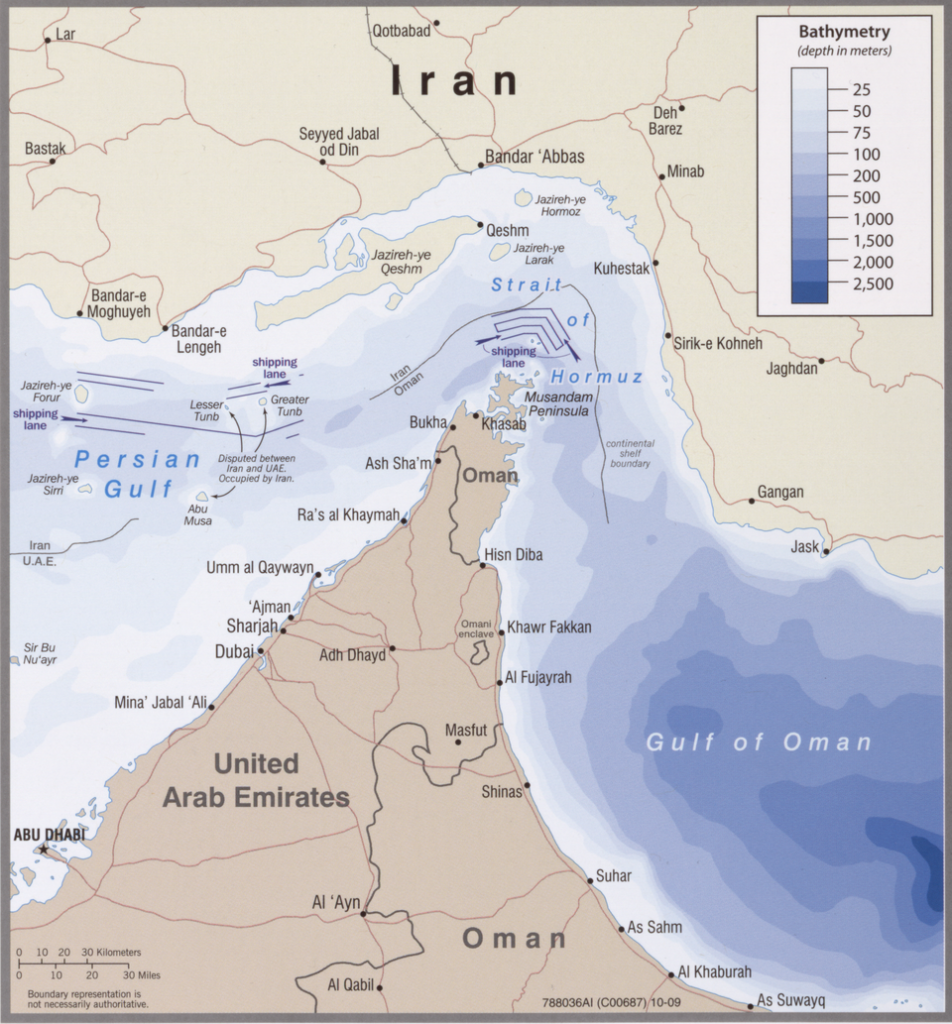
President Trump posted a map on Truth Social Tuesday showing the Strait of Hormuz circled and labeled “New U.S. Territory,” escalating a claim he first floated on Friday and has now repeated three times in four days. The waterway, through which roughly one-fifth of the world’s oil typically transits, runs entirely through territorial waters belonging to Iran and Oman under international law, meaning the U.S. has no recognized legal basis for the claim. Iran’s Deputy Foreign Minister, Kazem Gharibabadi, dismissed the post within hours, writing that the strait “has been Iranian, is Iranian, and will remain Iranian,” and that it “cannot be seized by tweet.” Trump’s post came hours after Iranian officials said the strait would remain closed until the U.S. lifted its naval blockade and sanctions, and two hours later, Trump posted separately that no talks with Iran were currently scheduled, insisting the strait was already “open and operating.”
What Happened
Trump shared the map early Tuesday morning without additional commentary, according to ABC News affiliate coverage. The image showed a portion of the Middle East with a large circle drawn around the Strait of Hormuz and the words “New U.S. Territory” printed across it. He first raised the idea Friday, addressing a mostly law-enforcement audience in Garden City, New York: “After we finish defeating Iran, which is being very badly defeated, pretty soon I’ll be declaring the Hormuz Strait a territory of the United States.” He repeated it Monday when reporters asked him at the White House, saying, “We control it with the blockade, and I like the idea of declaring it a territory.”
Iran’s response was swift and dismissive. Gharibabadi, posting on X, said the strait “will only be closed and opened under Iran’s command,” and added that as long as the U.S. does “not accept the reality of defeat,” Iran would continue enforcing its blockade of the waterway. Iranian officials separately said Tuesday the strait would stay closed until the U.S. met several conditions: lifting its naval blockade of Iranian ports, releasing frozen Iranian assets, removing oil sanctions, and ending military operations “on all fronts,” according to remarks from parliamentary speaker Mohammad Bagher Ghalibaf reported by Forbes.
About two hours after the map post, Trump published a follow-up on Truth Social insisting there were “no talks or conversations going on, or scheduled, with the Islamic Republic of Iran,” and claiming the Naval Blockade “remains in full force and effect” while the strait itself was “open and operating,” with “all water mines removed or detonated.” That claim could not be independently verified, and it directly conflicts with Iran’s own statement, issued the same day, that the strait remains closed.
Background
The Strait of Hormuz separates Iran from Oman and the United Arab Emirates and functions as one of the most strategically important shipping lanes in the world. Roughly 20 percent of global oil consumption typically moves through it, according to reporting from The Hill. Since the current US-Israel-Iran war began in February, Iran has restricted commercial transit through the waterway, while the U.S. has maintained its own naval blockade against Iranian ports, creating a prolonged standoff that has disrupted global shipping and pushed up energy prices.
The claim arrives as the war approaches its sixth month with no resolution. A 60-day window for a broader U.S.-Iran peace deal, set under a memorandum of understanding signed in June, expired Monday without an agreement, and Iran’s Foreign Ministry has said it would shift to a “fully offensive” military posture following what it described as repeated U.S. violations of the agreement’s terms.
Under international maritime law, sovereignty over the strait is not genuinely in dispute: it lies within the territorial waters of Iran and Oman, and no established legal mechanism would allow the United States to unilaterally declare it American territory. Neither the White House nor the State Department has offered a legal framework for how such a declaration would be implemented or enforced.
Why It Matters
A sitting U.S. president publicly claiming sovereignty over a strategic international waterway, even informally through a social media post, is a significant departure from standard diplomatic practice, regardless of whether the claim is ever formalized. The gap between Trump’s assertion that the strait is “open and operating” and Iran’s same-day statement that it remains closed also underscores how difficult it is for outside observers to determine the waterway’s actual status at any given moment, since both governments have strong incentives to describe the situation favorably.
Analysis: What It Means
Trump has now repeated the “new U.S. territory” claim three times in four days, moving from a joking aside at a police event to a formal-looking map posted without further comment. That repetition suggests the statement functions as leverage in the standoff over Hormuz rather than an announcement of imminent legal or military action, since no legal or diplomatic process supporting an actual annexation has been described. Iran’s dismissive response indicates Tehran does not currently view the statement as requiring a substantive countermeasure beyond rhetoric. Whether the claim escalates into something more concrete is not indicated by anything said so far.
Statistics & Context
- Share of global oil that typically transits the Strait of Hormuz: approximately 20%
- Number of times Trump has raised the claim publicly since Friday: 3
- Length of the now-expired US-Iran negotiation window: 60 days
- Length of the ongoing US-Israel-Iran war as of this week: approaching 6 months
What’s Next
Iranian officials have said broader U.S.-Iran talks will not resume until Iran and Oman first finalize their own arrangement for passage through the strait, with Qatar’s Foreign Ministry offering to mediate. Whether Trump’s claim translates into any formal U.S. action remains unstated by the administration. Actual shipping activity through the strait, rather than dueling public statements, will be the clearest indicator of the waterway’s real status going forward.
FAQ
Does the U.S. actually control the Strait of Hormuz?
No. Under international law, the strait lies within the territorial waters of Iran and Oman.
Has Trump made this claim before?
Yes, three times since Friday, first at an event in New York, then to reporters at the White House, then in Tuesday’s Truth Social post.
How did Iran respond?
Iran’s Deputy Foreign Minister called the claim a “delusion” and said the strait “cannot be seized by tweet,” while separately stating it will remain closed until the U.S. meets several conditions.
Is the Strait of Hormuz actually open right now?
Accounts conflict. Trump said Tuesday it was “open and operating”; Iran said the same day it remains closed. Neither claim has been independently verified.
Editorial Note: This article is based on reporting from KLTV (ABC/CNN Newsource), Forbes, The Hill, Mediaite, and Democracy Now, as available at the time of publication. Statements from the Trump administration and Iranian officials have not been independently verified and are presented as attributed claims throughout.
Sources:
KLTV (ABC/CNN Newsource) – Trump Doubles Down on Threat to Claim the Strait of Hormuz
Forbes -Trump Labels Strait of Hormuz Map “New U.S. Territory”
The Hill – Trump Posts Map Labeling Strait of Hormuz as a New U.S. Territory
Mediaite – Trump Truth Says Strait of Hormuz Is “NEW U.S. Territory”