
Quick Summary
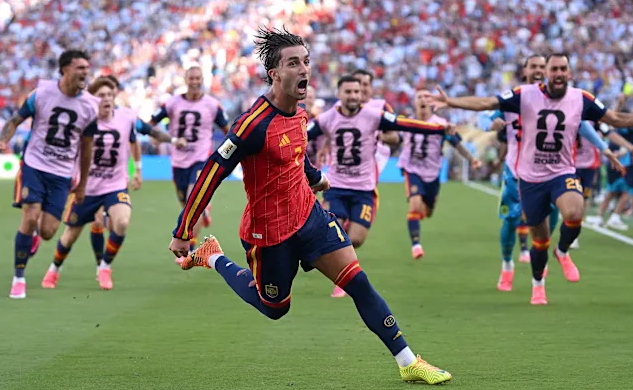
Spain defeated Argentina 1-0 in extra time on Sunday to win the 2026 FIFA World Cup, its second title in program history, capping a tournament in which the team conceded just a single goal across eight matches, a new World Cup record for a champion. Substitute forward Ferran Torres scored the decisive goal 37 seconds into the second period of extra time at MetLife Stadium in East Rutherford, New Jersey, denying Argentina and Lionel Messi a chance at back-to-back titles. The win extended Spain’s unbeaten run to 38 consecutive matches, the longest active streak by any European national team in history.
What Happened
According to NPR, Spain dominated possession throughout the match and shut down Argentina’s attack almost entirely, holding Messi’s team to zero shots and just two touches in Spain’s penalty box through the first half of extra time. Argentina goalkeeper Emiliano Martínez kept the match scoreless through regulation with 11 saves, the most ever recorded in a men’s World Cup final, before Torres finally broke through.
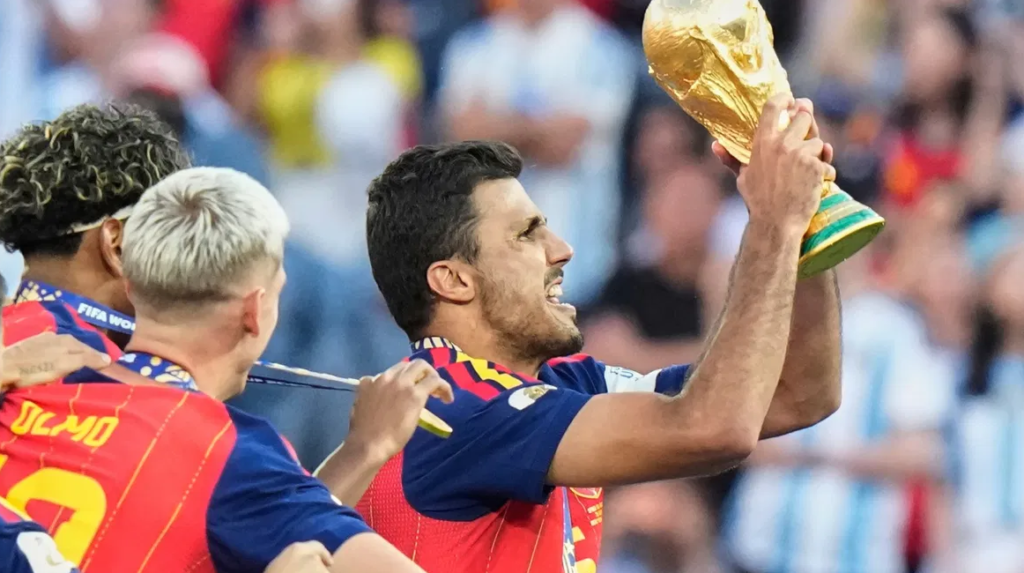
CBS News reported Spain outshot Argentina 20-3 across the match, and Spain head coach Luis de la Fuente, at 65, became the oldest coach ever to lead a team to a World Cup title. Rodri lifted the trophy for Spain and separately won the tournament’s Golden Ball as its best player.
Background
This marked Spain’s second World Cup title, following its first in 2010, and its second trip to a men’s World Cup final. The team’s dominant, low-scoring run through this tournament included wins over four of the world’s top ten ranked sides, according to NPR. Spain’s 38-match unbeaten streak, comprising 29 wins and 9 draws, now stands as the longest ever by a European nation, surpassing Italy’s 37-match run from October 2018 to September 2021, a streak Spain itself ended when the two teams met.
The tournament marked the first time the men’s World Cup was hosted across three North American countries, the United States, Canada, and Mexico, with the final held at MetLife Stadium in New Jersey.
Why It Matters
Spain’s title reinforces its status as the dominant international team of the current era, building on its 2024 European Championship win and now adding a second World Cup crown. The record-low single goal conceded across the tournament highlights an unusually defense-first approach for a team long associated with attacking, possession-based soccer, suggesting a tactical evolution under de la Fuente that other national programs may look to study.
The final’s broader spectacle, including a halftime show featuring Madonna, Justin Bieber, Shakira, and BTS, according to CNBC, underscored the scale of the tournament as the first World Cup expanded to a 48-team format and hosted across three nations.
Expert & Official Reaction
Spain’s coach: Luis de la Fuente said after the match that the team had reached this stage together, crediting the collective effort of the squad for the title.
FIFA’s refereeing chief: Pierluigi Collina said a referee’s performance in big matches is what matters most in officiating assignments, addressing the selection process for the final.
Statistics & Context
- Final score: Spain 1, Argentina 0 (after extra time)
- Goals conceded by Spain across the entire tournament: 1, a new record for a champion
- Spain’s unbeaten streak: 38 matches (29 wins, 9 draws), the longest ever by a European team
- Shots taken by Spain vs. Argentina in the final: 20 to 3
- Saves by Argentina’s Emiliano Martínez in the final: 11, a men’s World Cup final record
- Age of Spain’s coach Luis de la Fuente, now the oldest World Cup-winning coach: 65
- Minute of Ferran Torres’ winning goal: 106th (37 seconds into the second extra-time period)
What’s Next
Spain now holds the opportunity to attempt back-to-back World Cup titles in 2030, when the tournament will be held across Spain, Portugal, and Morocco, a feat no country has achieved since Brazil in 1958 and 1962. Spain was previously the defending champion heading into the 2014 tournament but was eliminated in the group stage, meaning the team’s ability to defend a title remains untested at the highest level.
FAQ
Who won the 2026 World Cup?
Spain, defeating Argentina 1-0 in extra time.
Who scored the winning goal?
Substitute forward Ferran Torres, in the 106th minute, just 37 seconds into the second period of extra time.
Is this Spain’s first World Cup title?
No, it’s their second. They also won in 2010.
How many goals did Spain concede during the entire tournament?
Just 1, across all 8 matches, a new record for a World Cup champion.
Where was the final played?
At MetLife Stadium in East Rutherford, New Jersey, part of the first World Cup hosted across the United States, Canada, and Mexico.
Editorial Note: This article was prepared using publicly available information from international sports news organizations available at the time of publication.
Sources:
NPR:Spain is the 2026 World Cup champion, defeating Argentina for its 2nd title
CBS News:Spain wins 2026 FIFA World Cup with grueling 1-0 victory over Argentina