
Quick Summary
The Deadliest Spanish Wildfire in decades has struck Almería province, becoming the deadliest fire in Andalusia’s history and the third deadliest in Spain’s modern history, with the confirmed death toll now standing at 13. The blaze is unfolding amid a record-breaking European Heatwave, which climate scientists say produced the hottest June on record for Western Europe. At least 17 people have been injured, roughly 10 remain missing, and more than 1,600 residents were evacuated from surrounding towns. The fire is one of several major blazes burning across Spain, Portugal, France, Greece, Italy, and Turkey this summer, part of a wider pattern of destructive wildfires linked to the ongoing heatwave.
What Happened
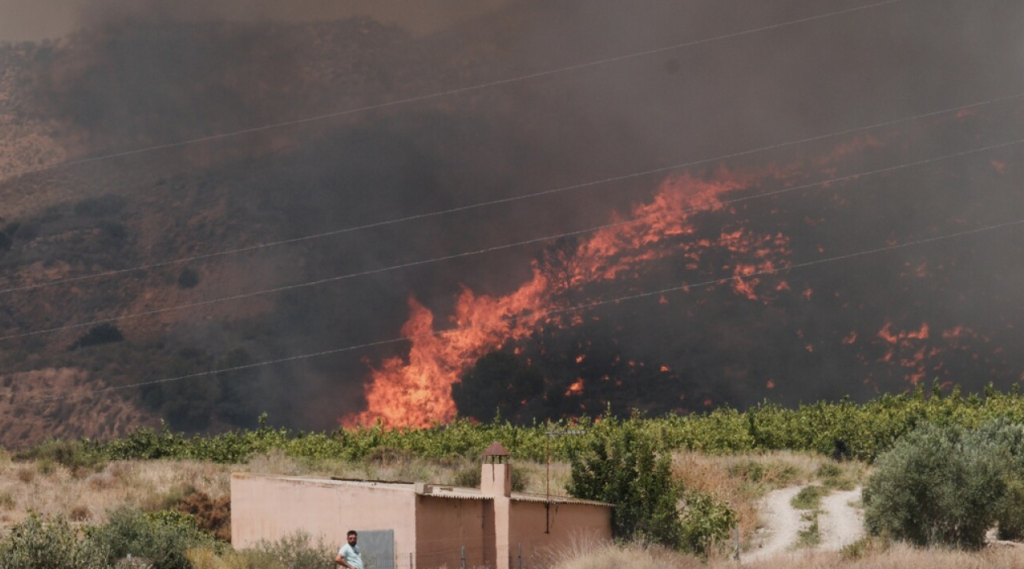
The fire began burning dry esparto grass, pastures, and low scrub near Los Gallardos on July 9, quickly spreading under strong winds and extreme heat to the nearby towns of Bédar, Antas, and Lubrín, according to Wikipedia’s incident tracker. Within a short period the fire had consumed roughly 3,000 hectares, destroying homes and vehicles and forcing residents to flee on foot and by car, according to reporting compiled by KÜRE Encyclopedia.
Regional officials in Andalusia confirmed the fire as the deadliest ever recorded in the region, according to Al Jazeera, which reported the initial death toll at 12 before it was later revised upward to 13. A 93-year-old British woman who suffered severe burns died in hospital on July 12, several days after the initial blaze, according to a detailed mapping analysis from Mappr, which described the disaster as the deadliest Spanish wildfire in roughly two decades. Many victims were reportedly caught while trying to escape, some in their vehicles and others along a dry riverbed that turned into a trap as flames raced downhill.
Background
Authorities have not officially confirmed the fire’s cause. Witnesses told local media that a downed power line sparked the blaze, though Spanish electricity provider Endesa has disputed the claim, stating the line in question was inactive and did not belong to the company, according to Wikipedia’s summary of the incident. Investigators continue to examine the power-line theory alongside other possible causes.
The Almería fire is unfolding against the backdrop of an unusually severe wildfire season across the entire Mediterranean basin. According to Mappr’s continent-wide tracking, fires across Europe had killed at least 15 civilians and three firefighters by July 25, forcing more than 250,000 people from their homes in Spain and France combined, while also scorching parts of Portugal, Greece, Italy, and Turkey. France has already set a national record for total burned area this year, and the analysis notes the peak of the fire season has likely not yet arrived, even though 2025 remains a more destructive year overall by total area burned.
The extreme heat driving these fires has itself proven separately deadly. Spain’s Environment Ministry, citing data from the Carlos III Health Institute, reported 1,180 heat-related deaths across the country between May 16 and July 13, according to The Independent, a sharp jump from just 70 deaths recorded over the same period in 2024. The Copernicus Climate Change Service found that June 2026 was the hottest June on record for Western Europe, with average temperatures roughly 3.05°C above the 1991 to 2020 norm, according to Mappr’s analysis.
Why It Matters
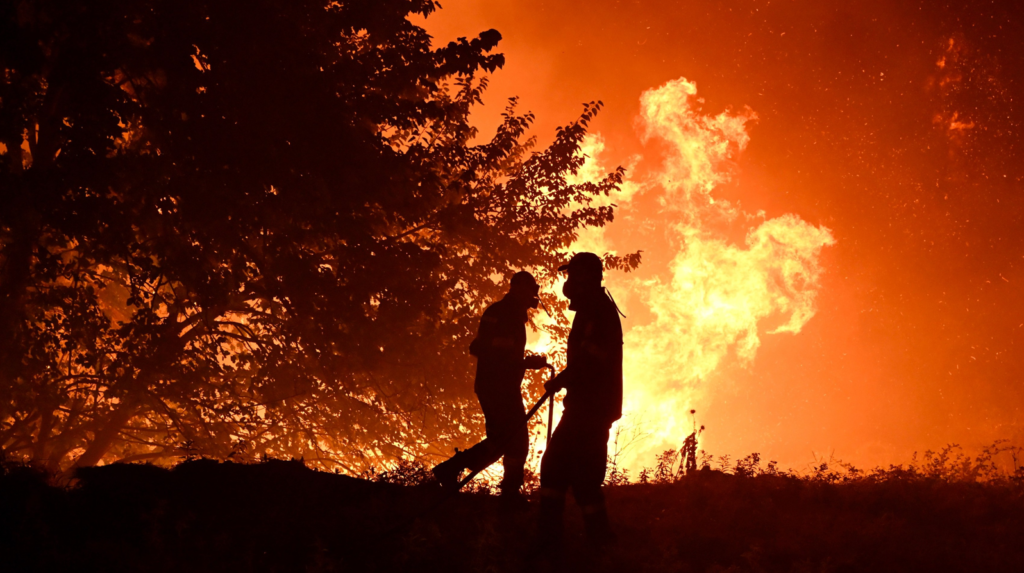
The combination of record heat and rapidly spreading wildfires is placing enormous strain on emergency services across southern Europe simultaneously, with more than 800 emergency personnel and about 170 air and ground firefighting resources deployed to the Almería fire alone, according to Mappr’s reporting. The scale of this year’s death toll from both direct fire casualties and heat-related excess mortality is prompting renewed scrutiny of how prepared Mediterranean countries are for increasingly extreme summer conditions, particularly in rural and elderly populations, who account for the overwhelming majority of heat-related deaths recorded so far this year.
For the tourism-dependent Spanish economy, the fires and heat warnings are also likely to affect the peak summer travel season, with foreign nationals reportedly making up a majority of those killed in the Almería fire specifically, according to KÜRE Encyclopedia’s reporting, underscoring the risk extreme weather now poses even to visitors unfamiliar with the region’s escalating fire danger.
Statistics & Context
- Confirmed deaths in the Almería wildfire: 13
- People injured: at least 17
- People still missing: roughly 10
- Residents evacuated: more than 1,600
- Hectares burned in the initial Almería blaze: approximately 3,000
- Emergency personnel deployed: more than 800, with about 170 air and ground resources
- Civilian deaths across Europe’s 2026 wildfire season so far: at least 15, plus 3 firefighters
- People displaced across Spain and France by wildfires this season: more than 250,000
- Heat-related deaths in Spain, May 16 to July 13: 1,180, compared with 70 over the same period in 2024
- June 2026 average temperature anomaly for Western Europe: +3.05°C above the 1991-2020 norm
What’s Next
Firefighting crews continue working to fully contain the Almería fire while search efforts for missing persons continue in the affected area. Spanish authorities are expected to press forward with their investigation into the fire’s cause, including the disputed power-line theory, in the coming weeks. Meteorologists and emergency planners across the Mediterranean are bracing for what analysts describe as the still-approaching peak of this year’s fire season, meaning further significant blazes remain likely across Spain, Portugal, France, Greece, Italy, and Turkey before conditions ease.
FAQ
How many people have died in the Almería wildfire?
At least 13, making it the deadliest wildfire in Andalusia’s history and the third deadliest in Spain’s modern history.
What caused the fire?
The cause hasn’t been officially confirmed. Witnesses pointed to a downed power line, but the electricity provider Endesa has disputed that account.
How does this fit into the broader European wildfire season?
It’s part of a severe 2026 fire season across the Mediterranean that has killed at least 15 civilians and 3 firefighters continent-wide and displaced more than 250,000 people in Spain and France alone.
Is the extreme heat connected to the fires?
Yes. June 2026 was the hottest June on record for Western Europe, and Spain has recorded over 1,100 heat-related deaths in recent months, conditions that have directly worsened wildfire risk.
Are foreign visitors affected?
Reports indicate a majority of those killed in the Almería fire were foreign nationals, highlighting the risk extreme weather poses to tourists unfamiliar with the region’s fire danger.
Editorial Note: This article was prepared using publicly available information from international news organizations and ongoing incident-tracking sources available at the time of publication. Casualty figures may be updated as authorities and search efforts continue.
Sources: