
Quick Summary
Hamas announced Monday that it is dissolving the body that has governed the Gaza Strip for nearly two decades, moving to hand power to a technocratic committee backed by the U.S. and the United Nations. The Palestinian group has ruled Gaza since seizing control from rival faction Fatah in 2007, and its announcement marks a significant step toward implementing President Trump’s U.S.-brokered peace plan. Israeli officials, however, dismissed the move as symbolic, since Hamas has made no commitment to disarm and its civil servants are expected to keep their jobs under the new administration.
What Happened
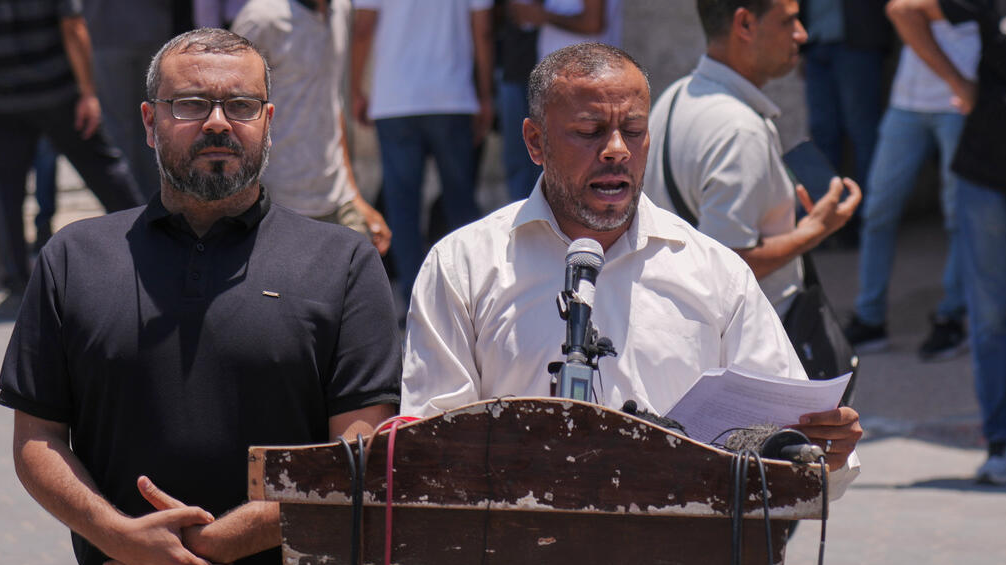
Ismail al-Thawabta, head of Hamas’s government media office, announced at a press conference in Deir el-Balah that Mohammed al-Farra, head of the group’s Government Emergency Committee, had submitted his resignation and that the committee itself would be dissolved. Al-Thawabta said the move was meant to demonstrate the seriousness of Hamas’s commitments under the ceasefire agreement and to facilitate a transition of power.
Hamas said authority would pass to the National Committee for the Administration of Gaza, a 15-member technocratic body headed by Ali Shaath. In a statement posted to X, Shaath said the NCAG stood ready to take over, but only once a single governing authority with a clear mandate and a unified security force were in place. The NCAG remains based in Cairo and has not yet entered Gaza, reportedly due to Israeli objections.
Background
Hamas won Palestinian legislative elections in 2006 and seized full control of Gaza the following year after fighting with Fatah, the faction that leads the Palestinian Authority in the West Bank. It has governed the territory ever since, through multiple wars with Israel, the deadliest of which began after Hamas’s October 7, 2023 attack that killed roughly 1,200 people in Israel and took 251 hostages.
A U.S.-brokered ceasefire took effect in Gaza last October under Trump’s Comprehensive Plan to End the Gaza Conflict, which called for a technocratic Palestinian committee, overseen by Trump’s “Board of Peace,” to eventually take over civilian administration. The NCAG was established in January under that framework, but disarmament, a central Israeli condition for any lasting peace arrangement, remains unresolved, and Israeli strikes have continued in the more than half of Gaza still held by the Israeli military.
Why It Matters
Analysts describe Monday’s announcement as more symbolic than substantive, since it says nothing about Hamas surrendering its weapons and leaves existing civil servants in their posts, only now reporting nominally to the NCAG. Israel’s government was blunt in its assessment: Foreign Minister Gideon Saar characterized the move as an attempt by Hamas to copy the model used by Hezbollah in Lebanon, where the group holds political influence and an independent armed force while formally operating alongside a national government.
Trump’s own Board of Peace signaled similar skepticism, saying in a statement that its assessment of the situation would be guided by actions rather than promises, and that any lasting arrangement requires a single governing authority operating under one law with one unified security force.
Expert & Official Reaction
Israeli government response: Foreign Minister Gideon Saar compared the move to Hezbollah’s arrangement in Lebanon, suggesting Hamas is seeking to retain influence and weapons while formally stepping back from day-to-day governance.
Board of Peace statement: The Trump-chaired board said it had taken note of the announcement, but that its judgment would depend on concrete implementation rather than declared intentions, and reiterated that a durable solution requires one authority, one law, and one weapon in Gaza.
Palestinian officials’ framing: Gaza local authorities spokesman Hazem Qassem said Hamas wanted to make clear it would not obstruct efforts to administer the territory, and called on international mediators to help end what he described as Israel’s continued military campaign.
Analyst perspective: Newsweek’s foreign policy desk noted that, for the first time in decades, neither Hamas nor the Palestinian Authority would formally govern Gaza if the transition proceeds as announced, though the timeline for the NCAG’s actual entry into Gaza remains unresolved.
Statistics & Context
- Years Hamas governed Gaza before Monday’s announcement: nearly 20 (since 2007)
- NCAG committee size: 15 members
- Deaths in Hamas’s October 7, 2023 attack on Israel: approximately 1,200
- Hostages taken in that attack: 251
- Days of conflict referenced by Newsweek’s reporting on the broader war: more than 1,000
- Palestinians reported killed in Gaza since the war began, per The National: more than 73,000
What’s Next
The central unresolved question is whether the NCAG can actually enter Gaza and assume authority, something that requires resolving Israeli objections and establishing the unified security apparatus Shaath says is a precondition for the committee’s work. Disarmament remains the sharpest sticking point: Hamas has said it wants a functioning Palestinian administration in place before discussing its arsenal, while Israel and the U.S. have repeatedly demanded disarmament as a prerequisite for the ceasefire’s next phase. Negotiations among Egypt, Qatar, and Turkey as mediators are expected to continue in the coming weeks.
FAQ
What exactly did Hamas dissolve?
Hamas dissolved its Government Emergency Committee, the body that has functioned as its governing authority in Gaza, and announced the resignation of its head, Mohammed al-Farra.
Who takes over governing Gaza now?
Power is meant to transfer to the National Committee for the Administration of Gaza (NCAG), a 15-member technocratic body backed by the U.S. and UN, though it has not yet entered Gaza.
Does this mean Hamas is disarming?
No. The announcement makes no commitment regarding Hamas’s weapons, which remains the central unresolved issue in ceasefire negotiations.
How has Israel responded?
Israeli officials, including Foreign Minister Gideon Saar, dismissed the move as largely symbolic, comparing it to Hezbollah’s model of retaining influence and an armed force while formally stepping back from governance.
How long had Hamas controlled Gaza before this announcement?
Nearly 20 years, since it seized full control from the rival Fatah faction in 2007.
Editorial Note: This article was prepared using publicly available information from international news organizations and official sources available at the time of publication. Facts may be updated as authorities release new information.
Sources:
Al Jazeera – What is the new Gaza administration as Hamas dissolves government?