
Quick Summary
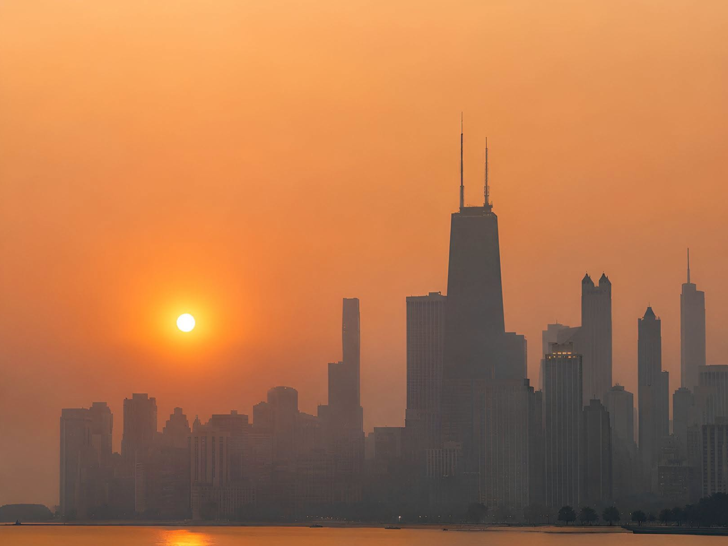
As wildfire smoke from Canadian and Minnesota fires has repeatedly blanketed large parts of the U.S. Midwest and Northeast this summer, parents and pediatricians are grappling with a question that’s becoming a regular part of American summers, when is it safe for kids to play outside. According to NBC News, Air Quality Index readings in parts of Michigan, Ohio, and Wisconsin have hit levels in the 300s, high enough that health officials advise avoiding outdoor activity altogether. With wildfire seasons growing longer and smoke traveling farther than in past decades, understanding the Air Quality Index, recognizing symptoms in children, and knowing simple protective steps have become essential summer skills for families well beyond the areas where fires actually burn.
What’s Happening This Summer
Smoke from wildfires burning across Canada has drifted deep into U.S. territory for weeks at a time, triggering air quality advisories, canceled outdoor events, and disrupted routines for families across multiple states. According to NBC News, officials in New York launched emergency operations offering free KN95 masks and opening shelter space, while Philadelphia suspended trash pickup and closed public pools on the worst air quality days.
Summer camps have been especially affected. According to reporting from The Associated Press, camps across the Midwest and East have repeatedly moved activities indoors, with staff at facilities like YMCA Camp Kon-O-Kwee Spencer in western Pennsylvania closing outdoor pools and adjusting schedules as air quality indexes climbed. Camp administrators describe a growing tension between the outdoor experiences summer camp is built around and the increasing frequency of smoke events that make those same activities risky.
Understanding the Air Quality Index
The Air Quality Index, or AQI, is the primary tool public health officials use to communicate wildfire smoke risk, and understanding its thresholds is the single most useful thing a parent can do this summer. According to a breakdown from Stony Brook Medicine, an AQI between 51 and 100 is considered moderate, and most children can play normally, though sensitive children should watch for symptoms. Between 101 and 150, the air is unhealthy for sensitive groups, meaning children with asthma or chronic lung conditions should cut back on vigorous outdoor activity. Between 151 and 200, all children should limit strenuous outdoor exercise, and above 200, the air is considered very unhealthy to hazardous, and children should stay indoors whenever possible.
Montana’s Department of Public Health and Human Services recommends a simpler rule of thumb for younger children specifically, according to its own wildfire smoke guidance: once the AQI exceeds 100, young children shouldn’t be outside for more than 15-minute intervals during a smoke event.
Why Children Are More at Risk Than Adults
Pediatric specialists emphasize that children aren’t simply small adults when it comes to wildfire smoke exposure. According to Children’s Hospital Colorado, pediatric pulmonologist Heather Hoch De Keyser explained that children are much more sensitive to environmental stressors than adults, regardless of whether the smoke comes from an urban fire or a distant wildfire. Montana’s state health guidance similarly notes that children’s developing lungs, faster breathing rates, and greater time spent outdoors all combine to increase their risk.
The American Academy of Pediatrics, through its HealthyChildren.org resource, lists the specific symptoms parents should watch for in children exposed to wildfire smoke, including chest tightness or pain, shortness of breath, coughing, and burning or stinging in the nose, throat, and eyes. Because children breathe more air relative to their body size and are generally more physically active than adults, they take in a proportionally larger dose of airborne particles during the same period of exposure.
For children with asthma specifically, Children’s Colorado notes that wildfire smoke can prolong asthma attacks longer than usual, and recommends using rescue medications before leaving the house on smoky days and keeping them on hand at all times, along with regular check-ins with a pediatrician or lung specialist to ensure any underlying conditions remain well controlled.
Practical Steps for Parents
Several consistent recommendations appear across pediatric and public health guidance for keeping kids safer during smoke events:
Check air quality before heading outside. Sites like AirNow.gov and local air quality monitoring pages provide real-time AQI readings, according to Children’s Hospital Los Angeles, which recommends checking these resources before planning any outdoor activity.
Limit strenuous outdoor activity as AQI rises. Physical exertion increases breathing rate and the volume of smoke particles inhaled, so Children’s Hospital Los Angeles recommends limiting activities that raise heart rate and avoiding tasks that stir up dust, like leaf blowing, on smoky days.
Use properly fitted masks for older children. For children age 2 and older, a well-fitted KN95 mask can reduce exposure during necessary outdoor time, though Children’s Hospital Los Angeles notes masks alone don’t protect against gases and must fit snugly to be effective.
Protect indoor air too. Indoor air can become nearly as polluted as outdoor air during a smoke event, according to Montana’s health department guidance, which recommends keeping windows and doors closed and using a HEPA air cleaner or a simple do-it-yourself box fan filter in the room where children spend the most time.
Don’t relax medication routines over summer. Pediatric specialists note that families sometimes ease up on asthma or allergy medication schedules once school lets out, but maintaining a consistent routine through smoke season can meaningfully reduce flare-ups.
Why It Matters
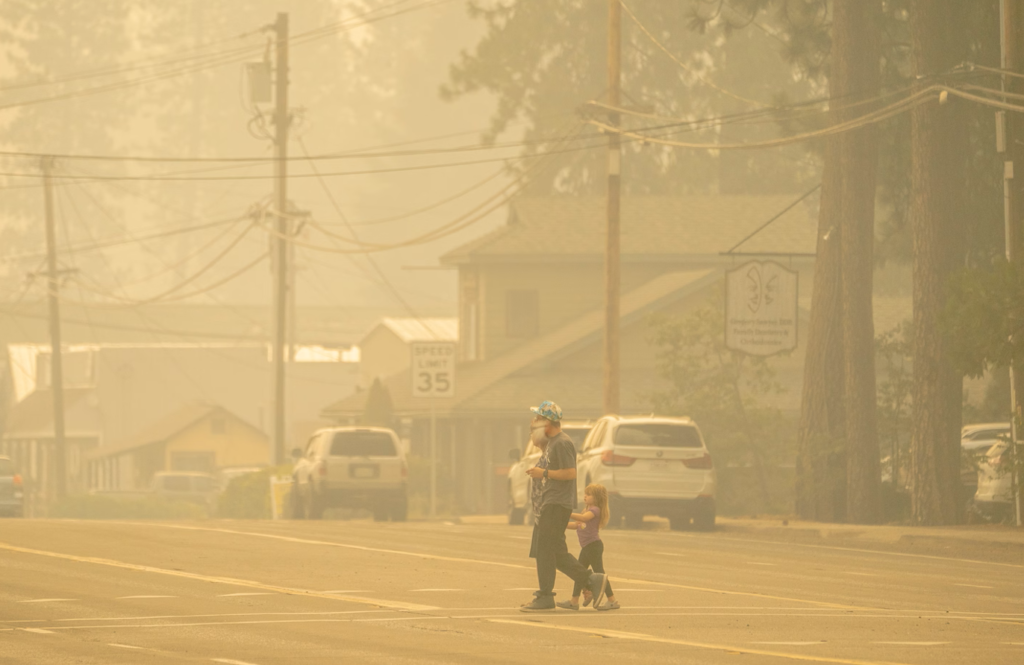
Public health experts increasingly describe this pattern, not as an occasional disruption, but as a new normal for American summers. Dr. De Keyser told Children’s Colorado she is concerned this represents a lasting shift rather than a one-off bad season, and said the challenge going forward is finding a balance between letting kids enjoy outdoor summer activities and keeping them safe from smoke exposure that can travel hundreds or even thousands of miles from its source. UNICEF’s Children’s Environmental Health Collaborative has also flagged early evidence connecting childhood exposure to wildfire particulate matter with reduced lung function, stunted physical growth, and neurological effects, underscoring why repeated smoke exposure over a childhood, not just a single bad week, is drawing growing research attention.
Statistics & Context
- AQI threshold at which young children should limit outdoor time to 15-minute intervals: 100
- AQI level considered “very unhealthy to hazardous,” per Stony Brook Medicine’s guidance: above 200
- Recent AQI readings in parts of Michigan, Ohio, and Wisconsin: in the 300s
- Minimum recommended KN95 mask age for children: 2 years and older
- Distance wildfire smoke plumes can travel, per UNICEF’s research collaborative: hundreds to thousands of kilometers
What Parents Can Do Today
Families in smoke-affected areas can check daily AQI readings on AirNow.gov before planning outdoor time, keep asthma or allergy medications on a consistent summer schedule, and have a HEPA filter or box fan air purifier ready for the room where children spend the most time. Summer camps and childcare programs in wildfire-smoke-prone regions are increasingly building flexible indoor programming into their planning, a trend health officials expect to continue as wildfire seasons lengthen in the years ahead.
FAQ
At what AQI level should kids stay inside?
Guidance varies slightly by source, but most health authorities recommend limiting vigorous outdoor activity once AQI passes 100, and staying indoors as much as possible once it exceeds 200.
Why are children more vulnerable to wildfire smoke than adults?
Children breathe more air relative to their body size, are generally more physically active, and have lungs that are still developing, all of which increase their exposure and risk.
Do masks actually protect kids from wildfire smoke?
A properly fitted KN95 mask can help reduce particle exposure for children age 2 and older, but masks don’t protect against gases and must fit tightly to be effective.
Is indoor air safer than outdoor air during a smoke event?
Not automatically. Indoor air can become nearly as polluted as outdoor air without proper sealing and filtration, so using a HEPA air cleaner or a DIY box fan filter is recommended.
Is this likely to keep happening in future summers?
Public health experts and pediatric specialists increasingly describe recurring wildfire smoke events as a long-term pattern rather than an isolated occurrence.
Editorial Note: This article was prepared using publicly available health guidance from pediatric hospitals, public health agencies, and news organizations available at the time of publication. This information is educational and not a substitute for advice from your child’s pediatrician.
Sources:
NBC News:Where the wildfire smoke from Canada is blowing, and how dangerous it is
Children’s Hospital Colorado:Wildfire Smoke and Kids: Health Effects
HealthyChildren.org :Wildfires: Taking Care of Your Children & Yourself