
Quick Summary
A powerful earthquake that struck southwestern Japan’s Kumamoto Prefecture on Tuesday has killed at least 18 people, including one foreign national, with soldiers and emergency workers still combing through a badly damaged shopping mall and collapsed houses in search of survivors as of Wednesday. According to NPR, the quake, initially reported at magnitude 7.1 before the U.S. Geological Survey revised it to 6.8, struck the city of Yatsushiro and left at least 62 people injured, six seriously. Three people remain missing, and rescue efforts have been complicated by an explosion at the mall, believed to have been caused by a gas leak, which killed several workers in addition to those lost in the initial quake.
What Happened
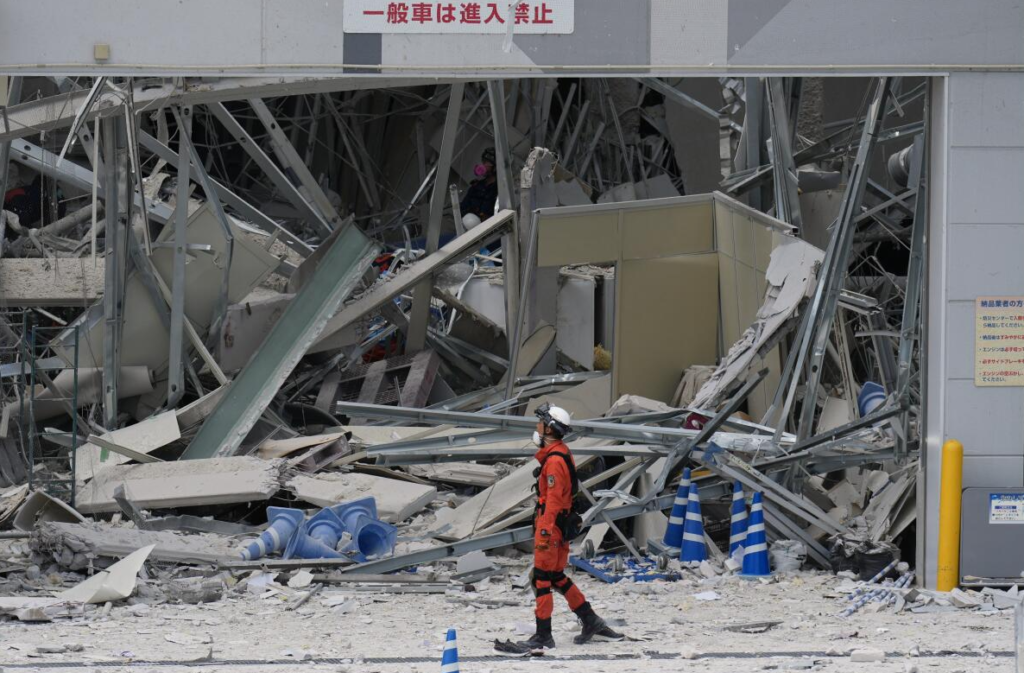
The earthquake severely damaged the Aeon Mall Kumamoto shopping center in Kashima Town, where the second floor collapsed and trapped people inside, according to France 24. Roughly 20 minutes after the initial quake, an explosion rocked the mall, which witnesses said shook the area nearly as violently as the earthquake itself. CNN reported that rescue workers detected the smell of gas at the scene afterward, and Japan’s chief cabinet secretary said authorities believe a gas leak caused the blast, a theory also reported by broadcaster TV Asahi.
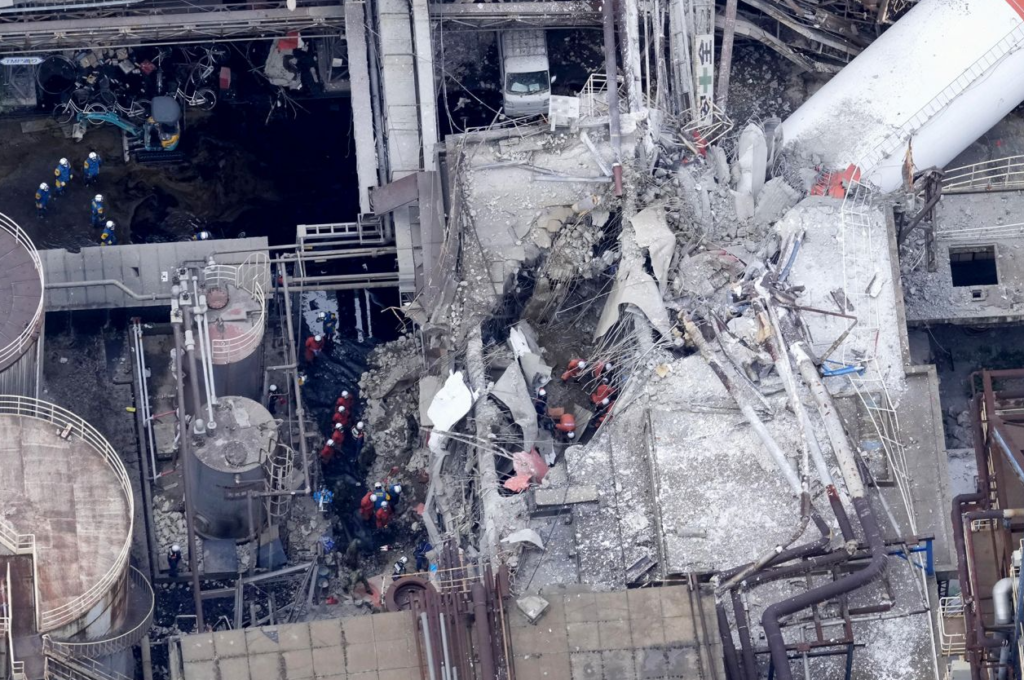
Aeon Mall’s operator confirmed at least three workers were killed in the partial collapse, with five deaths total confirmed at the mall site and three more people still missing there as of Wednesday, according to CNN. Separately, five workers died at a nearby Nippon Paper Industries factory in Yatsushiro, according to public broadcaster NHK. Aeon President Akio Yoshida bowed deeply alongside two other executives during a news conference in Kumamoto, saying the company takes seriously that an explosion occurred and that lives were lost as a result, according to NPR.
According to CNN, roughly 2,700 staff normally worked at the mall, which housed around 200 shops, services, and restaurants, including international retailers like H&M and Uniqlo, along with a cinema complex. A local teacher named Kamiyo, 28, who was holding a tutoring class about 300 meters from the mall, told Reuters he ordered his young students to evacuate outside a few minutes after the initial shaking, and described watching the explosion occur roughly 20 minutes later as chilling in hindsight.
Background
The earthquake struck the Kumamoto region on Japan’s southern main island of Kyushu, an area with a documented history of seismic activity. According to ABC News, a tsunami warning was also issued following the quake, though the most severe and widely reported damage centered on the mall collapse and the paper factory. Sweltering summer heat in the days following the quake has added to the difficulty and urgency of rescue operations, with officials and rescue teams working in high temperatures while searching for anyone still trapped in rubble, according to Georgia Public Broadcasting.
The death toll has climbed steadily since the quake first struck, rising from an initial report of 13 dead to at least 18 by Wednesday, and officials have cautioned the tally may continue to rise as search efforts continue and it remains unclear exactly how many people might still be unaccounted for.
Why It Matters
The combination of a natural disaster and what appears to be a secondary industrial accident, the suspected gas explosion at the mall, has significantly complicated both the immediate rescue effort and the broader public understanding of what caused the full scope of casualties. Distinguishing which deaths and injuries resulted directly from the earthquake versus the subsequent explosion has become an important part of the ongoing investigation, and carries implications for questions of building safety, gas infrastructure integrity during seismic events, and mall operator responsibility going forward.
The scale of the mall itself, with roughly 2,700 employees and 200 businesses under one roof, meant the facility was likely at or near full operation when the quake and explosion occurred, magnifying the potential for casualties in a single location compared to a more dispersed disaster. The presence of international retail chains inside the mall also underscores how a regional Japanese disaster can carry international dimensions, both in terms of foreign nationals affected and global retail brands with operations disrupted.
Statistics & Context
- Confirmed deaths as of Wednesday: at least 18, including one foreign national
- People injured: at least 62, with 6 seriously hurt
- People still missing: 3 at the mall site alone
- Earthquake magnitude: initially reported at 7.1, later revised by the USGS to 6.8
- Mall employees normally on site: approximately 2,700
- Shops, services, and restaurants inside the mall: around 200
- Deaths confirmed specifically at the mall: 5
- Deaths confirmed at the nearby paper factory: 5
What’s Next
Rescue crews are expected to continue searching the mall and surrounding collapsed structures for the three people still reported missing, working against the added challenges of summer heat and the risk of further gas-related hazards at the explosion site. Japanese authorities are likely to launch a formal investigation into the cause of the mall explosion specifically, given the suspicion that a gas leak, rather than the earthquake alone, caused a significant share of the casualties. Aeon Mall’s operator faces likely scrutiny over building safety and gas infrastructure as the death toll and investigation both continue to develop.
FAQ
How many people have died in the Japan earthquake?
At least 18, according to the latest count, including one foreign national, with officials warning the toll may still rise.
What caused the explosion at the shopping mall?
Authorities believe a gas leak triggered the explosion, which occurred roughly 20 minutes after the initial earthquake and caused part of the mall’s second floor to collapse.
How strong was the earthquake?
It was initially reported at magnitude 7.1, though the U.S. Geological Survey later revised the figure to magnitude 6.8.
Where did the earthquake strike?
Kumamoto Prefecture, on Japan’s southern main island of Kyushu, with the most severe damage centered in Yatsushiro and Kashima Town.
Are people still missing?
Yes, at least three people remain missing at the mall site alone as of Wednesday, and rescue efforts are ongoing.
Editorial Note: This article was prepared using publicly available information from international news organizations available at the time of publication. Casualty figures may be updated as search and rescue efforts continue, given the active nature of the disaster response.
Sources:
NPR:Death toll rises to 18 as rescuers comb through quake rubble in southwestern Japan
ABC News:Rescuers search for survivors after a 7.1 quake kills 18 in southwestern Japan
CNN:Rescuers scramble to reach people trapped by deadly Japan earthquake