
Quick Summary
At least 57 migrants have died and roughly 60,000 people crossed from Morocco into Spain’s North African enclave of Ceuta within a 24-hour span, after a border crisis that had been building for 10 days boiled over on Thursday, July 30. According to Al Jazeera, Spain’s government confirmed the death toll Friday evening, a sharp rise from just 9 deaths reported a day earlier, as migrants breached the border fence by land and sea, many swimming around a breakwater barrier. Prime Minister Pedro Sánchez is traveling to Ceuta as the Spanish Armed Forces deploy to restore order, and the crisis has already rippled into Italy, where PM Giorgia Meloni threatened to suspend Italy’s Schengen participation with Spain.
What Happened
According to NPR, the border crisis intensified dramatically overnight Thursday into Friday, with Spain’s state broadcaster RTVE airing footage of burned cars on the Moroccan side of the border following reported clashes. Migrants also attempted to cross into Melilla, and widespread unrest broke out in Bni Nsar, the Moroccan town bordering Melilla, where crowds clashed with police, threw rocks, and set police vehicles ablaze, according to local media and rights groups.
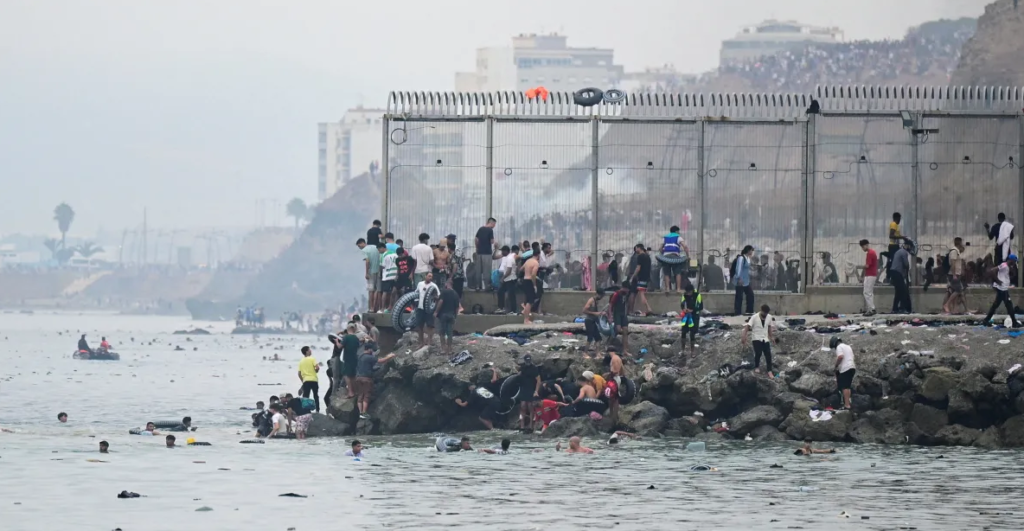
Rachid Sbihi, who leads a local workers’ association representing Civil Guard officers in Ceuta, described the scene as a serious humanitarian crisis, according to Al Jazeera. He said many of the dead drowned attempting the crossing, while others were killed in a stampede to cross the breakwater fence at Tarajal beach, an urban beach near a border checkpoint. Video footage showed crowds, mostly young Moroccan men though with some women and children present, walking around the breakwaters and onto local roads, with many arriving by inner tube and keeping their phones sealed in waterproof pouches. According to Wikipedia’s ongoing summary of the incident, migrants who reached shore cheered for Spain and kissed the ground upon arrival.
Background
Ceuta authorities had previously linked the surge to a Spanish Supreme Court ruling earlier in July, which found that migrants who arrive by sea cannot be immediately pushed back across the border without due process, unlike those who cross by land, according to PBS News. Ceuta’s government had said Thursday that between 1,500 and 2,000 people had already entered over the preceding 10 days, before Thursday and Friday’s mass breach dwarfed those earlier numbers entirely.
The crisis carries clear echoes of a similar incident in May 2021, when an estimated 6,000 to 9,000 Moroccan and sub-Saharan youths entered Ceuta within days, though that episode resulted in only 2 confirmed deaths, according to Wikipedia’s historical record. Migrant rights activist Zakaria Zarroqui told Reuters this week’s surge closely resembled that earlier event in scale and intensity, adding that people were still flocking to the Moroccan border city of Fnideq to attempt the crossing even as the crisis unfolded.
Spain’s national government initially rejected Ceuta’s request to declare a national emergency, arguing migration doesn’t fall within the legal framework governing such declarations, according to Wikipedia. It instead announced it would deploy the Spanish Armed Forces to help the Civil Guard maintain security in the city, and Prime Minister Sánchez confirmed he would travel to Ceuta himself alongside the interior minister.
Why It Matters
The scale of Friday’s confirmed death toll, 57 people and climbing, alongside roughly 60,000 total crossings in a single day, makes this one of the most severe migration incidents at the Ceuta-Melilla border in years, surpassing even the 2021 episode by a wide margin. Regional president Vivas declared an “absolute humanitarian and social emergency” Thursday and called on Madrid to send troops to reassert control, reflecting how quickly local authorities felt the situation had spiraled beyond their capacity to manage.
The crisis has also produced ripple effects beyond Spain’s borders.
Italian Prime Minister Giorgia Meloni threatened to suspend Italy’s participation in the Schengen open-border agreement with Spain, even though Italy doesn’t share a physical border with the country, according to PBS News. It’s a sign of how quickly a crisis at one EU external border can generate political pressure across the wider bloc.
Domestically, reactions have varied sharply. Taxi drivers have called it an invasion, NGOs describe it as a humanitarian crisis, and local politicians have labeled it a national emergency, according to Wikipedia’s summary of the Spanish response, reflecting the deep political divisions the episode has exposed within Spain itself.
Statistics & Context
- Confirmed deaths as of Friday evening: at least 57, up from 9 reported Thursday and 18 reported Friday morning
- Estimated total people who crossed into Ceuta by land and sea: roughly 60,000 within 24 hours, per regional president Vivas
- People who had already entered Ceuta in the prior 10 days, per local authorities: 1,500 to 2,000
- Comparable 2021 incident scale: 6,000 to 9,000 people over several days, with 2 confirmed deaths
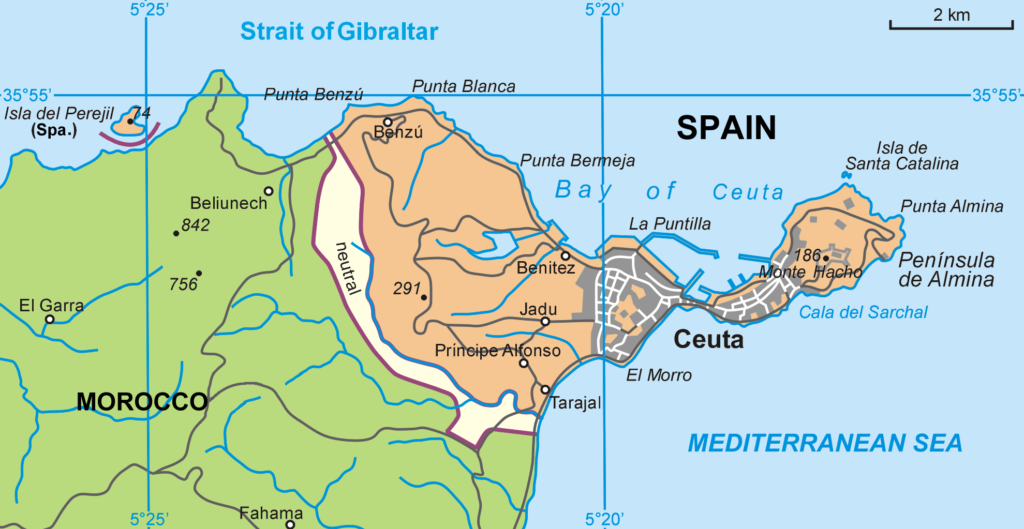
- Location where many deaths occurred: Tarajal beach, near a border checkpoint with Morocco
What’s Next
Spanish Prime Minister Pedro Sánchez is expected in Ceuta in the coming days alongside the interior minister, as the Spanish Armed Forces move to help the Civil Guard restore order at the border. The death toll is likely to be revised further as authorities continue recovering bodies from the coastline and the surrounding area, and diplomatic tension between Spain, Morocco, and other EU states, including Italy’s threatened Schengen suspension, is expected to remain a live issue in the days ahead as European leaders respond to the scale of the crisis.

FAQ
How many people have died in the Ceuta border crisis?
At least 57, according to Spain’s government as of Friday evening, though the toll rose steadily throughout the crisis from an initial report of 9.
How many migrants crossed the border?
Regional president Juan Jesus Vivas said roughly 60,000 people crossed into Ceuta by land and sea within a 24-hour period.
What triggered the surge?
Local authorities linked it partly to a Spanish Supreme Court ruling in July finding that migrants arriving by sea cannot be immediately pushed back without due process, unlike those crossing by land.
Is this similar to any past incident?
Yes, a comparable but smaller crisis occurred in May 2021, when 6,000 to 9,000 people crossed into Ceuta within days, though that episode resulted in only 2 confirmed deaths.
How is Spain responding?
The government is deploying the Armed Forces to assist the Civil Guard, and Prime Minister Pedro Sánchez is traveling to Ceuta in response to the crisis.
Editorial Note: This article was prepared using publicly available information from international news organizations available at the time of publication. Casualty and crossing figures have changed rapidly and may be updated further as authorities continue their response. This is a sensitive, actively developing humanitarian situation.
Sources:
Al Jazeera:Spain’s PM visits Ceuta after 57 migrants die breaching border from Morocco
NPR:At least 18 die after breach of border between Morocco and Spanish territory of Ceuta
Wikipedia (ongoing incident summary):2026 Morocco–Spain border incident