
Quick Summary
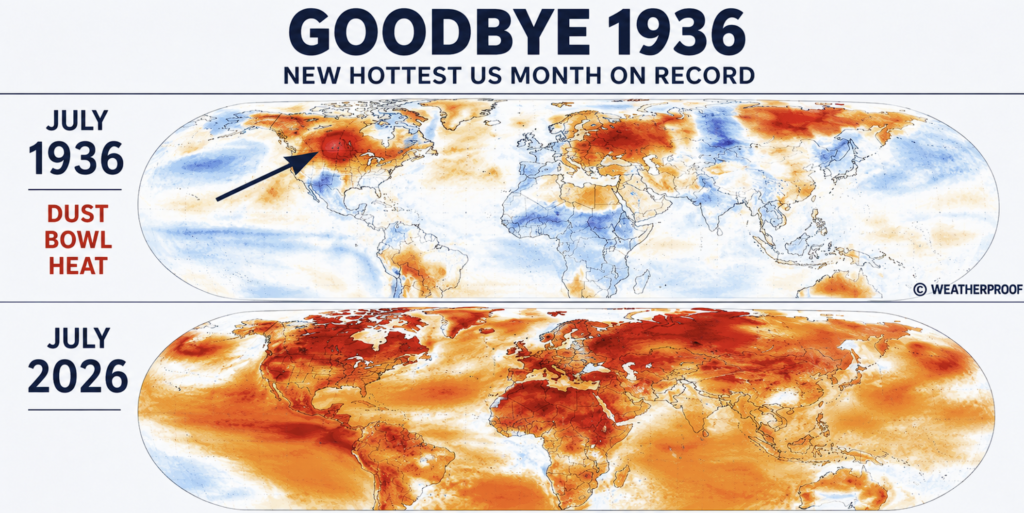
US Records its hottest month in history this July, finally surpassing a heat record that had stood since the Dust Bowl of the 1930s, according to the National Oceanic and Atmospheric Administration. July 2026 averaged 76.89 degrees Fahrenheit across the Lower 48 states, edging out July 1936 by roughly an eighth of a degree in data stretching back to 1895. Climate scientists say the milestone is especially notable because the 1936 Dust Bowl record has long been a favorite talking point for climate change skeptics, and breaking it removes one of the last major heat benchmarks from that era.
What Happened
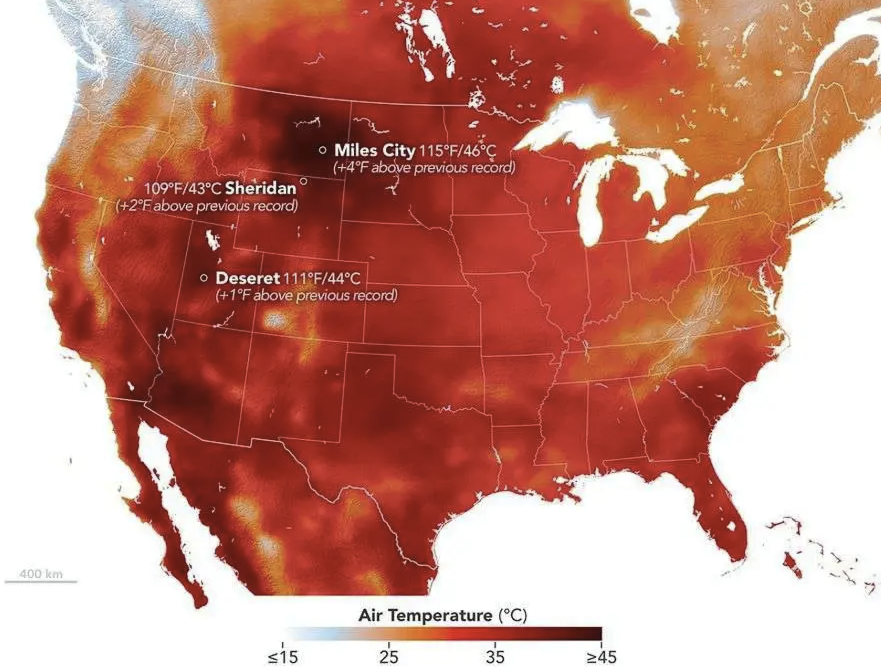
NOAA’s National Centers for Environmental Information confirmed the new record earlier this month, noting the July 2026 average came in 3.3 degrees above the 20th-century average for the month. Nearly every part of the Lower 48 states ran hotter than normal, with the most excessive heat concentrated in the Mountain West, Southwest, Northern Plains, and Southeast, while Alaska was unusually cool in comparison.
Russ Vose, chief of monitoring at NOAA’s National Center for Environmental Information, said the heat was so widespread that every single one of the Lower 48 states came in at least 1 degree Fahrenheit warmer than its 20th-century average. Rather than daytime highs driving the record, NOAA found the biggest factor was overnight low temperatures, which shattered the previous record for warmest monthly minimum by 0.7 degrees. Nighttime lows averaged 64.2 degrees, also a record, surpassing the previous mark set in July 2022.
Background
The Dust Bowl of the 1930s, a period of severe drought combined with poor agricultural practices that stripped topsoil across the central United States, has remained a touchstone in American climate history for nearly a century, both as a genuine ecological catastrophe and as a recurring reference point in debates over modern climate change. Meteorologist Jeff Masters of Yale Climate Connections said breaking a Dust Bowl-era record is significant precisely because that record has often been cited by climate change skeptics to argue that today’s heat isn’t unusual by historical standards.
Masters and fellow meteorologist Bob Henson noted that the comparison isn’t entirely straightforward, since 24 of the 48 contiguous states still haven’t individually exceeded their single hottest reading from the 1930s. But climate scientists were quick to point out that the underlying causes of the two heat records differ fundamentally. University of Arizona climate scientist Katharine Jacobs said this year’s extreme heat, along with the accompanying drought and fire conditions, is entirely consistent with the pattern expected from human-caused climate change, while researchers noted the 1930s heat was concentrated more narrowly in the Midwest and worsened by the era’s agricultural practices rather than by fossil fuel emissions.
The record didn’t occur in isolation. Wildfires broke out across Canada and the U.S. Pacific Northwest in July, burning more than 140,000 acres in Oregon alone, and smoke from Canadian fires blanketed cities as far south as Chicago during the month. Puerto Rico experienced its own extreme conditions, recording its driest and second-hottest July on record, with rotating 48-hour water shutoffs affecting 180,000 customers on the island as the broader Caribbean basin recorded its driest May-through-July period ever measured.
Why It Matters
Beyond the symbolic weight of surpassing a Dust Bowl-era benchmark, the record carries genuine public health and infrastructure implications, since the overnight low temperatures that drove this particular record are considered especially dangerous from a heat-stress standpoint. Masters explained that nighttime lows are critical for determining total heat stress on the human body, because they limit the recovery period people and buildings would otherwise get after a hot day, a pattern scientists consistently link to rising overnight temperatures as one of the clearest fingerprints of human-caused climate change.
The record also arrives amid broader signs of accelerating climate extremes across the country: NOAA found the contiguous U.S. average temperature was the hottest on record not just for July alone, but for the trailing six-month, 12-month, 18-month, 24-month, 36-month, 48-month, and 60-month periods as well, according to the agency’s Climate at a Glance tracking tool. That layered pattern of records across multiple timeframes suggests the July heat wasn’t an isolated monthly anomaly but part of a broader, sustained warming trend.

Statistics & Context
- July 2026 average temperature across the Lower 48: 76.89°F
- Margin by which it surpassed the previous record (July 1936): approximately 0.12°F
- Years of temperature records analyzed: since 1895 (131 years)
- July 2026 temperature above the 20th-century average: 3.3°F
- Record for warmest average overnight low temperature: 64.2°F, surpassing the previous record (July 2022) by 0.7°F
- Portion of Lower 48 states at least 1°F above their 20th-century July average: all 48
- Acres burned by wildfires in Oregon alone in July: more than 140,000
- Puerto Rico customers affected by rotating water shutoffs amid drought: 180,000
- Contiguous U.S. states yet to exceed their individual all-time hottest reading from the 1930s: 24 of 48
What’s Next
Climate scientists expect continued monitoring of how this year’s heat compares with other historically extreme years, noting that through July, 2026 was running slightly cooler overall than 2021, which held the record for hottest summer on record alongside 1936. Meteorologists say the broader trend, more frequent record-breaking heat months layered across increasingly long timeframes, is likely to continue absent significant reductions in fossil fuel emissions, according to scientists who study the connection between rising temperatures and continued burning of coal, oil, and gas.
FAQ
How hot was July 2026 across the US?
The Lower 48 states averaged 76.89°F, the hottest month recorded since NOAA’s data began in 1895.
How does this compare to the Dust Bowl record?
It surpassed the previous record, set in July 1936 during the Dust Bowl, by about an eighth of a degree.
What caused this year’s record, versus the 1930s record?
Scientists say the 1930s heat was driven by drought and agricultural practices concentrated in the Midwest, while this year’s heat is linked to human-caused climate change from burning fossil fuels.
Why do nighttime temperatures matter so much?
Overnight low temperatures drove much of this year’s record, and scientists say warm nights are especially dangerous because they limit the body’s ability to recover from daytime heat, a well-documented sign of climate change.
Were there other extreme weather effects in July?
Yes. Wildfires burned across Canada and the Pacific Northwest, smoke blanketed cities including Chicago, and Puerto Rico experienced severe drought with water shutoffs affecting 180,000 customers.
Editorial Note: This article was prepared using publicly available information from NOAA and news organizations at the time of publication.
Sources:
The Business Journal: Lower 48 records hottest July on record
Common Dreams: July Was Hottest Month in History of Contiguous US, Breaking Dust Bowl Record
Yale Climate Connections: The US just had its hottest month in recorded history, surpassing Dust Bowl record
PBS News: Contiguous US broke its record for hottest month ever in July, NOAA says