
Quick Summary
The American Flag flying today, with its 13 stripes and 50 stars, is the twenty-seventh official version of a design first approved by the Continental Congress on June 14, 1777, and almost everything casual observers believe about its origins deserves a second look. The stripes honor the original thirteen colonies, the stars represent the current states, and the nickname Old Glory came not from a general or a president but from a 19th century sea captain who refused to let his flag be torn down. The famous story of Betsy Ross sewing the first flag at George Washington’s request rests on family testimony given nearly a century after the fact, while the man with the strongest documented claim to designing it, Francis Hopkinson, was refused payment by Congress. The current 50-star version, designed by a 17-year-old high school student for a class project that initially earned a B minus, has now flown longer than any flag in American history.
What the Flag Actually Represents
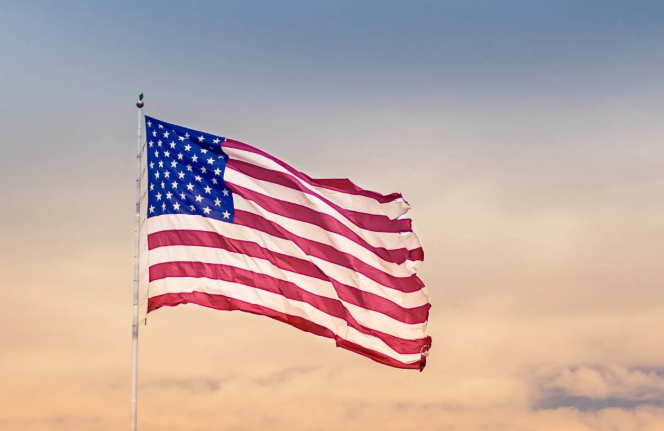
The design rules are simpler than many Americans realize. The 13 horizontal stripes, seven red and six white, stand for the thirteen original colonies that declared independence from Britain in 1776: Delaware, Pennsylvania, New Jersey, Georgia, Connecticut, Massachusetts, Maryland, South Carolina, New Hampshire, Virginia, New York, North Carolina and Rhode Island. The 50 white stars on the blue canton represent the 50 states of the Union, with no star assigned to any particular state. When a new state joins the Union, a star is added on the following Fourth of July, a rule that has been in place since 1818.
The original Flag Resolution, passed by the Continental Congress on June 14, 1777, was remarkably brief. It stated only that “the flag of the United States be thirteen stripes, alternate red and white; that the union be thirteen stars, white in a blue field, representing a new constellation.” It said nothing about the arrangement of the stars, the proportions of the flag, or what the colors meant, which is why early American flags varied wildly, with stars in rows, circles and scattered patterns.
The Betsy Ross Question
The most beloved story in American vexillology holds that Philadelphia upholsterer Betsy Ross sewed the first Stars and Stripes in 1776 after a personal visit from George Washington, and that she convinced him to use five-pointed stars instead of six-pointed ones because she could cut them with a single scissor snip. The historical record is more complicated. The story entered public circulation only in 1870, when her grandson William Canby presented it to the Historical Society of Pennsylvania, roughly 94 years after the events it describes, supported by affidavits from family members rather than contemporary documents.
What the record does show is that Ross was a real and skilled flag maker. A 1777 receipt confirms she was paid a substantial sum for making flags for the Pennsylvania State Navy Board. Most modern scholars neither fully accept nor entirely dismiss the family account; they simply note that no surviving document from the Revolutionary era connects her to the first national flag. The stronger documented claim belongs to Francis Hopkinson, a New Jersey signer of the Declaration of Independence and a designer of government seals, who billed Congress for his work on the flag, famously requesting a quarter cask of public wine as payment. Congress declined, arguing in part that he had not been the only person consulted on the design.
How 13 Stars Became 50
The flag has been altered 26 times since 1777, and the changes tell the story of American expansion. In 1794, after Vermont and Kentucky joined the Union, Congress approved a flag of 15 stars and 15 stripes. That is the version that flew over Fort McHenry in Baltimore during the British bombardment of September 1814, the flag Francis Scott Key saw “by the dawn’s early light” when he wrote the words that became the national anthem. The original Star-Spangled Banner, sewn by Mary Pickersgill, survives today in the Smithsonian’s National Museum of American History.
By 1818 the impracticality of adding a stripe for every state was obvious, and Congress, acting on a proposal championed by Representative Peter Wendover and naval hero Captain Samuel Reid, permanently fixed the stripes at 13 and ruled that only stars would be added. The 48-star flag adopted in 1912 lasted 47 years through two world wars. When Alaska and Hawaii joined the Union in 1959, President Dwight Eisenhower’s administration reviewed thousands of proposed designs for a 50-star flag. One of them came from Robert Heft, a 17-year-old student in Lancaster, Ohio, who had sewn a 50-star layout for a high school project before Hawaii was even admitted. His teacher gave the project a B minus, reportedly promising a better grade if Congress ever accepted it. The design became official on July 4, 1960, and the teacher changed the grade to an A. As of 2026, the 50-star flag has flown for 66 years, the longest run of any version.
Why the Colors Are Red, White and Blue
The 1777 resolution assigned no meaning to the colors at all. The often quoted symbolism comes from 1782, when Charles Thomson, secretary of the Continental Congress, explained the colors of the newly adopted Great Seal of the United States: red for hardiness and valor, white for purity and innocence, and blue for vigilance, perseverance and justice. Because the seal drew its palette from the flag, the explanation attached itself to the flag over time, and presidents from Washington’s era to the present have repeated variations of it.
The Rules That Govern the Flag Today
Flag etiquette in the United States is codified in the U.S. Flag Code, first drafted at a national conference in 1923 and adopted into federal law in 1942. It holds that the flag should not touch the ground, should be illuminated if displayed at night, and should be retired with dignity, traditionally by burning, when worn beyond repair. The code is advisory for civilians, with no penalties for violations. Flag Day, marking the anniversary of the 1777 resolution, was proclaimed by President Woodrow Wilson in 1916 and made a permanent national observance by Congress in 1949 under President Harry Truman.
The Numbers Behind the Banner
The flag has had 27 official versions since 1777. The stripes have been fixed at 13 since 1818. The 48-star flag served 47 years, the longest run until the current one. The 50-star design has flown for 66 years as of July 2026. The Star-Spangled Banner of 1814 measured 30 by 42 feet, and Mary Pickersgill was paid $405.90 for it, a considerable sum at the time.
Looking Ahead
The design will change again only if a 51st state joins the Union, a scenario periodically discussed for Puerto Rico and the District of Columbia. The Army’s Institute of Heraldry already maintains contingency designs for flags of 51 stars and beyond, meaning the next version of the flag, whenever it comes, has in a sense already been drawn.
FAQ
Why does the American flag have 13 stripes?
The 13 stripes represent the original thirteen colonies that declared independence from Britain in 1776. Congress permanently fixed the number at 13 in 1818 after briefly experimenting with 15 stripes.
Did Betsy Ross really make the first American flag?
There is no contemporary document proving it. The story came from her grandson in 1870, though records confirm she was a professional flag maker paid for Pennsylvania navy flags in 1777. Francis Hopkinson has the strongest documented design claim.
Who designed the current 50-star flag?
Robert Heft, a 17-year-old Ohio high school student, created the accepted 50-star layout as a class project in 1958. It became official on July 4, 1960, after Hawaii’s admission to the Union.
What do the colors of the flag mean?
The 1777 resolution assigned no meaning. The traditional interpretation, red for valor, white for purity and blue for vigilance, perseverance and justice, comes from Charles Thomson’s 1782 explanation of the Great Seal.
When is a new star added to the flag?
Under the Flag Act of 1818, a new star is added on the first Fourth of July after a state is admitted to the Union. The stripes never change.
Editorial Note: This article was prepared using publicly available information from international news organizations and official sources available at the time of publication. Facts may be updated as authorities release new information.
Sources: