
Quick Summary
As fatal shootings connected to the federal task force patrolling Memphis draw national attention, many Americans are asking a more basic question: how did soldiers end up on city streets performing what looks like police work in the first place? The answer involves a patchwork of laws dating back more than two centuries, three distinct legal statuses the National Guard can operate under, and a constitutional tradition that has generally kept the military out of civilian law enforcement. This explainer breaks down what the law actually permits, and why the Memphis deployment has avoided the legal battles that stalled similar efforts elsewhere.
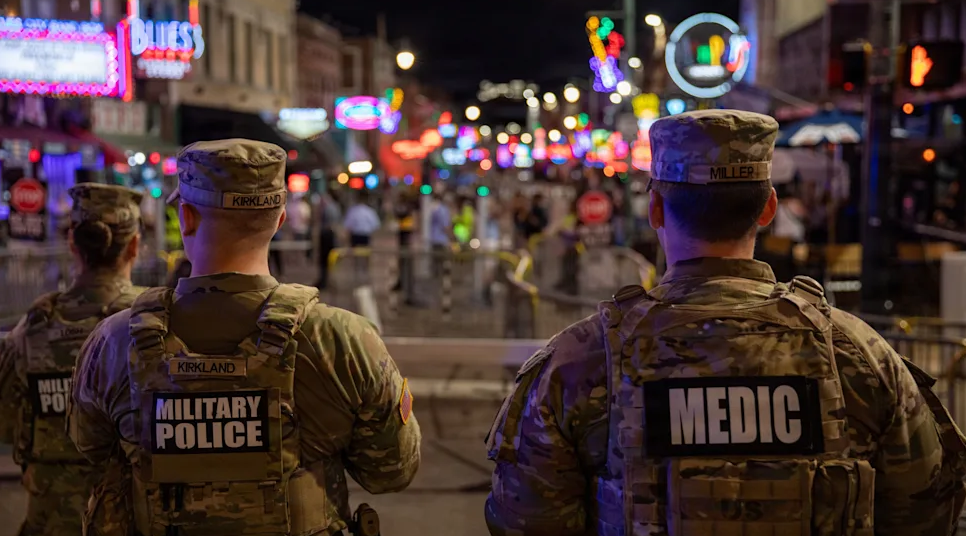
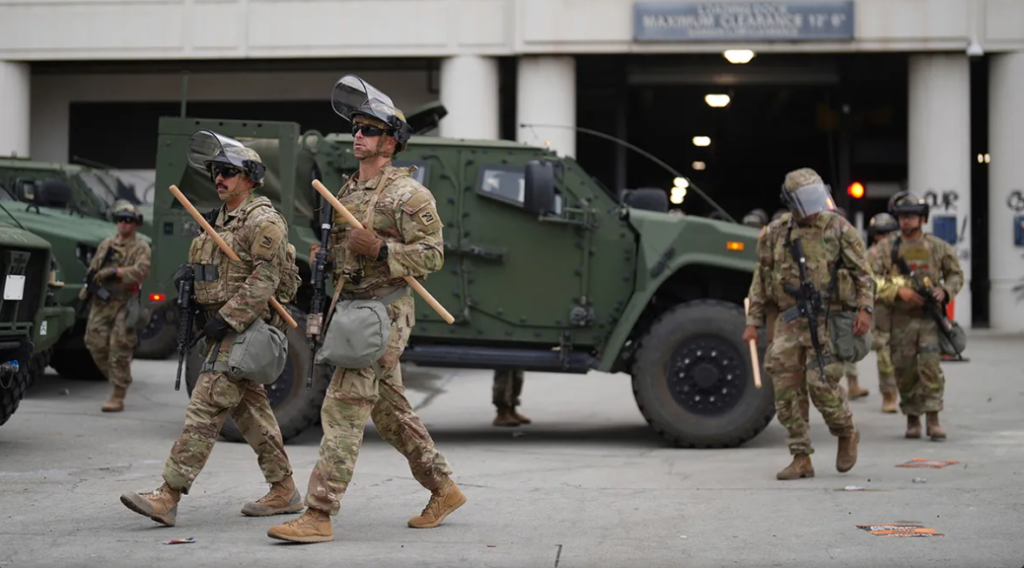
What It Is
The National Guard occupies an unusual dual role in the American system, serving simultaneously as a state military force under a governor’s command and as a federal reserve force the president can call into national service under specific legal conditions. That dual identity is central to understanding why Guard deployments generate such different legal outcomes depending on the circumstances, and why the Memphis deployment has proceeded with relatively little court interference compared to deployments in other cities.
Background: The Three Statuses That Matter
The National Guard operates under one of three distinct legal statuses at any given time, according to legal experts who have studied recent deployments. Under State Active Duty, the Guard is called up by a state governor for state-specific missions, such as disaster response, and remains entirely under state command and state funding. Under Title 32, the hybrid status used for the Memphis deployment, the Guard is federally funded but remains under the command of the state governor, requiring the governor’s consent under federal law. Under Title 10, the president can federalize the Guard entirely, placing it under direct federal military command, a status that triggers much stricter legal limitations on what the troops can actually do.
That last distinction matters enormously. The Posse Comitatus Act, a law dating to 1878, generally prohibits federal military forces, including federalized National Guard troops under Title 10, from performing civilian law enforcement functions such as making arrests or conducting searches. The primary exception is the Insurrection Act, a set of laws tracing back to 1792 that allows the president to deploy the military domestically to suppress rebellion or address situations where regular law enforcement cannot execute the laws of the United States. According to the Brennan Center for Justice, the Insurrection Act has been invoked roughly 30 times throughout American history, but only three times in the past 50 years, most recently by President George H.W. Bush in 1992 in response to the Los Angeles riots, and only at the request of California’s governor at the time.
Why the Memphis Deployment Is Different
The distinction between Memphis and cities like Portland or Chicago, where deployment attempts faced significant legal challenges, comes down almost entirely to state consent. Tennessee’s Republican Governor Bill Lee agreed to the Memphis Safe Task Force deployment under Title 32 status, meaning the Guard remains under his ultimate command even while receiving federal funding and coordinating with federal agencies. Because the deployment has gubernatorial consent and does not rely on Title 10 federalization or the Insurrection Act, it sidesteps the Posse Comitatus Act’s restrictions in a way that contested deployments elsewhere have not managed to do.
By contrast, when the Trump administration attempted to send federalized Guard troops into states like Illinois over the objection of local officials, those deployments faced immediate legal challenges, with courts scrutinizing whether the statutory conditions required under Title 10, specifically, whether the president was genuinely “unable with the regular forces to execute the laws of the United States,” had actually been met.
Expert Analysis
Constitutional impact: Legal scholars, including Georgetown law professor Stephen Vladeck, have described the Insurrection Act as historically functioning as a political “third rail,” rarely invoked precisely because of the serious constitutional questions raised by using the military against American civilians, a norm that recent expanded use of alternative statutes like Title 10 federalization has increasingly tested.
Accountability impact: Because National Guard soldiers operating under Title 32 status in Memphis are performing law enforcement-adjacent functions without the same legal restrictions that would apply to fully federalized Title 10 troops, questions about their training for civilian policing situations, distinct from combat or overseas deployment training, have become central to the debate following the task force’s fatal shootings.
Federalism impact: The consent-based structure of the Memphis deployment illustrates how state governors retain meaningful leverage over Guard deployments even in an era of expanded federal ambition, since a governor’s objection can trigger substantially more legal scrutiny than a governor’s cooperation.
Historical impact: The last time a president invoked the Insurrection Act against a state’s explicit objection was in 1965, when President Lyndon B. Johnson sent troops to Alabama to protect civil rights demonstrators following violence at the Edmund Pettus Bridge, a precedent frequently cited in current legal debates about the outer limits of presidential authority.
Statistics & Context
The Insurrection Act has been invoked approximately 30 times throughout U.S. history but only three times in the past 50 years, according to the Brennan Center for Justice. The Posse Comitatus Act, which restricts military involvement in domestic law enforcement, has been federal law since 1878. Title 32 deployments, the status used in Memphis, require the consent of the state’s governor under federal law.
What’s Next
Legal experts anticipate the Supreme Court will eventually be asked to more clearly define the boundaries between permissible and impermissible domestic military deployment, particularly as court challenges to deployments in states like Illinois continue working through the federal appeals process. How those cases are resolved will likely shape whether future administrations, of either party, rely more heavily on Title 32 arrangements requiring gubernatorial consent, or attempt broader federalization under Title 10 and face the accompanying legal resistance.
FAQ
Can the president send the National Guard to any city without the governor’s permission?
Generally, no, not for law enforcement purposes, unless the president federalizes the Guard under Title 10 or invokes the Insurrection Act, both of which face significant legal constraints and, in the case of Title 10, an unresolved legal question about whether it can be used without gubernatorial consent for domestic policing.
Why has the Memphis deployment avoided the legal fights seen in other cities?
Tennessee’s governor consented to the deployment under Title 32 status, meaning the Guard remains under state command while receiving federal funding, a structure that avoids the stricter Posse Comitatus Act limitations that apply to fully federalized troops.
What is the Insurrection Act?
It’s a set of federal laws dating to 1792 that allows the president to deploy the military domestically, including federalizing the National Guard, to address rebellion, insurrection, or situations where the government cannot enforce federal law through normal means.
How often has the Insurrection Act actually been used?
Roughly 30 times throughout American history, but only three times in the past 50 years, most recently in 1992 during the Los Angeles riots, at the request of California’s governor.
Does the National Guard have the same restrictions as regular military when deployed domestically?
It depends on their legal status. Guard troops under State Active Duty or Title 32 status face different, generally less restrictive rules than fully federalized Title 10 troops, who are subject to the Posse Comitatus Act’s prohibition on domestic law enforcement absent an Insurrection Act invocation.
Editorial Note: This article was prepared using publicly available information from legal research organizations and official sources available at the time of publication. Facts may be updated as authorities release new information.
Sources: