
Quick Summary
A member of the Memphis Safe Task Force, the federal crime-fighting unit President Trump established last September, shot and killed a man Wednesday during a drug warrant operation, the second fatal shooting by task force personnel in four days and the fourth death connected to the unit since it began operating. The earlier shooting, on Sunday, involved two Tennessee National Guard soldiers who killed 20-year-old Tyrin Johnson after police said he turned toward them with a handgun during a foot pursuit. Both incidents are now under independent investigation by Tennessee’s state bureau of investigation.
What Happened
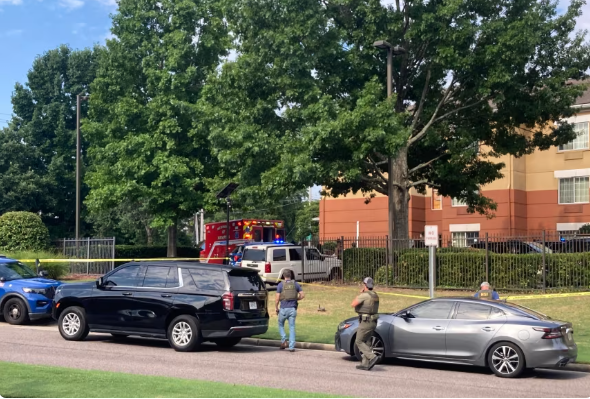
Wednesday’s shooting occurred when U.S. Drug Enforcement Administration agents were serving a warrant at a Memphis hotel room. According to the U.S. Marshals Service, which coordinates communications for the task force, agents knocked down the door after the man inside refused to open it, and he was killed after pointing a handgun at task force members. A separate statement from the Tennessee Bureau of Investigation offered a more limited account, saying only that “for reasons still under investigation, the situation escalated, resulting in a DEA agent firing into a room, striking a man and killing him.”
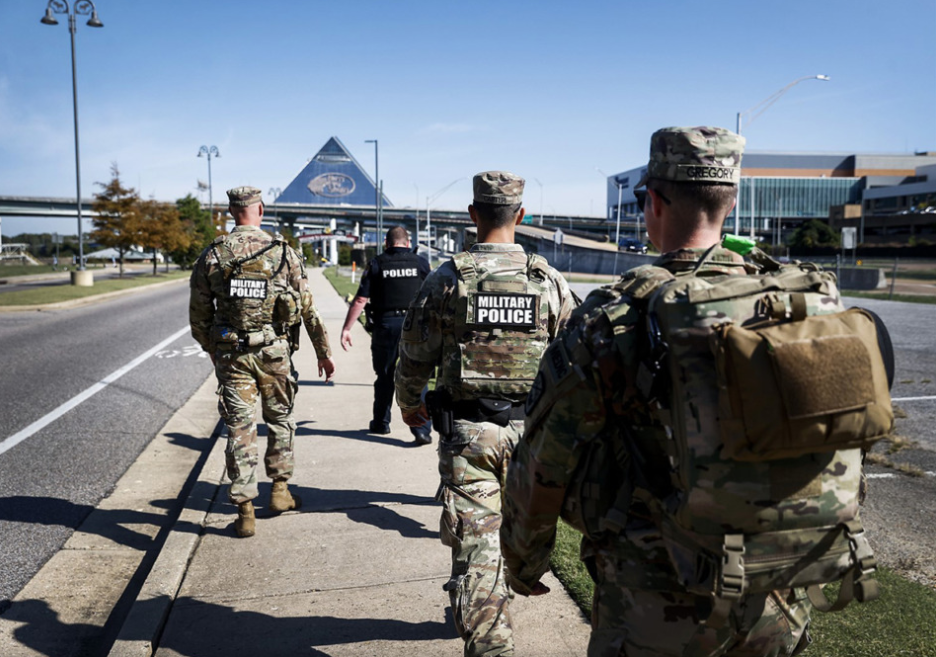
That shooting followed Sunday’s death of Tyrin Johnson, a 20-year-old described by Memphis lawmakers as a college student and young father. Police said officers responding to reports of gunfire in downtown Memphis around 4 a.m. spotted an armed man who fled on foot, pursued by both Memphis police and National Guard soldiers assigned to the area. According to police, Johnson turned toward the guardsmen with his weapon, and two soldiers opened fire, striking him. He was pronounced dead at the scene. Family members told the Associated Press that Johnson had been shot twice in the chest and that he ran a construction business and was passionate about music. His grandfather, Evaniel Johnson, has publicly demanded that authorities release video footage of the shooting.
Background
The Memphis Safe Task Force was created by presidential declaration in September, combining Tennessee National Guard soldiers, federal agencies, and local police under a single command structure. It is one of several deployments Trump has ordered into Democratic-led cities he has described as overwhelmed by crime, following similar efforts in Los Angeles, Portland, and Chicago, some of which were blocked by federal courts. Tennessee’s Republican Governor Bill Lee embraced the deployment and consented to it, a distinction that matters legally: because Lee agreed to the Guard’s involvement, the operation has avoided some of the legal challenges that stalled deployments in states where governors objected.
Memphis has one of the highest violent crime rates among major American cities, according to FBI data, though both Democratic and Republican officials have noted crime declines beginning before the task force’s arrival, a trend that has paralleled similar drops in other U.S. cities. Memphis Mayor Paul Young, a Democrat, has taken what he has described as a pragmatic stance, saying the troops were coming regardless of his position and that he preferred to find ways to use them effectively rather than fight their presence outright.
Why It Matters
Wednesday’s shooting brings the total number of use-of-force deaths connected to the task force to four since it began operating in September, with a fifth shooting in December involving a Tennessee Highway Patrol trooper who wounded, but did not kill, a driver during a traffic stop. All five shootings are being investigated by the Tennessee Bureau of Investigation, the state’s independent law enforcement agency, rather than by the task force itself. State lawmakers have publicly demanded greater transparency, and the American Civil Liberties Union filed a lawsuit in May alleging what it described as a broader pattern of constitutional violations connected to the task force’s operations.
Expert Analysis
Legal impact: Because the National Guard soldiers involved in Sunday’s shooting were operating under Title 32 status, federally funded but under the command of Tennessee’s governor rather than the president, the Posse Comitatus Act’s general prohibition on military personnel performing civilian law enforcement does not squarely apply in the way it would to fully federalized troops, a legal distinction that has allowed the Memphis deployment to continue with less judicial interference than deployments in states where governors objected.
Accountability impact: The discrepancy between the Marshals Service’s account, which stated the man in Wednesday’s shooting pointed a handgun at agents, and the more cautious Tennessee Bureau of Investigation statement, which said only that the situation “escalated,” illustrates a recurring pattern in use-of-force incidents involving federal task forces: initial accounts from the agencies involved often carry more specific claims than the independent investigators later confirm.
Political impact: The rising death toll is likely to intensify pressure on both state lawmakers and the Trump administration to release additional details, including body camera or surveillance footage, particularly given the outstanding public request from Tyrin Johnson’s family for video of Sunday’s shooting.
Community impact: Repeated fatal encounters involving the same federal task force, especially within such a short window, risk eroding public trust in the initiative’s stated goal of improving safety, regardless of whether individual investigations ultimately clear the officers and soldiers involved.
Statistics & Context
Wednesday’s death marks the fourth fatality connected to the Memphis Safe Task Force since its creation in September, and the second fatal shooting within four days. A fifth, non-fatal shooting occurred in December when a Tennessee Highway Patrol trooper fired on a vehicle during a traffic stop. All five incidents remain under investigation by the Tennessee Bureau of Investigation.
What’s Next
The Tennessee Bureau of Investigation is conducting independent investigations into both the Sunday and Wednesday shootings, though no timeline for either investigation’s conclusion has been made public. Whether authorities release video footage from either incident, as Tyrin Johnson’s family has specifically requested, will likely shape public reaction in the coming weeks. State lawmakers who have already sought answers about the task force’s operations are expected to continue pressing for greater oversight.
FAQ
How many people have died in incidents connected to the Memphis Safe Task Force?
Four people have been killed since the task force began operating in September, including two fatal shootings within four days of each other in July.
Who is running the Memphis Safe Task Force?
It combines Tennessee National Guard soldiers, federal agencies including the DEA and U.S. Marshals Service, and local Memphis police, operating under a presidential declaration issued in September with the consent of Tennessee’s Republican governor.
Was Tyrin Johnson armed when he was shot?
Police said Johnson, 20, turned toward National Guard soldiers with a handgun during a foot pursuit before two soldiers opened fire. His family has asked to see video of the incident before drawing conclusions.
Who is investigating these shootings?
The Tennessee Bureau of Investigation, the state’s independent law enforcement agency, is investigating both shootings, separate from the task force itself.
Has the National Guard deployment to Memphis faced legal challenges like deployments to other cities?
Unlike deployments to Los Angeles, Portland, and Chicago, which faced court challenges after governors objected, Tennessee’s Republican governor consented to the Memphis deployment, which has limited the legal obstacles the operation has faced.
Editorial Note: This article was prepared using publicly available information from international news organizations and official sources available at the time of publication. Facts may be updated as authorities release new information.
Sources: