
Quick Summary
Mount Rushmore features four Presidents carved into the granite of the Black Hills of South Dakota: George Washington, Thomas Jefferson, Theodore Roosevelt, and Abraham Lincoln. Millions of Americans can picture the monument instantly, yet far fewer know why those four men were chosen, who did the choosing, or how a crew of unemployed miners hanging from cables managed to blast a mountain into the most recognizable sculpture in the United States without losing a single life. The answers involve a publicity-hungry state historian, a stubborn and brilliant sculptor named Gutzon Borglum, fourteen years of dynamite work during the Great Depression, and a legal battle over sacred Lakota land that the Supreme Court itself called an illegal taking. This is the full story of how the faces got on the mountain, what each one was meant to represent, and why the monument remains both a beloved symbol and a contested one nearly a century later.
What Mount Rushmore Actually Is
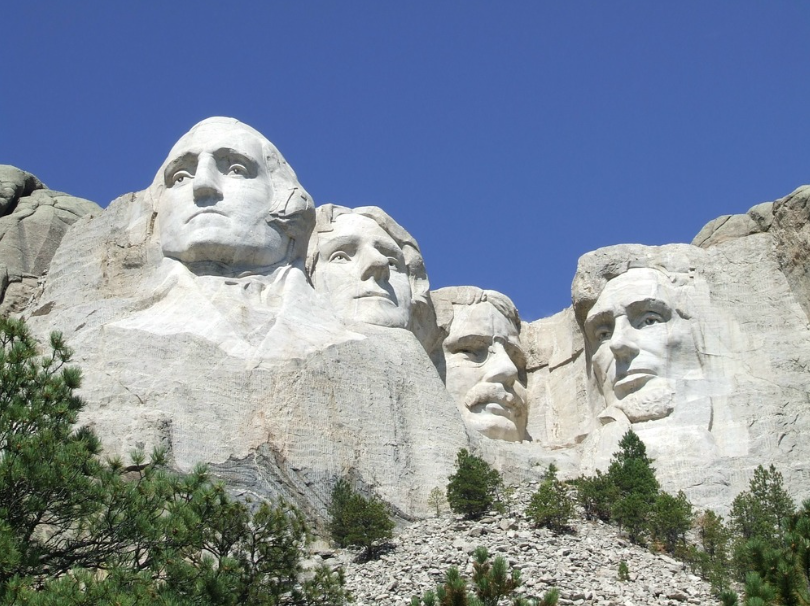
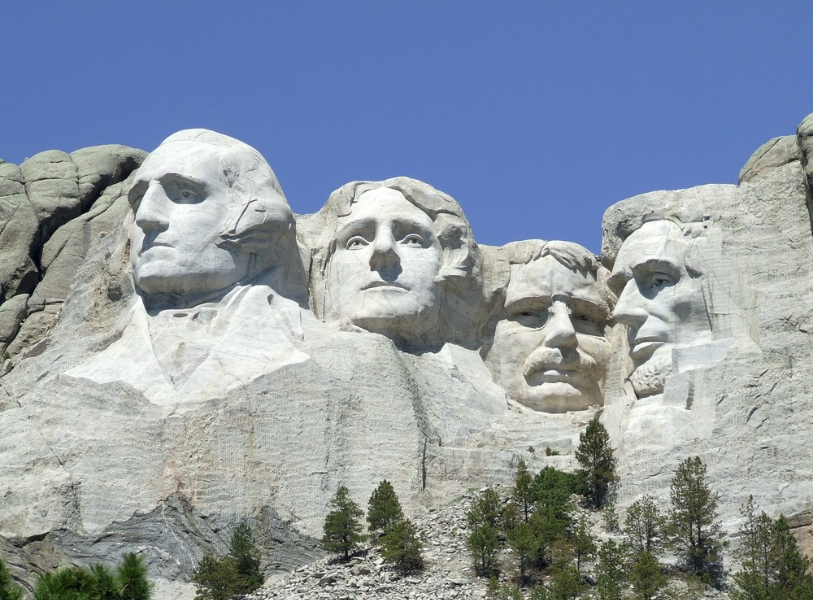
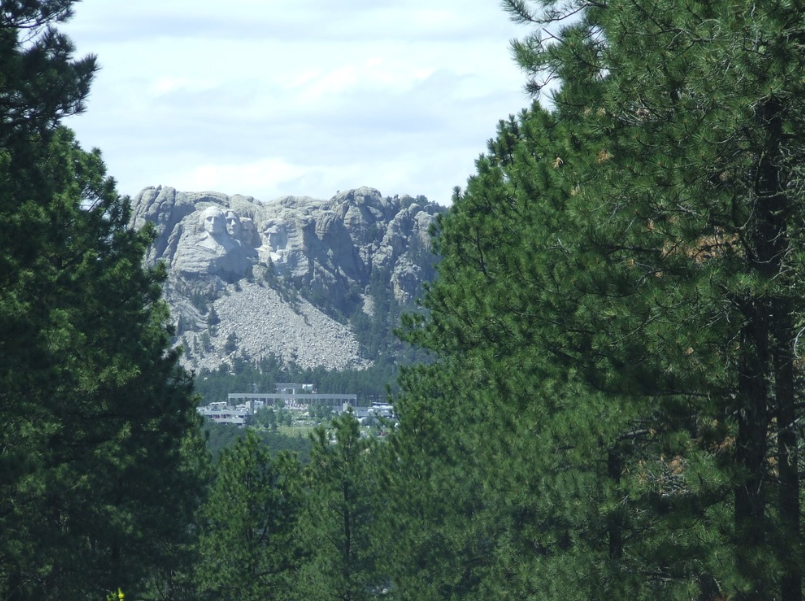
Mount Rushmore National Memorial sits in the Black Hills about two miles southwest of Keystone, South Dakota, roughly 23 miles from Rapid City. Each of the four faces measures about 60 feet from chin to forehead, which means that if the Presidents had been carved with full bodies at the same scale, they would stand around 465 feet tall. The National Park Service manages the site, which draws more than two million visitors every year, making it one of the most visited memorials in the country and the economic engine of western South Dakota’s tourism industry.
The mountain itself was named long before the carving began. In 1885, a young New York attorney named Charles E. Rushmore traveled to the Black Hills to check legal titles on mining claims. When he asked a local guide the name of a particular granite peak, the guide reportedly answered that it had no name, but that it would be called Rushmore from then on. The joke stuck, and four decades later the attorney’s surname became attached to a national icon. Rushmore himself later donated $5,000 to the carving project, one of the largest early private contributions.
Why These Four Presidents Were Chosen
The selection was made almost entirely by one man, the sculptor Gutzon Borglum, and his logic was national rather than regional. The original idea came from Doane Robinson, South Dakota’s state historian, who proposed in 1923 and 1924 a massive carving to lure tourists to the Black Hills. Robinson wanted Western heroes: Lewis and Clark, Buffalo Bill Cody, and the Oglala Lakota leader Red Cloud. Borglum, who joined the project in 1924, rejected that vision. A monument of regional figures, he argued, would only ever have regional appeal. If South Dakota wanted the world to come, the mountain needed subjects the whole nation revered.
Borglum settled on four Presidents, each representing a chapter in the first 150 years of the American story. George Washington represents the birth of the nation, the commander who won independence and then, crucially, gave up power. Thomas Jefferson represents growth and expansion; the author of the Declaration of Independence also completed the Louisiana Purchase in 1803, which nearly doubled the size of the country and opened the West. Abraham Lincoln represents preservation, the President who held the Union together through the Civil War and ended slavery. Theodore Roosevelt, the most debated choice at the time because he had died only recently, in 1919, represents the development of the nation into a modern power, from the Panama Canal to trust-busting to conservation. Borglum knew Roosevelt personally, and critics grumbled that the pick was as much friendship as history, but the sculptor’s rationale, that Roosevelt carried the country into the twentieth century, has held up in the memorial’s official interpretation ever since.
How the Mountain Was Carved
Carving began on October 4, 1927, with President Calvin Coolidge attending the dedication, and ended on October 31, 1941. Over those fourteen years, about 400 workers, many of them miners left jobless by the collapsing Black Hills gold industry, removed roughly 450,000 tons of granite from the mountain. Around 90 percent of the carving was done with dynamite. Powdermen became so precise that they could blast rock to within inches of the final surface, after which drillers hanging in bosun chairs from steel cables honeycombed the stone with small holes and finishers smoothed the faces with hand tools. Despite the men dangling hundreds of feet above the valley floor with drills and explosives, not one worker died during construction, a safety record historians still describe as remarkable.
The project survived constant money trouble. The final cost came to $989,992.32, and roughly 85 percent of it was paid by the federal government, an irony given the monument’s origin as a state tourism scheme. The design changed with the rock itself. Jefferson was originally begun on Washington’s right, but after eighteen months the granite there proved too cracked, so workers blasted the unfinished face off the mountain and started again on the other side. Borglum’s grander plans, which included carving the Presidents to the waist and cutting a massive Hall of Records into the canyon behind the faces, were abandoned when funding dried up and war approached. Borglum died in March 1941, and his son Lincoln Borglum oversaw the final months of work. In 1998, the Park Service partially fulfilled the old dream by installing a titanium vault with porcelain panels recording the monument’s history in the unfinished Hall of Records entrance.
The Other History: Six Grandfathers and the Lakota
No honest account of Mount Rushmore can skip what the mountain was before 1927. To the Lakota Sioux, the peak was Tunkasila Sakpe, the Six Grandfathers, part of the Black Hills that the United States guaranteed to the Sioux Nation “for absolute and undisturbed use” in the 1868 Treaty of Fort Laramie. After gold was discovered in the Black Hills in 1874, the government seized the land in 1877. More than a century later, in the 1980 case United States v. Sioux Nation of Indians, the Supreme Court ruled that the taking was illegal and ordered compensation of about $105 million. The Sioux tribes have refused the money to this day, insisting the land itself should be returned; the unclaimed award, held in trust and accruing interest, is now estimated at well over one billion dollars. Nearby, the Crazy Horse Memorial, begun in 1948 and still under construction, stands as the Lakota answer in stone.
Why the Monument Still Matters
Mount Rushmore endures because it works on two levels at once. As civic art, it compresses the American experiment, founding, expansion, preservation, and modernization, into four faces visible from miles away. As a political stage, it keeps drawing Presidents; the site has hosted fireworks displays, national addresses, and campaign moments right up to the present day. And as a historical argument, it forces the questions Americans keep asking in the country’s 250th year: who gets memorialized, who decides, and on whose land.
Facts and Figures
The faces are 60 feet tall. Carving ran from 1927 to 1941, employed about 400 workers, removed 450,000 tons of rock, cost $989,992.32, and caused zero deaths. The four dedications came in stages: Washington in 1930, Jefferson in 1936, Lincoln in 1937, and Roosevelt in 1939. Annual visitation exceeds two million people, according to the National Park Service.
What’s Next for the Memorial
The Park Service continues year-round monitoring of the granite, using a network of sensors installed in the 1990s to track hairline cracks, and crews rappel down the faces each autumn to seal fissures before winter ice can widen them. Debates over the surrounding Black Hills land claim continue in Congress and in South Dakota politics, and the compensation fund keeps growing, untouched.
FAQ
Who are the four Presidents on Mount Rushmore?
George Washington, Thomas Jefferson, Theodore Roosevelt, and Abraham Lincoln, chosen by sculptor Gutzon Borglum to represent the nation’s founding, expansion, development, and preservation.
Why is Theodore Roosevelt on Mount Rushmore instead of another President?
Borglum wanted a figure who represented America’s rise as a modern power, citing the Panama Canal and Roosevelt’s conservation legacy. The choice was controversial in the 1920s because Roosevelt had died so recently, and because Borglum knew him personally.
Did anyone die building Mount Rushmore?
No. Despite fourteen years of dynamite blasting and workers suspended by cables, there were no fatalities during construction, though some workers later suffered from silicosis caused by granite dust.
Was Mount Rushmore ever supposed to be bigger?
Yes. Borglum planned to carve the Presidents to the waist and build a grand Hall of Records behind the faces. Funding shortages and the approach of World War II ended both plans, leaving the monument officially unfinished.
Why do the Lakota consider Mount Rushmore controversial?
The mountain sits in the Black Hills, land guaranteed to the Sioux Nation by the 1868 Treaty of Fort Laramie and seized after the 1874 gold rush. In 1980 the Supreme Court ruled the seizure illegal and awarded compensation, which the Sioux tribes have refused, demanding the land instead.
Editorial Note: This article was prepared using publicly available information from international news organizations and official sources available at the time of publication. Facts may be updated as authorities release new information.
Sources: