
Quick Summary
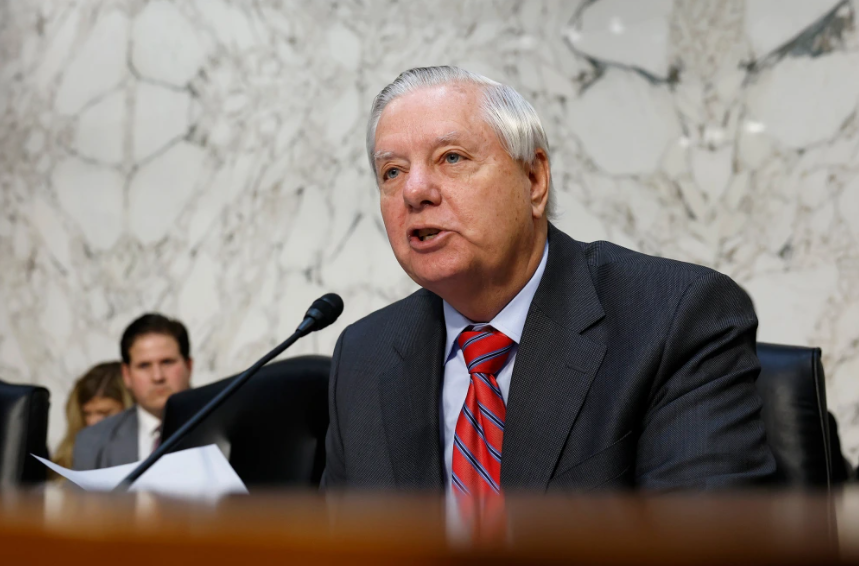
Lindsey Graham, the South Carolina Republican who spent more than two decades as one of the most recognizable voices in the United States Senate, dies at 71 after what his office described as a brief and sudden illness, just hours after returning from a trip to Ukraine. His death late Saturday night, confirmed by his office early Sunday, stunned Washington and set off an immediate wave of tributes from President Trump, congressional colleagues in both parties, and foreign leaders who had come to know Graham as one of America’s most tireless foreign policy travelers. His passing also opens a Senate vacancy that Governor Henry McMaster must now fill by appointment, with a special primary required to place the seat on November’s general election ballot.

What Happened
Graham’s office announced early Sunday that the senator had died late Saturday night following a brief and sudden illness. He was 71 years old. The office did not release a cause of death, and NBC News reported that no additional medical details were immediately available. What made the news especially jarring for colleagues was its timing: Graham died just hours after returning from Ukraine, the country whose cause he had championed relentlessly since Russia’s full-scale invasion in 2022. Even at 71, Graham had maintained one of the most punishing travel schedules in the Senate, and the Ukraine trip was entirely in character for a man who believed that American influence was built in person, on the ground, in the capitals where wars are fought and alliances are tested.
President Trump paid tribute on Truth Social, writing that Graham “was always working” and calling him “a true American Patriot.” In an interview with NBC, Trump singled out Graham’s fiery 2018 defense of Supreme Court nominee Brett Kavanaugh as “one of the classics, I think, in the history of the Senate,” adding that “he defended Brett Kavanaugh so brilliantly, and Brett might not have made it except for that.”
A Life That Traced the Arc of the Modern GOP
Graham’s biography reads like a history of the Republican Party’s last three decades. Born in Central, South Carolina, where his parents ran a bar and pool hall, he lost both of them by his early twenties and helped raise his younger sister while finishing law school. He spent years in the Air Force as a judge advocate, rising to the rank of colonel in the reserves, and carried that military identity into every foreign policy fight of his career.
Elected to the House in 1994 and to the Senate in 2002, Graham built his early reputation as the inseparable ally of John McCain, crisscrossing the globe with the Arizona senator and Joe Lieberman in a trio that embodied the muscular, internationalist wing of American politics. He ran briefly for president in 2016, memorably feuding with Donald Trump during the primary, then executed one of the most discussed political pivots in modern memory, becoming one of Trump’s closest allies in the Senate and a constant presence at the White House and on the golf course beside the president. Through it all, he never abandoned the causes that defined him: a hawkish foreign policy, unwavering support for the military, and in his final years, the fight to keep American weapons and money flowing to Ukraine.
Why It Matters
Graham’s death removes one of the last remaining bridges between the Republican Party’s McCain era and its Trump era, a senator who managed to keep a foot in both worlds when almost no one else could. On Ukraine specifically, his loss is significant: Graham was the Republican voice European leaders sought out, the senator who could walk into the Oval Office and argue for continued support in language Trump respected. With the war still unresolved and Trump recently announcing a license for Ukraine to manufacture Patriot air defense systems, the Senate has lost its most persistent Republican advocate for Kyiv at a delicate moment.
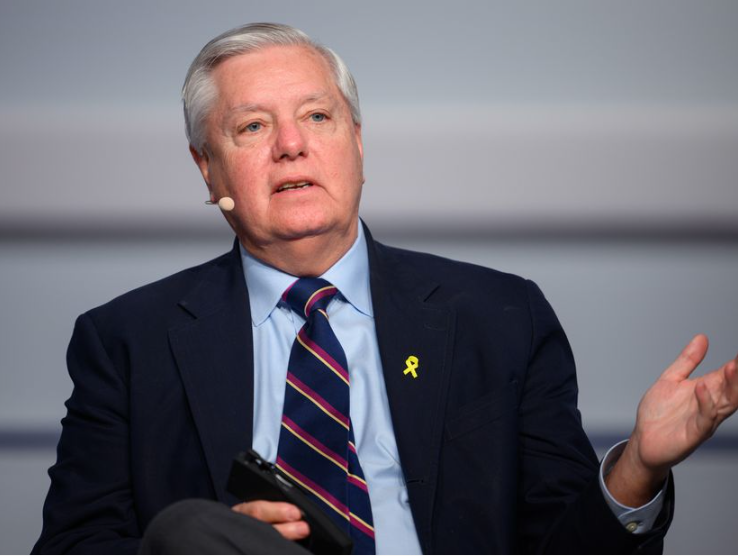
The political consequences at home are immediate. South Carolina law requires Governor Henry McMaster to appoint a successor to serve until a special election, and because the vacancy occurred in an election year, a special primary must be organized to place the seat on November’s general election ballot. Trump told reporters he already has someone in mind but declined to name them, saying “it’s too soon with Lindsey,” while praising McMaster as a “good friend” who is “going to do the right thing.” Representative Joe Wilson, who has held South Carolina’s 2nd Congressional District since 2001, is emerging as an early potential contender, according to CNN.
Impact Assessment
Politically, the seat itself is safely Republican, but the succession fight could become a proxy battle over the direction of the party in a state that hosts the first Southern presidential primary. Legislatively, Graham chaired and served on committees central to judicial confirmations and defense policy, and his absence reshuffles seniority on Judiciary and Appropriations at a moment when both panels face consequential fights this fall. On foreign policy, analysts note that the informal “Ukraine caucus” within the GOP has lost its most senior member, which could subtly shift the internal Senate debate over the next aid package. And in South Carolina, where Graham won four Senate terms, his death closes a political era that began when Strom Thurmond, whose seat Graham inherited in 2003, finally retired after nearly half a century.
Numbers and Context
Graham served 23 years in the Senate and 8 in the House before that, a combined 31 years in Congress. He was 71, and his death marks the first time a sitting senator has died in office since Dianne Feinstein in September 2023. He won his fourth Senate term in 2020 by a 10-point margin in the most expensive Senate race in American history at the time, with more than 200 million dollars spent by both sides combined.
What’s Next
Governor McMaster is expected to announce an appointment in the coming days, and South Carolina election officials must set the timeline for a special primary. Funeral arrangements have not yet been announced. In Washington, Senate leaders are expected to hold a floor tribute when the chamber reconvenes, and flags at the Capitol have been ordered to half-staff.
FAQ
How did Lindsey Graham die? His office said he died late Saturday night after a brief and sudden illness. No cause of death has been released, and the announcement came just hours after he returned from a trip to Ukraine.
Who will replace Lindsey Graham in the Senate? South Carolina Governor Henry McMaster will appoint a successor to serve until a special election. A special primary must also be held to place the seat on November’s general election ballot. Representative Joe Wilson is an early potential contender.
How long was Graham a senator? He served from January 2003 until his death in July 2026, more than 23 years, after first winning the seat vacated by Strom Thurmond.
Was Graham always a Trump ally? No. He ran against Trump in the 2016 primary and was sharply critical of him at the time, but became one of the president’s closest Senate allies after the election.
Does Graham’s death change the Senate balance of power? Not meaningfully in partisan terms, since McMaster, a Republican, will appoint a Republican successor. But it removes a senior voice on Judiciary, Appropriations, and foreign policy, particularly on Ukraine.
Editorial Note: This article was prepared using publicly available information from international news organizations and official sources available at the time of publication. Facts may be updated as authorities release new information.
Sources: